

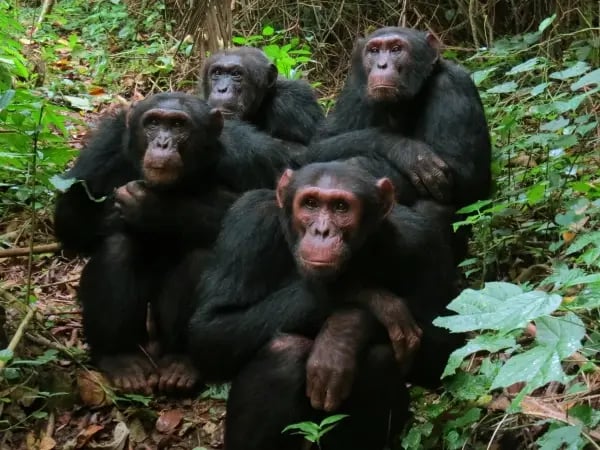
 Bulindi
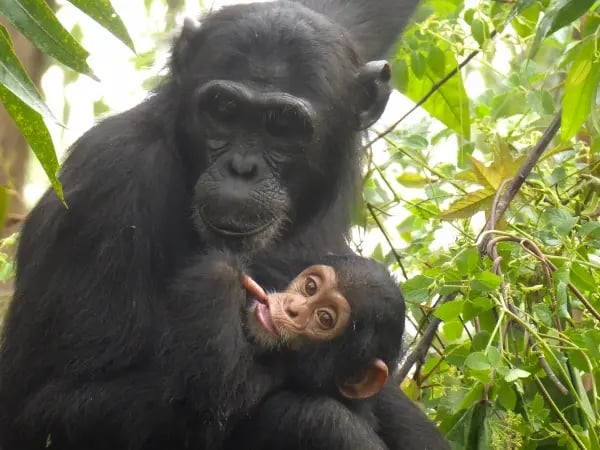 Wagaisa
.webp?width=600&height=450&name=bccp_individual%20chimp%20page%20-%20mairirwe_the%20mairirwe%20chimpanzees%20(1).webp) Mairirwe
Mairirwe
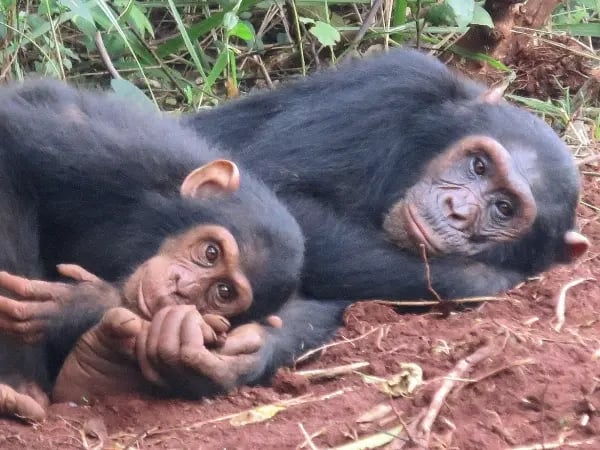 Kyabasengya
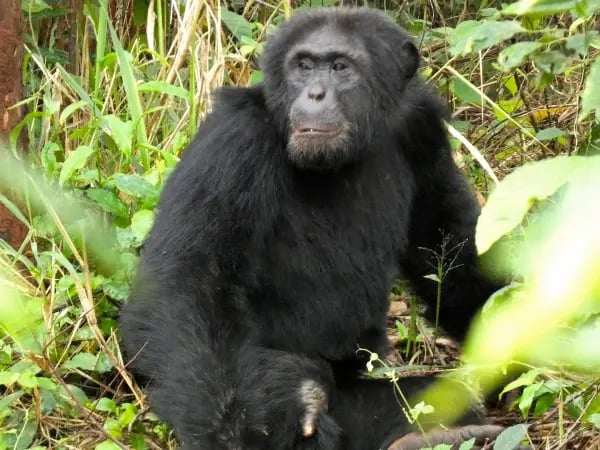 Kihomboza
.webp?width=600&height=450&name=bccp_individual%20chimp%20page%20-%20kiraira-kasunga_the%20kiraira%E2%80%93kasunga%20chimpanzees%20(1).webp) Kiraira-Kasunga
Kiraira-Kasunga
 Blogs & Updates
 Videos
 Publications
Apes vs. Monkeys: What's the Real Difference?
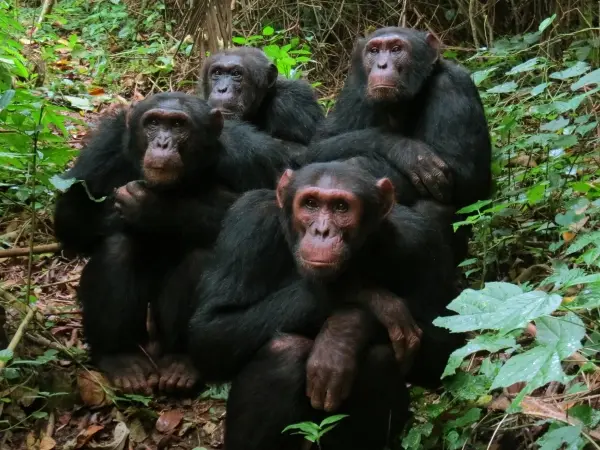
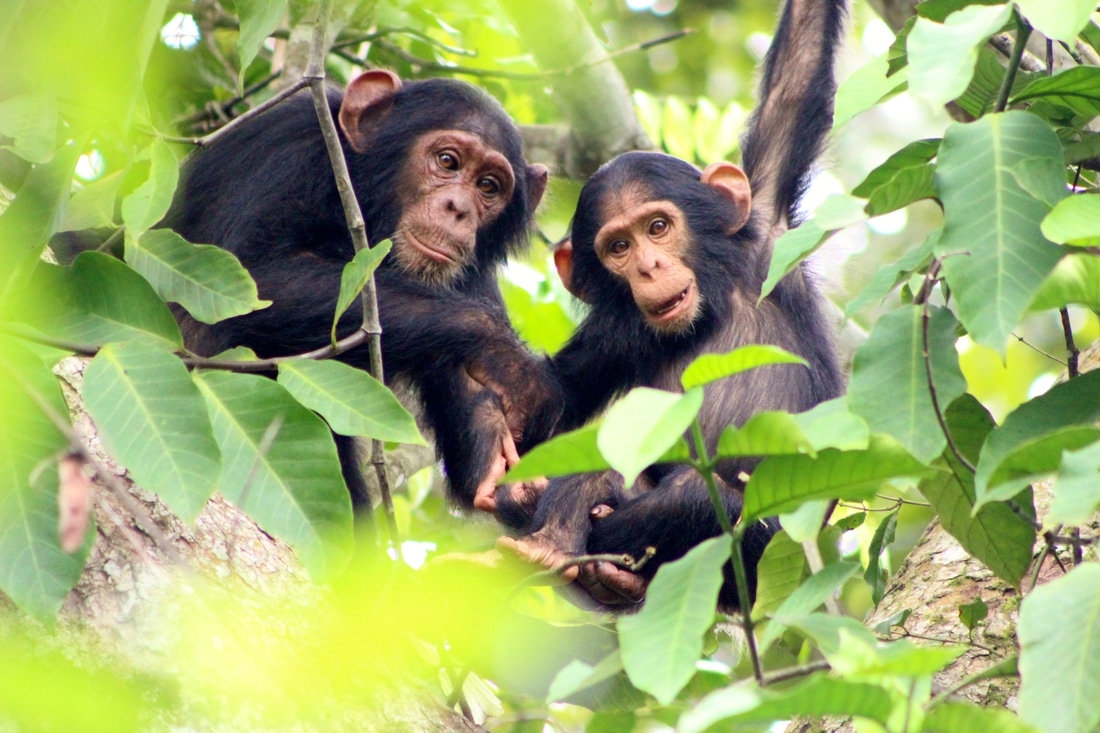
"Monkey" is one of the most misused words in the animal kingdom. Chimpanzees, gorillas, orangutans, and bonobos are routinely called monkeys in casual conversation, headlines, and even children's books — but biologically, none of them are. Apes and monkeys are different groups entirely, separated by millions of years of evolution and a handful of clear physical traits.
The simplest test: do they have a tail?
The single most reliable rule of thumb is tails. Almost all monkeys have tails, often long ones used for balance or, in New World species, for gripping branches. Apes — chimpanzees, bonobos, gorillas, orangutans, gibbons, and humans — have no tail at all. If you're looking at a primate swinging through trees with a long tail trailing behind it, it's a monkey. Chimpanzees, like all apes, simply don't have one.
Body size and build
Apes are generally larger-bodied than monkeys, with broader chests, wider shoulders, and no tail to help with balance — instead relying on strength and flexible shoulder joints to move through branches or knuckle-walk on the ground. Monkeys tend to be smaller and quicker, running along branches on all fours rather than swinging or climbing upright the way apes often do.
Brain size and cognition
Apes have proportionally larger brains relative to body size than monkeys, and this shows in behaviour. Chimpanzees make and use tools regularly in the wild, recognise themselves in mirrors, and can learn to use symbols to communicate — cognitive feats rarely, if ever, documented in monkeys to the same degree. This isn't a strict rule (some monkey species are impressively clever too), but it's a consistent broad pattern.
Where each group lives
Monkeys are found across Africa, Asia, and the Americas, split into two major groups — Old World monkeys (Africa and Asia) and New World monkeys (Central and South America). Apes have a much smaller, exclusively Old World range: gibbons and orangutans in South East Asia, and chimpanzees, bonobos, and gorillas in Africa, including the forest fragments of Western Uganda where wild chimpanzees survive today.
Why the confusion is so common
Part of the mix-up comes from popular culture — countless films and cartoons label any primate character a "monkey," ape or not. Part of it is simply that both groups look broadly similar to an untrained eye: fur, expressive faces, hands that grip. But get up close, and the differences are consistent and easy to check once you know what to look for.
Why getting it right matters for conservation
This isn't just pedantry. Apes and monkeys face different conservation pressures, live in different habitats, and require different protection strategies. Wild chimpanzees — the apes at the centre of the Bulindi Chimpanzee & Community Project's work in Western Uganda — face specific threats tied to their exact ecology: shrinking forest fragments, competition with farmland, and the physical risks of crossing roads to reach food or other chimpanzee communities. Broad, inaccurate labelling makes it harder for the public to understand exactly what's at stake and why targeted, species-specific conservation work is necessary rather than a generic "save the monkeys" appeal.
The bottom line
Chimpanzees are apes — tailless, large-brained, tool-using, and among humanity's closest living relatives. Knowing the difference isn't trivia for its own sake; it's the starting point for understanding why organisations like the Bulindi Chimpanzee & Community Project focus so specifically on chimpanzee habitat, chimpanzee behaviour, and the particular pressures facing this one remarkable group of apes in Western Uganda.
Quick FAQ
Are there any apes with tails? No — the complete absence of a tail is one of the most consistent traits defining the ape group, from gibbons through to gorillas and humans.
Is a lemur an ape or a monkey? Neither — lemurs belong to an even more distantly related primate group called prosimians, which split off earlier in primate evolution than either apes or monkeys.
Why do people confuse the two so often? Popular culture rarely distinguishes them, and both groups share a broadly similar appearance to an untrained eye — furry, expressive, tree-dwelling primates — even though the underlying biology is genuinely distinct.
One more thing worth remembering
Next time you see a headline or a social post calling a chimpanzee, gorilla, or orangutan a "monkey," it's worth a gentle correction — not out of pedantry, but because accurate language keeps public attention focused on the actual, specific animals and habitats that need protecting, rather than a vague, catch-all category that blurs real differences in threat and urgency. Even museum exhibits and nature documentaries occasionally slip into loose, inaccurate language here, which only reinforces how deeply the habit is ingrained in everyday communication about wildlife, regardless of how carefully individual scientists themselves try to use precise terminology in their own published research and public commentary.
Related Reading
- Chimpanzee vs. Gorilla: How Do They Compare?
- How Strong Is a Chimpanzee?
- Chimpanzee vs. Monkey: Why Chimps Aren't Monkeys
- What Is a Primate?
Meet the Real Chimps of Bulindi
BCCP monitors six wild chimpanzee communities in the Budongo–Bugoma Corridor, each with its own named members and story. Meet the chimps we protect and follow their lives.
Want to help protect one of these apes directly? Support the Bulindi Chimpanzee & Community Project.