

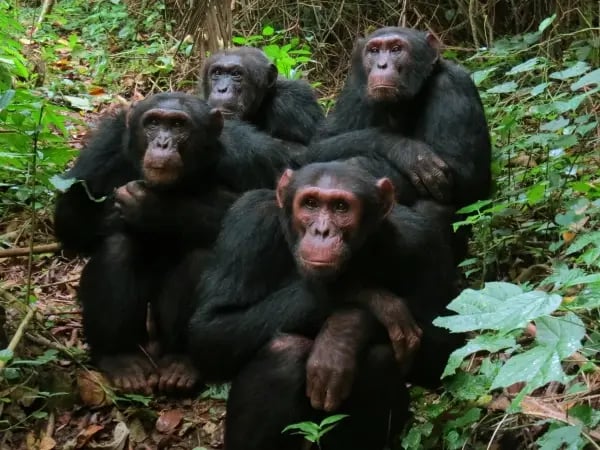
 Bulindi
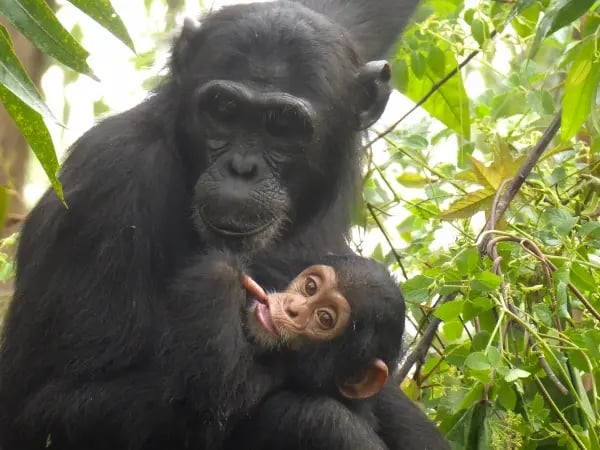 Wagaisa
.webp?width=600&height=450&name=bccp_individual%20chimp%20page%20-%20mairirwe_the%20mairirwe%20chimpanzees%20(1).webp) Mairirwe
Mairirwe
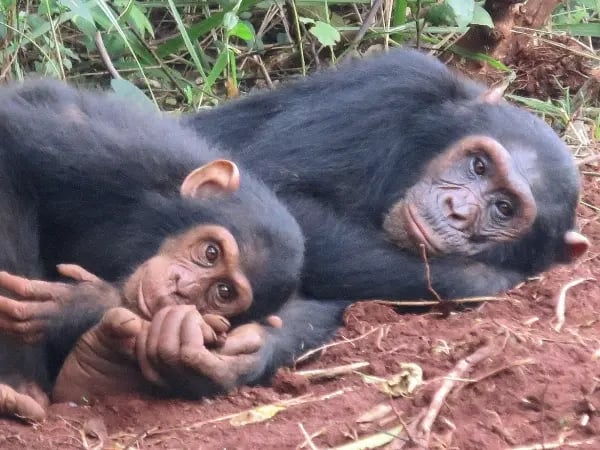 Kyabasengya
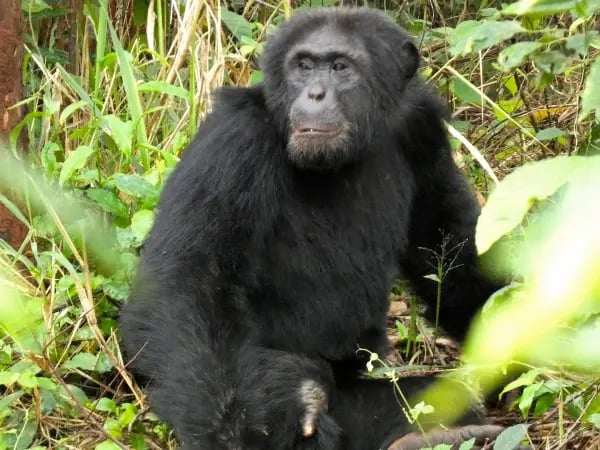 Kihomboza
.webp?width=600&height=450&name=bccp_individual%20chimp%20page%20-%20kiraira-kasunga_the%20kiraira%E2%80%93kasunga%20chimpanzees%20(1).webp) Kiraira-Kasunga
Kiraira-Kasunga
 Blogs & Updates
 Videos
 Publications
.png?width=72&height=70&name=IMG%20(1).png) Free eBook
Free eBook
Bonobo vs. Chimpanzee vs. Gorilla: The Three Compared
Bonobos, chimpanzees, and gorillas are the three African great apes, sharing a continent, a broadly similar body plan, and a family tree that connects all three to humans. But line them up side by side and it becomes clear just how differently each species has evolved to solve the basic problems of survival, social life, and reproduction.
Size
Gorillas are, by a wide margin, the largest of the three: adult male silverbacks weigh 140–180kg. Chimpanzees are considerably smaller, with adult males typically weighing 40–70kg, and bonobos are slighter still, with males around 40–45kg and a noticeably more slender, longer-limbed build than chimpanzees despite the similar weight range.
Social structure
This is where the three species look most different from one another. Gorilla groups are led by a single dominant silverback, with a stable hierarchy and relatively low internal conflict. Chimpanzee communities use a fission-fusion system with shifting subgroups, frequent political alliance-building among males, and occasional serious, even lethal, conflict between rival males or neighbouring communities. Bonobos are the outlier: female-led, with strong female alliances that outrank individual males, remarkably low aggression, and no confirmed cases of lethal group conflict recorded in the wild — a genuinely unusual social system among the great apes.
Diet
Gorillas are primarily folivorous, eating mostly leaves, stems, and shoots, with fruit a smaller, seasonal supplement. Chimpanzees and bonobos are both more frugivorous, relying heavily on ripe fruit supplemented with leaves, seeds, and insects. The key dietary difference between the two Pan species is meat: chimpanzees hunt cooperatively, most notably targeting red colobus monkeys in some populations, while bonobos hunt far less often and have never been observed engaging in the coordinated lethal raids on neighbouring groups seen in some chimpanzee communities.
Range
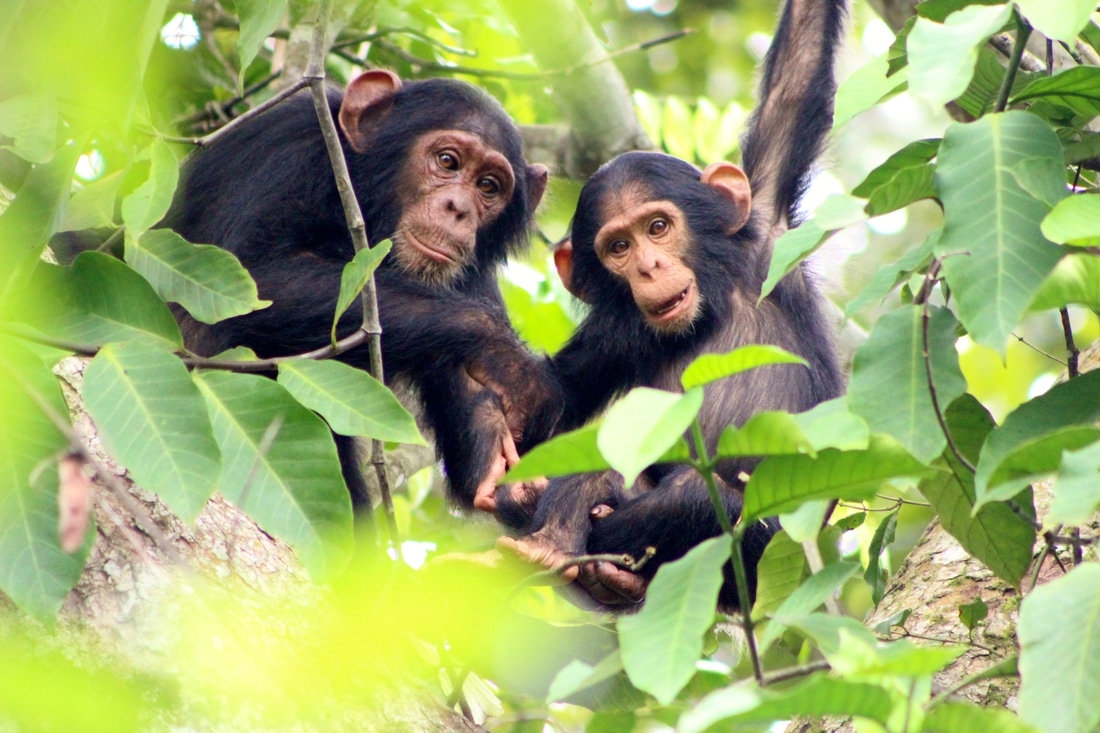
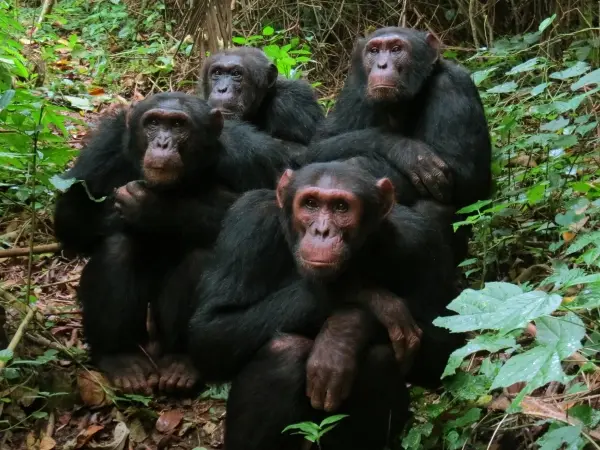
Gorillas occupy Central Africa, split into western and eastern species across several countries. Chimpanzees have the broadest range of the three, stretching across West, Central, and East Africa, including Uganda, where BCCP works with wild chimpanzee communities surviving in the Budongo–Bugoma Corridor. Bonobos have by far the most restricted range: they exist naturally only in forests south of the Congo River in the Democratic Republic of Congo, making them the most geographically confined of the three species.
Relationship to humans
Genetically, chimpanzees and bonobos are equally close to humans, both sharing roughly 98–99% of our DNA using standard alignment methods, having split from each other only 1–2 million years ago — long after both lineages diverged from ours. Gorillas are a little more distant, having branched off from the shared human-chimp-bonobo lineage around 9–10 million years ago, which shows up in slightly greater genetic and anatomical divergence, alongside their larger body size and more folivorous diet.
Brain size
Chimpanzee and bonobo brains are broadly similar in volume, around 350–400 cubic centimetres, and proportionally large relative to their smaller body size. Gorillas have a larger brain in absolute terms, commonly cited in the 340–500 cubic centimetre range, but because their bodies are so much bigger, their brain-to-body ratio is actually lower than that of chimpanzees or bonobos — a pattern that shows up behaviourally in chimpanzees' particularly prolific and varied tool use.
Conservation status
All three species are classified as Endangered, though the specifics of their vulnerability differ. Some gorilla subspecies, including the mountain gorilla and Cross River gorilla, are Critically Endangered. Bonobos, confined to a single country, face acute risk tied to regional instability and habitat loss in the DRC. Chimpanzees, despite the broadest range of the three, face intense localised pressure from habitat fragmentation, poaching, and disease, particularly in areas like Bulindi where forest fragments are surrounded by farmland and human communities.
Quick FAQ
Which of the three is most closely related to humans? Chimpanzees and bonobos are equally close, both sharing roughly 98–99% of our DNA; gorillas are slightly more distantly related, having branched off several million years earlier.
Which is the most peaceful? Bonobos, by a clear margin — their female-led social structure and reliance on affiliative behaviour to resolve tension make them the least aggressive of the three great apes.
Do any of the three share habitat? Gorillas and chimpanzees occasionally share forest in parts of Central Africa, but bonobos, confined to south of the Congo River, do not naturally overlap with either.
Which of the three would be hardest to conserve? Each poses a distinct challenge — bonobos because their entire wild population depends on the stability of a single country, gorillas because several subspecies are already Critically Endangered, and chimpanzees because their broad range means threats vary enormously from one fragmented population to the next.
One family tree, three very different strategies
What makes comparing bonobos, chimpanzees, and gorillas so instructive is that all three descend from a shared ancestor, yet each has settled on a markedly different way of organising social life, resolving conflict, and using the forest around them. There's no single "great ape blueprint" — just three closely related species that evolved three distinct, and equally valid, answers to the challenges of African forest life.
Related Reading
- Bonobo vs. Gorilla: Key Differences
- Great Ape Brain Size Compared: Chimp, Gorilla, Orangutan, Bonobo
- Chimpanzee vs. Gorilla: How Do They Compare?
Meet the Real Chimps of Bulindi
BCCP monitors six wild chimpanzee communities in the Budongo–Bugoma Corridor, each with its own named members and story. Meet the chimps we protect and follow their lives.
Want to make a difference and support our conservation efforts? Donate today