

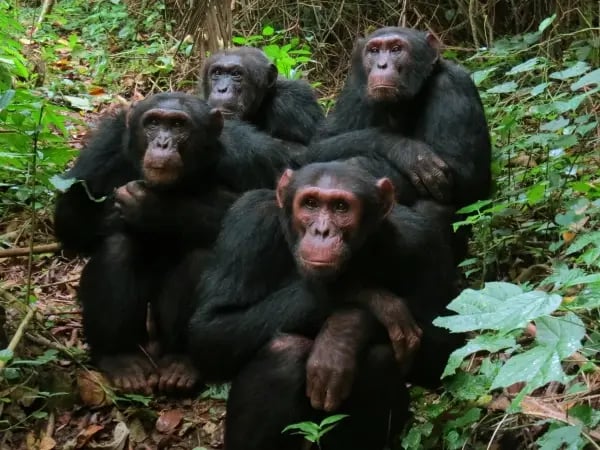
 Bulindi
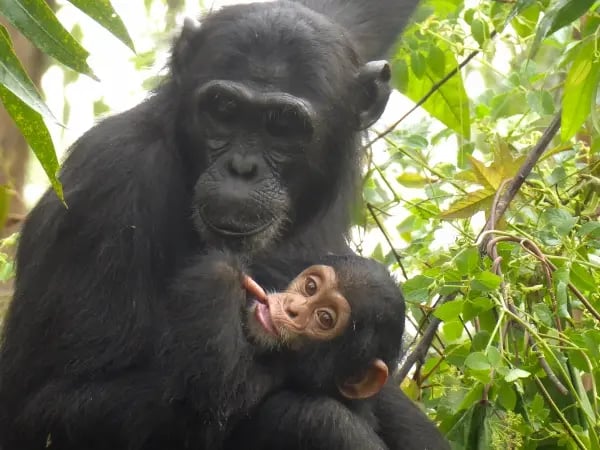 Wagaisa
 Mairirwe
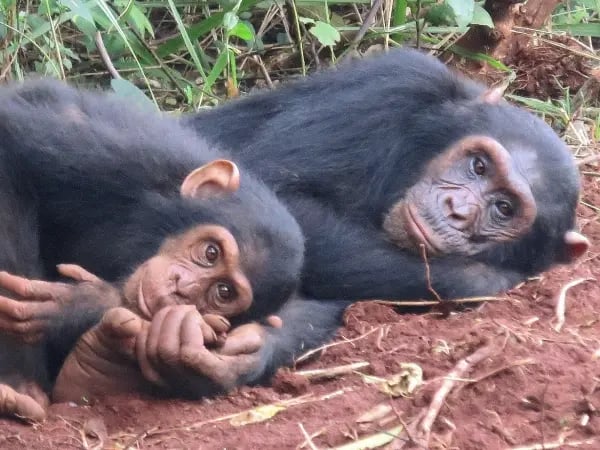 Kyabasengya
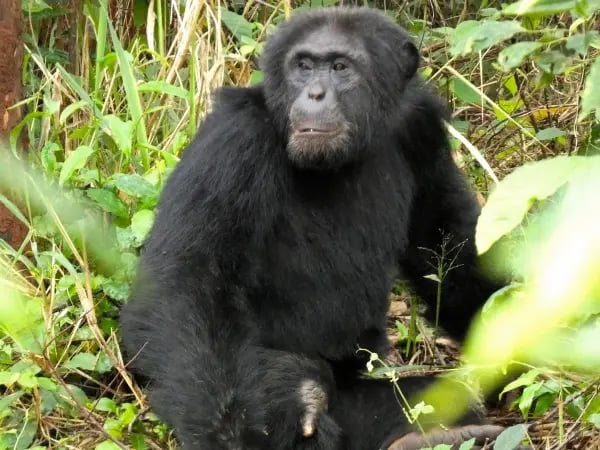 Kihomboza
 Kiraira-Kasunga
 Blogs & Updates
 Videos
 Publications
 Free eBook
By Dr Matt McLennan, BCCP Director
In chimpanzee society, young females normally leave the community they were born in when they reach adolescence, and join another community to begin their reproductive lives. This way, they avoid breeding with close male relatives, such as their fathers, uncles, and brothers. In Uganda’s Budongo–Bugoma Corridor, where BCCP monitors several communities of wild chimpanzees living in unprotected habitat around villages, farmland, and roads, setting out alone in search of other chimpanzees is a risky undertaking. The network of riverside forests and swamps that once served as their migration routes has largely been cut down and replaced by farmland, villages, and towns, and the landscape is now crisscrossed with busy roads.
Our free eBook, The chimpanzees next door, tells the wider story of how this landscape has changed, and what it means for chimpanzees and people.
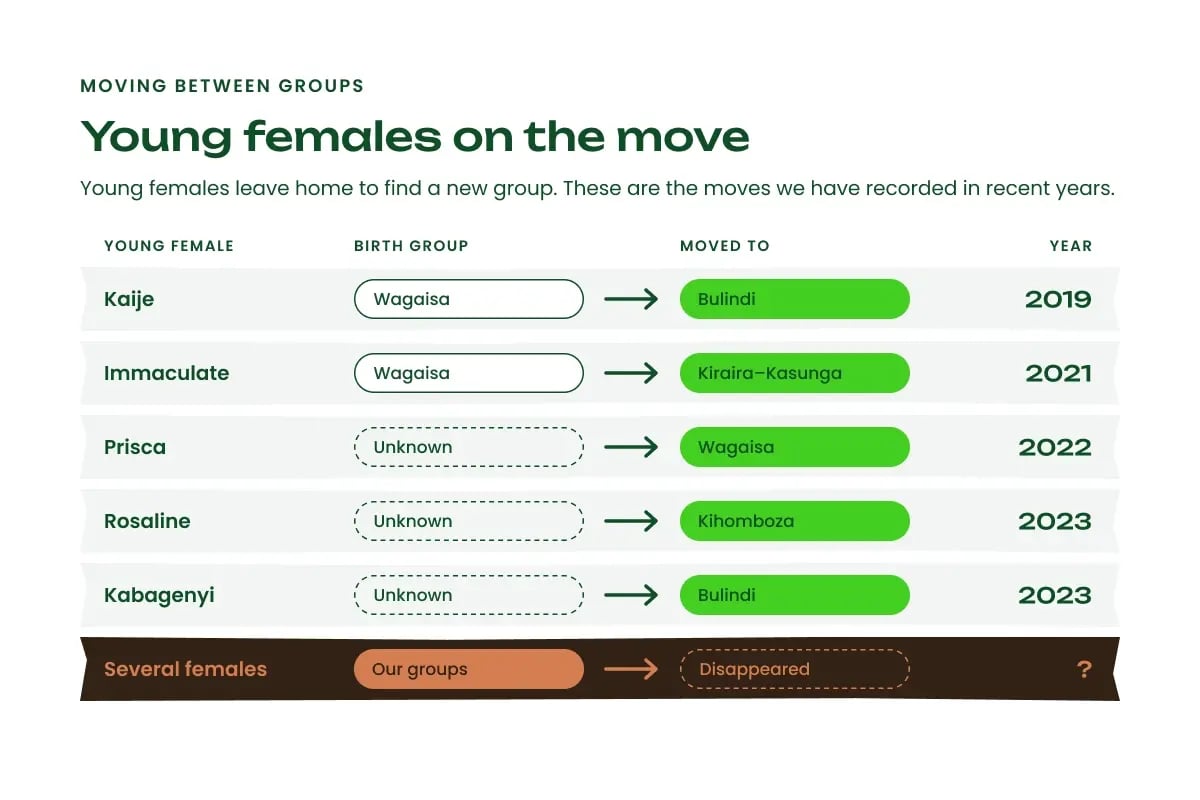
Still, in recent years we have documented several successful transfers of young females between our monitored groups. Wagaisa-born female Kaije transferred to Bulindi in 2019, and Wagaisa female Immaculate transferred to the Kiraira–Kasunga community in 2021. Other young females whose birth communities we don’t know have appeared in our groups from time to time: Prisca appeared in Wagaisa in 2022, Rosaline migrated to Kihomboza in 2023, and Kabagenyi appeared in Bulindi in 2023. On the other hand, several young females have disappeared from our monitored groups, and we don’t know what happened to them.
 The chimpanzee behind my house
The challenges facing young females in the corridor are illustrated by Rosette, the “city chimp”. We first identified Rosette in March 2023, when she appeared near the range of the Kihomboza chimpanzees. We expected her to join the Kihomboza group soon, but instead she bypassed them and turned up on the outskirts of Hoima City. In a strange twist, between October and December 2023 she was often seen in a small swamp directly behind my house!
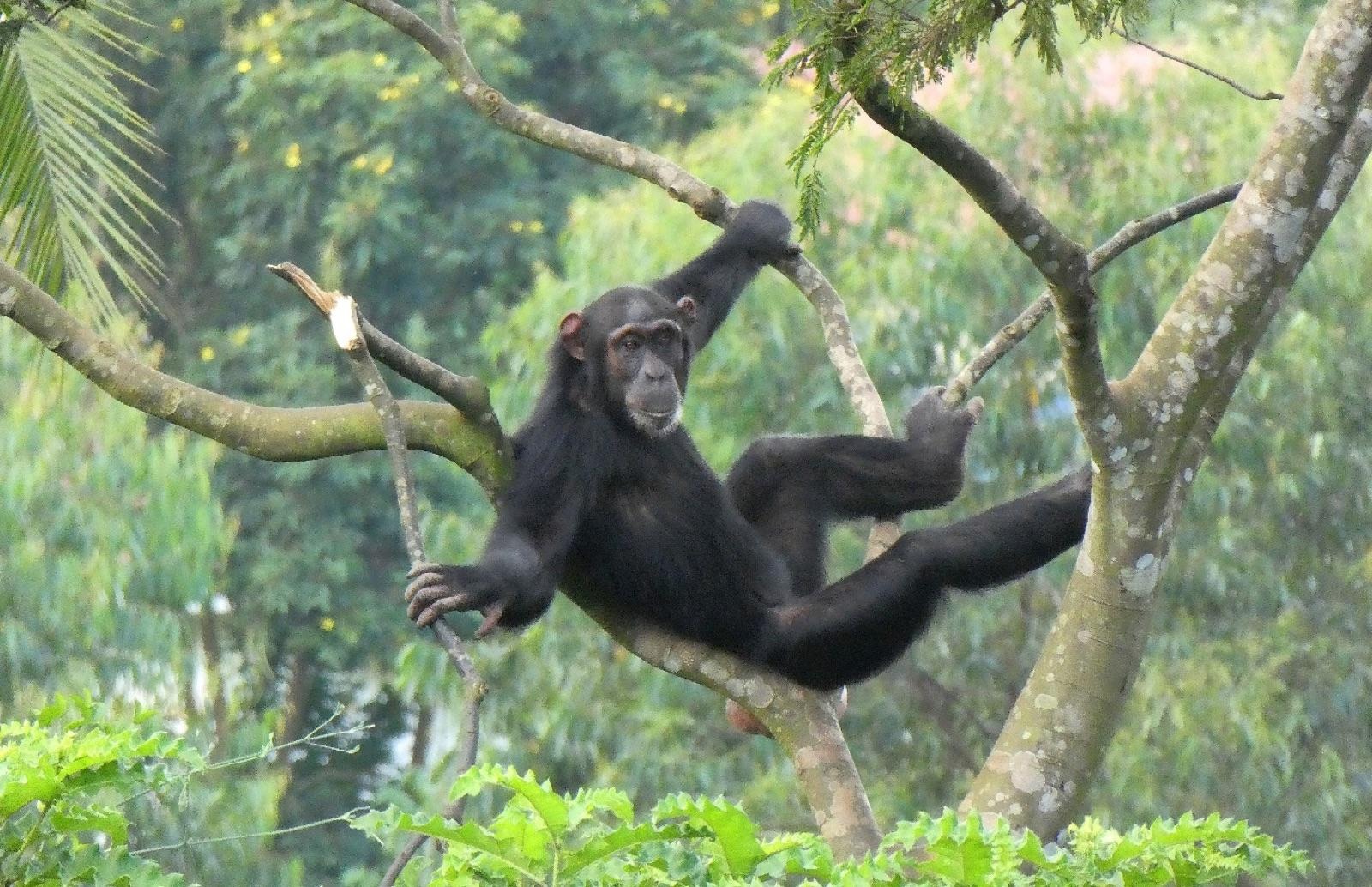
Rosette relaxing in a small tree behind my house (November 2024).
A “dangerous wild animal”?
By October 2023, Rosette had ranged even deeper into residential areas, causing considerable alarm among some residents. In particular, the family of a bishop at the Catholic Diocese, where Rosette often nested in a eucalyptus plantation, were outraged and claimed publicly that they were being terrorised by a “dangerous wild animal” that had invaded their land. In November 2023, following angry complaints by certain politicians and the family at the Diocese, the wildlife authorities attempted to translocate Rosette. BCCP staff guided the vet team over several days, but the attempt failed: Rosette disappeared after an attempt was made to dart her, only to reappear once the vet team had left!
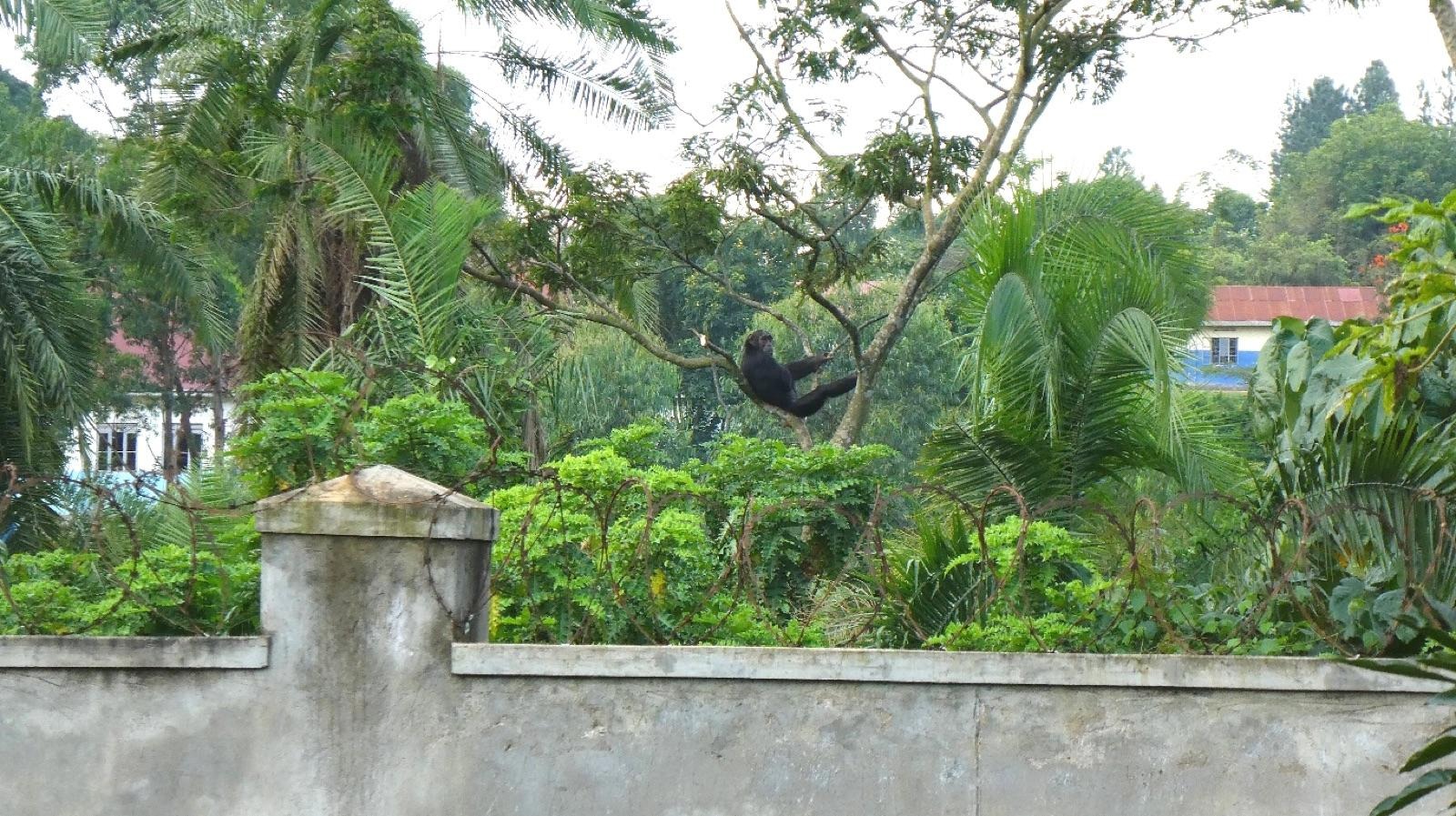
Rosette photographed from my house in Hoima City (November 2024).
Throughout 2024, Rosette continued to range around the spacious land owned by the Diocese, and occasionally she popped up behind my home, about 800 metres away across a swamp. Some residents kept complaining bitterly about her presence, and journalists were eager to cover the story. Complaints about Rosette featured regularly on local radio and television, and sensational reports appeared in the national press, with headlines such as “Chimpanzee terror grips Hoima city dwellers” and “Loose chimp attacks 60-year-old widow’s home”.
Three attempts to move her
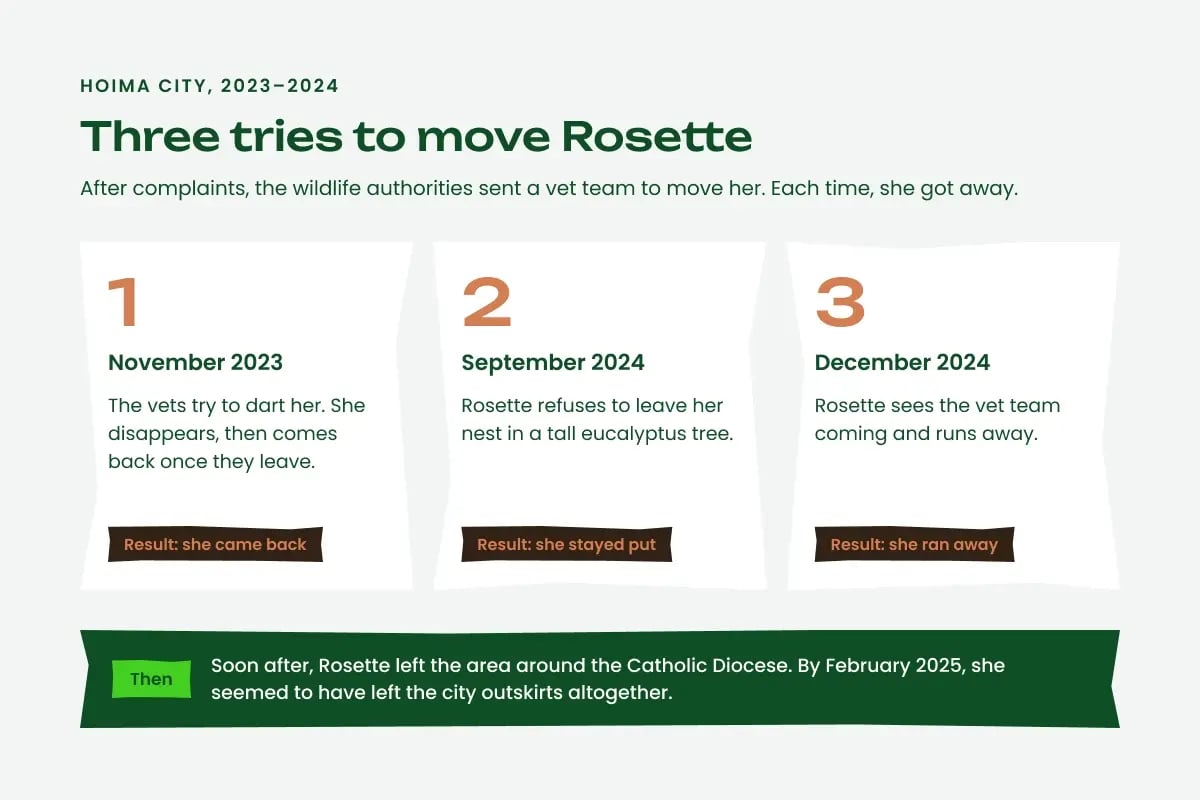 In September 2024, the vet team returned and tried again to dart Rosette, but she stubbornly refused to leave her nest in a tall eucalyptus tree.
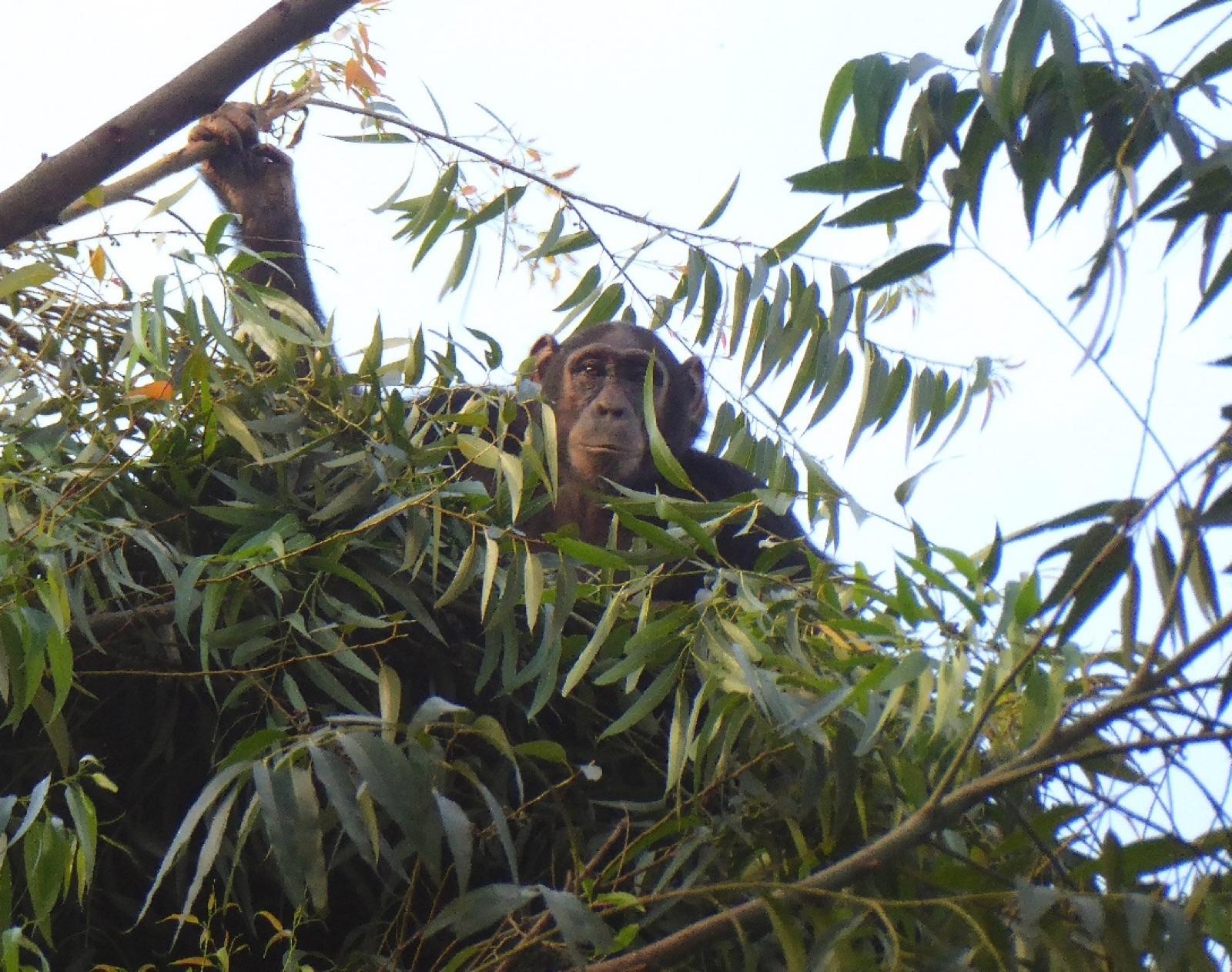
Rosette looks out warily from her nest in a tall eucalyptus tree, where a vet team waited for a chance to dart her (September 2024).
After another round of bitter complaints from the bishop’s family, the vet team came a third time in December 2024, but this time Rosette fled when she saw them approaching. Shortly afterwards, she finally left the area around the Catholic Diocese, and by February 2025 she seemed to have left the city outskirts altogether.
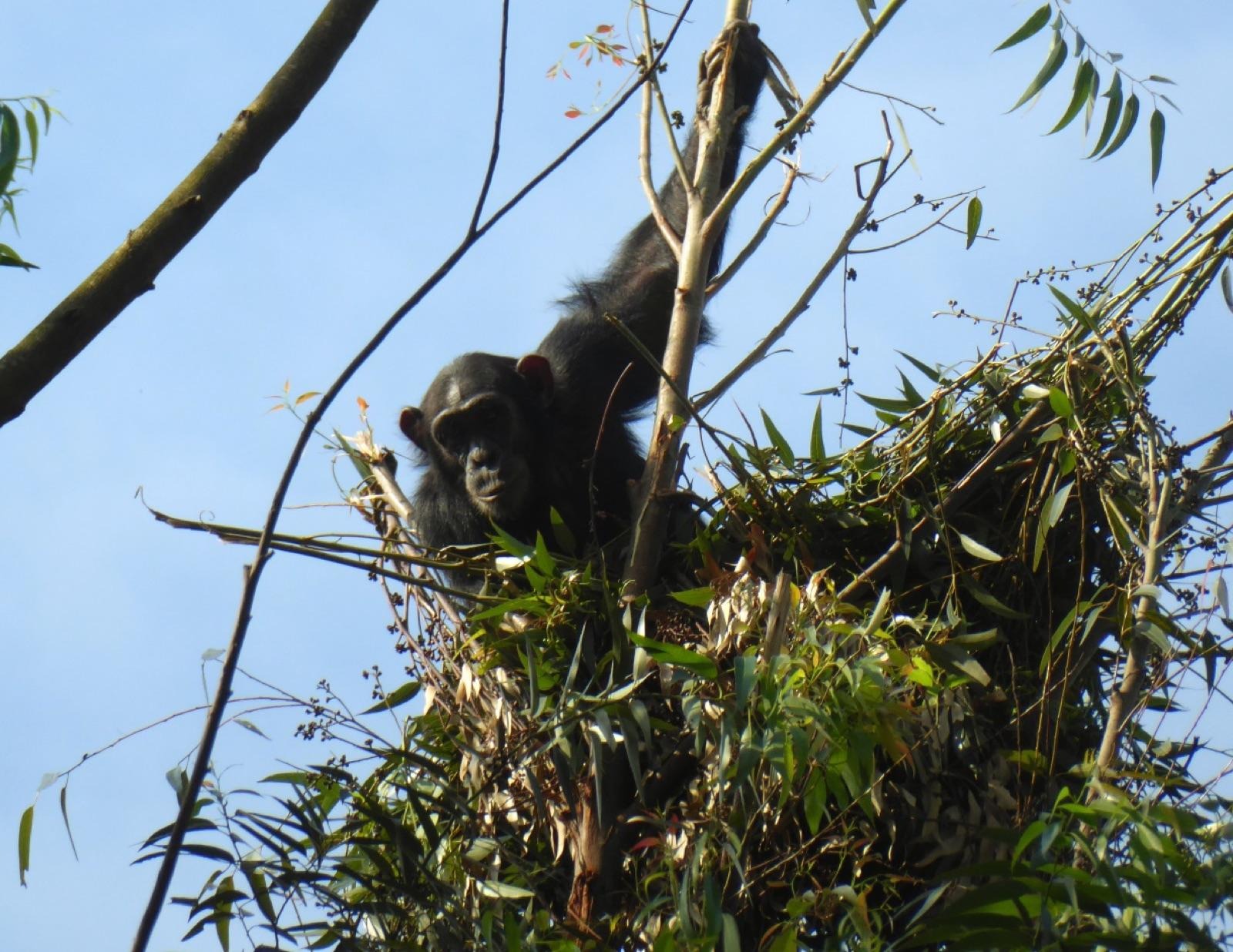
Rosette in her eucalyptus nest during the translocation attempt (September 2024).
Rosette’s case highlights the significant challenges young females face in highly modified environments like the Budongo–Bugoma Corridor, and shows how chimpanzees can make the wrong “choices” while adapting to such a fast-changing landscape.
What happened to Rosette next? Find out in Part 2 of her story. Sign up for our newsletter so you don’t miss it.
Young females like Rosette face these risks alone. Our Chimpanzee Monitors follow the chimpanzees every day, keeping them safe and reassuring local people. Your donation helps keep them in the field.