

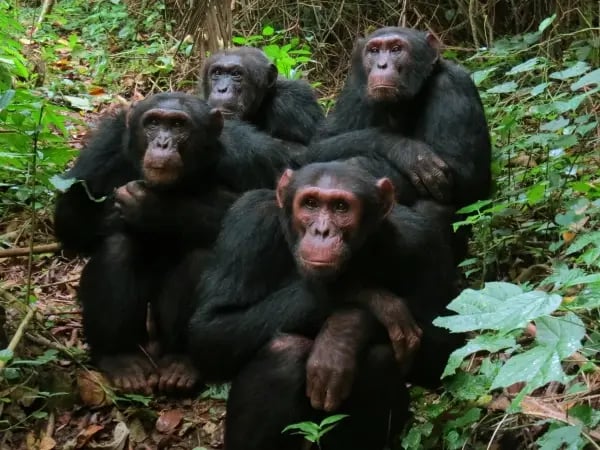
 Bulindi
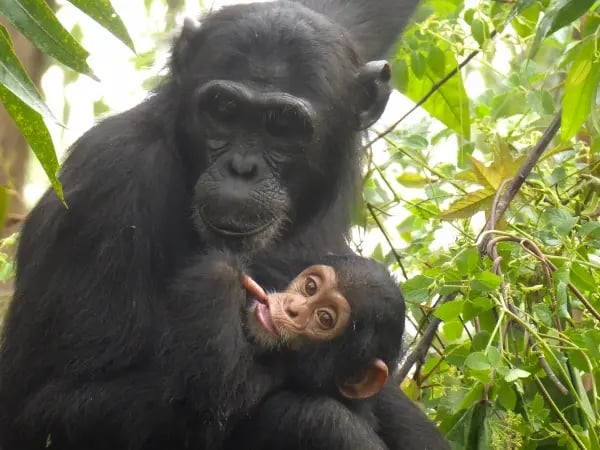 Wagaisa
.webp?width=600&height=450&name=bccp_individual%20chimp%20page%20-%20mairirwe_the%20mairirwe%20chimpanzees%20(1).webp) Mairirwe
Mairirwe
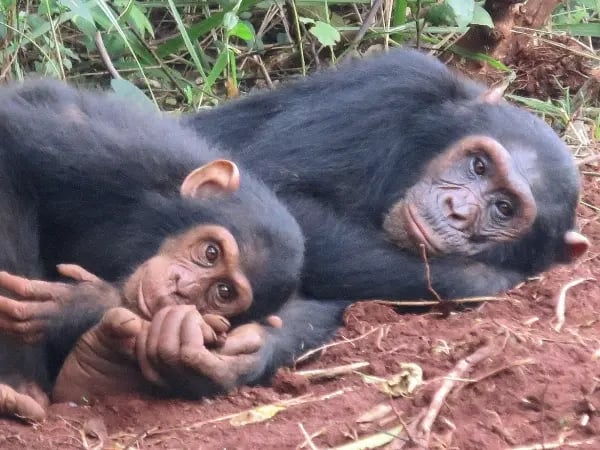 Kyabasengya
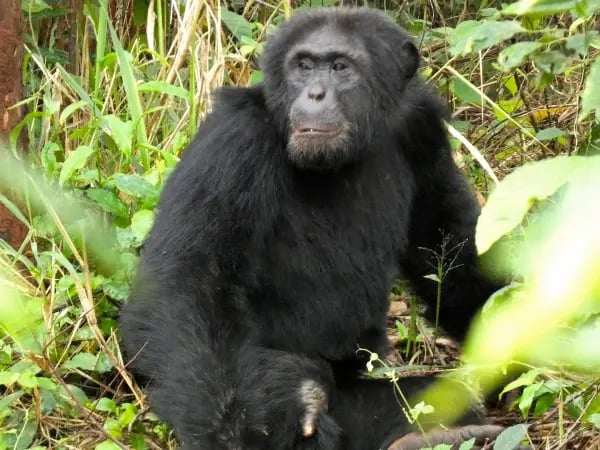 Kihomboza
.webp?width=600&height=450&name=bccp_individual%20chimp%20page%20-%20kiraira-kasunga_the%20kiraira%E2%80%93kasunga%20chimpanzees%20(1).webp) Kiraira-Kasunga
Kiraira-Kasunga
 Blogs & Updates
 Videos
 Publications
Ape vs. Chimpanzee: Is a Chimp an Ape?
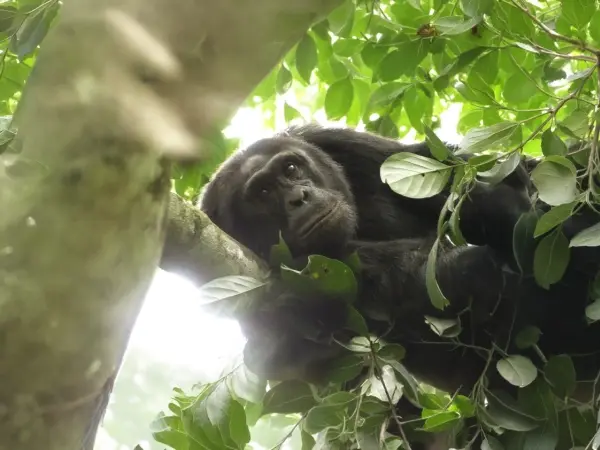
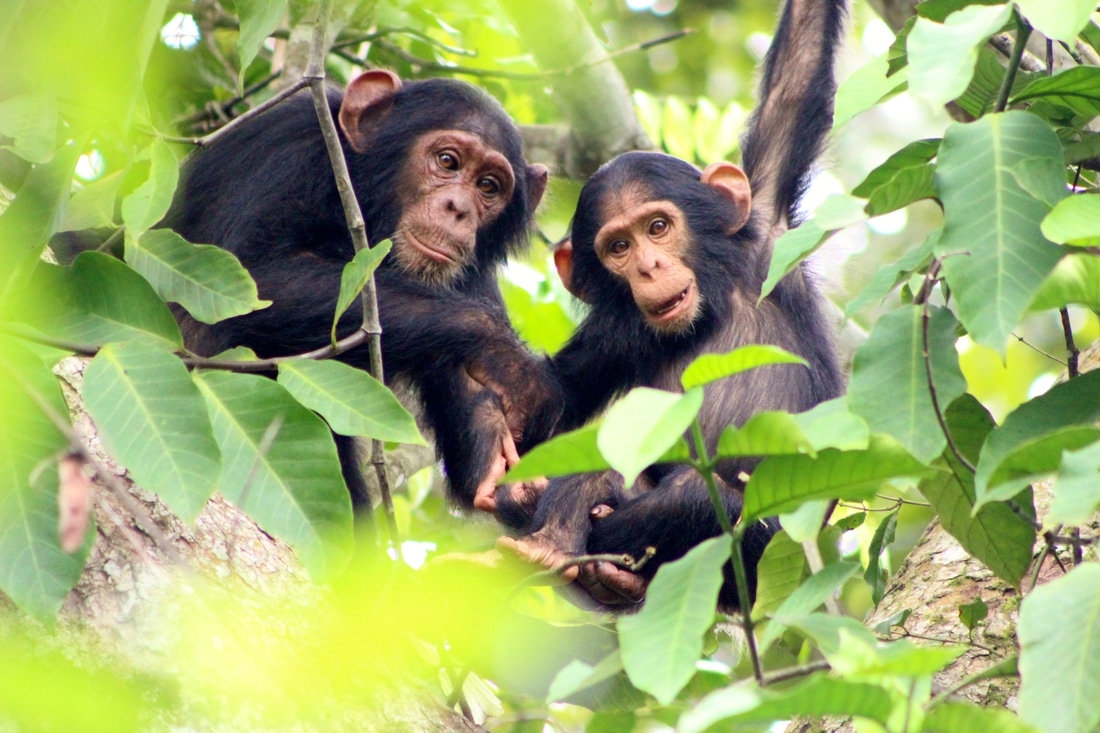
Yes — a chimpanzee is an ape. It's a simple question with a simple answer, but the confusion around it is common enough to be worth unpacking properly, since "ape" is a specific biological category, not just a casual synonym for any primate.
What actually makes something an "ape"
Apes are a specific group of tailless primates divided into two families: the lesser apes (gibbons) and the great apes (orangutans, gorillas, chimpanzees, bonobos, and humans). What unites them is a shared set of traits — no tail, larger brains relative to body size than monkeys, broader chests, and shoulder joints built for hanging and swinging rather than running on all fours along branches.
Where chimpanzees fit
Chimpanzees are one of the four non-human great ape genera, alongside gorillas, orangutans, and their closest relative of all, the bonobo. Chimpanzees and bonobos are so closely related that they were once considered the same species, and together they are humanity's nearest living relatives, sharing around 98–99% of our DNA.
The five living great apes
There are five great ape species groups alive today: humans, chimpanzees, bonobos, gorillas, and orangutans (with gorillas and orangutans each including multiple recognised subspecies). All are large-bodied, intelligent, tailless primates — and, with the exception of humans, all are classified as Endangered or Critically Endangered.
Why people still get it wrong
Popular culture is the main culprit — countless films, adverts, and casual conversations refer to any primate character as a "monkey," blurring a distinction that's actually quite clear once you know the traits to look for. Add to that the fact that both apes and monkeys are broadly similar in appearance to an untrained eye, and the mix-up becomes an easy, understandable habit rather than a sign of ignorance.
A quick way to remember it
If it has no tail, it's very likely an ape. Chimpanzees, gorillas, orangutans, bonobos, gibbons, and humans all lack a tail entirely. Nearly every monkey species, by contrast, has one — often a long one used for balance or, in South and Central American species, active gripping.
Why this distinction has real conservation weight
Getting the ape/monkey distinction right isn't just a trivia point — it shapes how effectively the public understands what's actually at risk. Wild chimpanzee populations, including the community the Bulindi Chimpanzee & Community Project monitors in Western Uganda, face a specific set of pressures tied to their particular ecology and behaviour: shrinking, fragmented forest habitat, competition with farmland, and the physical risks of navigating roads and open ground between remaining forest patches. A vague, inaccurate "monkey" label obscures exactly what makes chimpanzee conservation distinct — and what specific interventions, like forest enrichment and corridor replanting, are actually needed to address it.
The bottom line
Chimpanzees are unambiguously apes — genetically, physically, and behaviourally. They belong in the same broad category as gorillas, orangutans, bonobos, and humans, not with monkeys. It's a small correction, but an important one for understanding exactly what — and who — conservation organisations like BCCP are working to protect.
Quick FAQ
Are humans technically apes? Yes — under strict biological classification, humans are members of the great ape family alongside chimpanzees, bonobos, gorillas, and orangutans, even though the term is rarely used this way in everyday speech.
What's the difference between a "great ape" and a "lesser ape"? Lesser apes refers specifically to gibbons, which are smaller-bodied and structured differently socially — typically monogamous pairs rather than the larger, more complex communities seen in great apes like chimpanzees.
Is a bonobo the same as a chimpanzee? No — bonobos are a distinct, closely related species with their own name, sometimes mistakenly called a chimpanzee subspecies, though they're recognised as a separate species in their own right.
A category worth remembering
Once you know that "ape" specifically means humans, chimpanzees, bonobos, gorillas, and orangutans — no tail, larger brain, tool use — it becomes much easier to read wildlife news accurately and understand exactly which of the five great ape groups a given conservation story or appeal is actually about. This classification isn't just an academic technicality either — it directly shapes which international conservation agreements, trade regulations, and legal protections apply to a given species, making accurate categorisation something with genuine practical consequences beyond simple scientific tidiness. Wildlife documentaries have played a meaningful role in improving public understanding here over the past few decades, increasingly taking care to use precise ape terminology rather than defaulting to the looser, more casual language that dominated earlier nature programming.
This kind of foundational clarity also makes it considerably easier for supporters to follow ongoing conservation reporting accurately, since they can immediately place a given update within the correct species and family context.
Related Reading
- Chimpanzee vs. Human Strength: Fact-Checked
- The Great Apes: A Complete List
- Are Chimpanzees Apes or Monkeys?
- 50 Fascinating Chimpanzee Facts
Meet the Real Chimps of Bulindi
BCCP monitors six wild chimpanzee communities in the Budongo–Bugoma Corridor, each with its own named members and story. Meet the chimps we protect and follow their lives.
Support the Bulindi Chimpanzee & Community Project to help protect this remarkable species in Western Uganda. Even seasoned wildlife guides occasionally slip into casual, imprecise language when speaking informally, underscoring just how deeply ingrained the habit is even among people who understand the correct terminology perfectly well.