

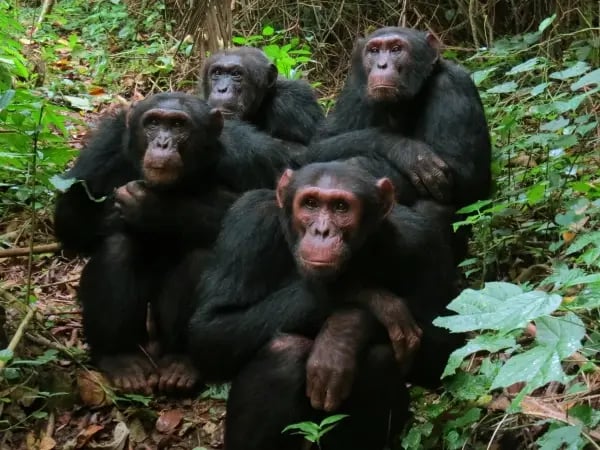
 Bulindi
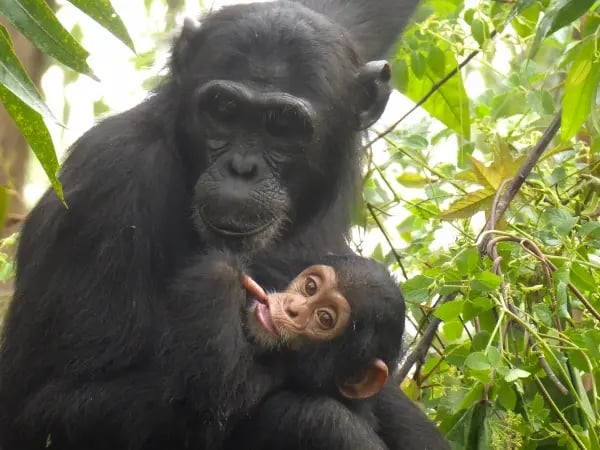 Wagaisa
.webp?width=600&height=450&name=bccp_individual%20chimp%20page%20-%20mairirwe_the%20mairirwe%20chimpanzees%20(1).webp) Mairirwe
Mairirwe
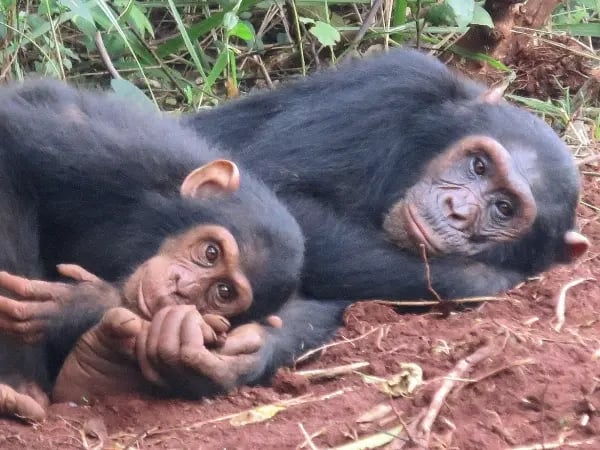 Kyabasengya
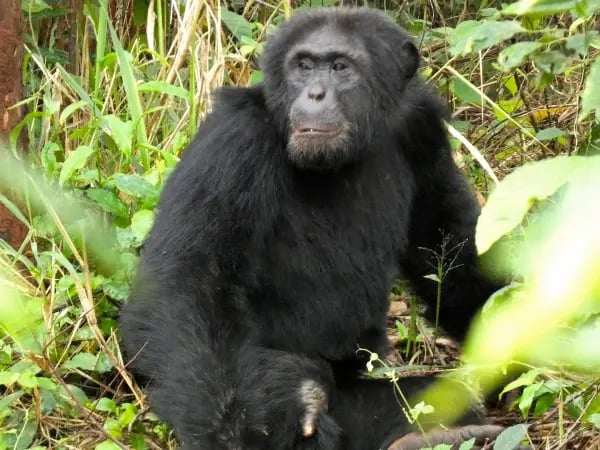 Kihomboza
.webp?width=600&height=450&name=bccp_individual%20chimp%20page%20-%20kiraira-kasunga_the%20kiraira%E2%80%93kasunga%20chimpanzees%20(1).webp) Kiraira-Kasunga
Kiraira-Kasunga
 Blogs & Updates
 Videos
 Publications
50 Fascinating Chimpanzee Facts
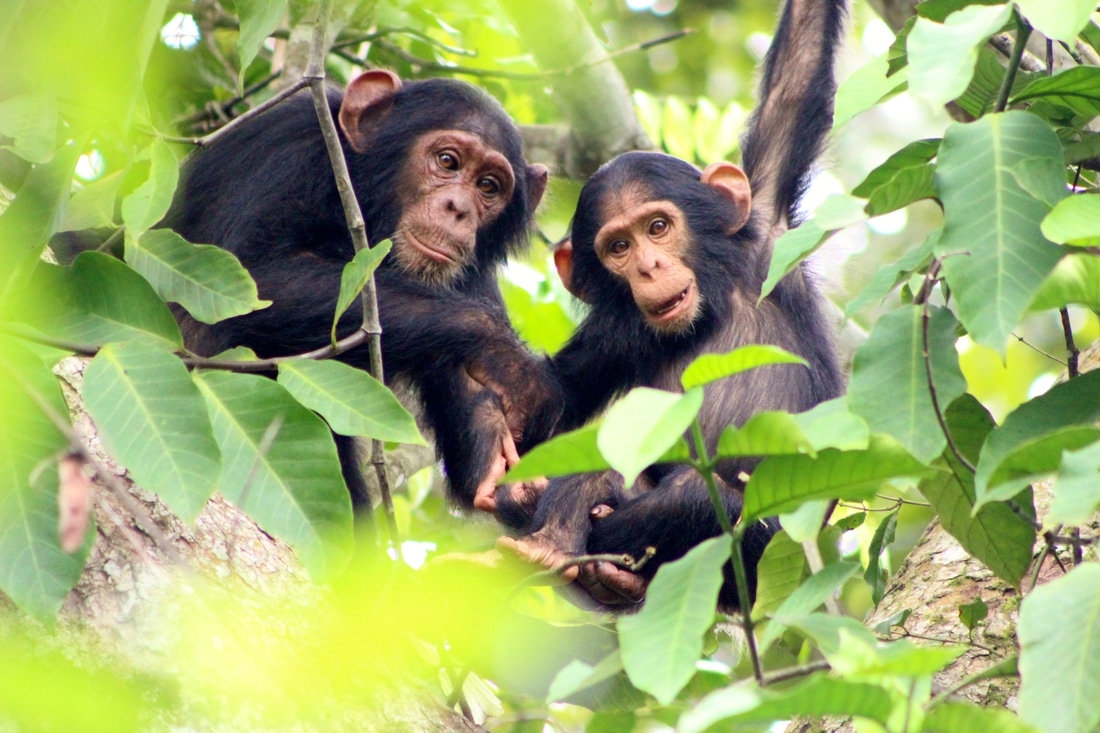
Chimpanzees are endlessly studied and endlessly surprising. Here are 50 facts that show just how close — and how remarkable — our nearest living relatives really are.
Biology and genetics
- Chimpanzees share around 98–99% of their DNA with humans, making them our closest living relatives.
- Adult male chimpanzees typically weigh 40–70kg; females are somewhat smaller.
- Chimpanzees can live 33–45 years in the wild, and into their 50s or 60s in captivity.
- Chimpanzees have opposable thumbs and big toes, giving them dexterous hands and feet.
- A chimpanzee's arm span is longer than its height, an adaptation for swinging through trees.
- Chimpanzees are covered in coarse black hair, but like humans, they can go visibly grey with age.
- Wild chimpanzees are found across more than 20 countries in West and Central Africa.
- Chimpanzees and bonobos are the two species in the genus Pan — chimpanzees' closest relative besides humans.
Intelligence and tool use
- Chimpanzees use more tools, in more contexts, than any animal other than humans.
- They fashion "fishing sticks" from twigs to extract termites and ants from mounds.
- Some populations use stone or wooden hammers and anvils to crack open hard-shelled nuts.
- Chimpanzees have been observed using leaves as sponges to soak up water for drinking.
- They can recognise themselves in a mirror — a rare sign of self-awareness in the animal kingdom.
- Chimpanzees can learn and use symbols and simple sign language in controlled studies.
- Young chimpanzees learn tool use by watching and copying adults — true cultural transmission.
- Different chimpanzee communities have distinct "tool kits" and behaviours passed down locally, much like human regional traditions.
Social life
- Chimpanzees live in fission-fusion societies — communities split into smaller, shifting subgroups throughout the day.
- A single chimpanzee community can include 20 to over 100 individuals.
- Chimpanzee society is generally male-dominated, with males competing for rank within the group.
- Grooming is central to chimpanzee social life, reinforcing bonds and defusing tension.
- Chimpanzees form long-term friendships and alliances that can last for years.
- Mothers carry and nurse infants for several years, and the bond between them can last a lifetime.
- Chimpanzees have been observed comforting group members in distress with hugs and touch.
- Adult males patrol the boundaries of their territory and can be highly protective of it.
Communication
- Chimpanzees combine vocal calls, facial expressions, gestures, and posture to communicate.
- The "pant-hoot" call can travel over a kilometre through dense forest.
- Chimpanzees have distinct calls for excitement, alarm, and greeting.
- Facial expressions in chimpanzees are strikingly similar to human ones, including a "play face" resembling a laugh.
- Chimpanzees can understand pointing and gaze direction from humans and other chimps.
Behaviour and diet
- Chimpanzees are omnivores — the bulk of their diet is fruit, but they also eat leaves, seeds, insects, and occasionally meat.
- Chimpanzees have been documented hunting cooperatively, including organised group hunts for smaller monkeys.
- They build a fresh sleeping nest of bent branches and leaves nearly every night.
- Chimpanzees are capable of forward planning, sometimes carrying tools to a location they intend to use them later.
- Some populations have been observed self-medicating by eating specific plants that appear to combat parasites.
Uganda and Bulindi
- Uganda is home to several important wild chimpanzee populations, including in Western Uganda's forest fragments.
- The Bulindi chimpanzee community survives in a patchwork of remnant forest surrounded by farmland and villages.
- A multi-year study of the Bulindi chimps recorded how they cross a busy road running through their territory, revealing specific behavioural strategies to reduce collision risk.
- The Bulindi Chimpanzee & Community Project monitors this community daily to understand how the chimps adapt to a fast-changing landscape.
- Forest corridor replanting along rivers is helping reconnect fragments of Bulindi's forest so chimpanzees can move more safely between them.
Threats and conservation
- Chimpanzees are classified as Endangered by the IUCN.
- Habitat loss from agricultural expansion is the single biggest threat to wild chimpanzees.
- Human-chimpanzee conflict rises sharply as forest shrinks and chimps and farmers compete for the same land.
- Chimpanzees are vulnerable to human respiratory diseases, which can spread easily through close contact.
- Snaring intended for other bushmeat species frequently injures or kills chimpanzees as bycatch.
- Reforestation and forest-enrichment programmes can measurably reduce crop-raiding and conflict over time.
- Providing local communities with alternative income sources — like education sponsorship and small livestock projects — reduces pressure on the remaining forest.
- Energy-saving stoves, distributed to households near chimpanzee habitat, cut firewood demand and forest degradation.
- Long-term daily monitoring of chimpanzee communities is one of the most effective early-warning tools conservationists have.
- Every wild chimpanzee population that survives today does so because habitat, community livelihoods, and daily protection efforts are all addressed together — not separately.
- Chimpanzees can catch a yawn from another chimpanzee, a form of contagious behaviour linked in other species to empathy.
- Wild chimpanzee density and behaviour can vary hugely between sites just a few hundred kilometres apart, depending on habitat and human pressure.
Related Reading
- Do Chimpanzees Use Tools?
- How Do Chimpanzees Communicate?
- Inside a Chimpanzee Community: Social Structure Explained
- Why Are Chimpanzees Endangered?
Meet the Real Chimps of Bulindi
BCCP monitors six wild chimpanzee communities in the Budongo–Bugoma Corridor, each with its own named members and story. Meet the chimps we protect and follow their lives.
Want to help protect one of these populations directly? Support the Bulindi Chimpanzee & Community Project and its work in Western Uganda.