

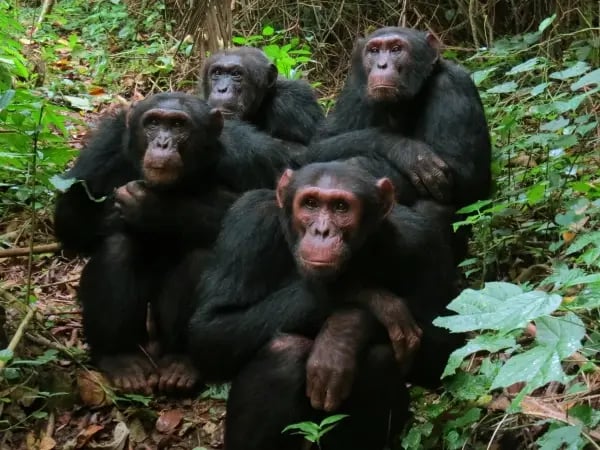
 Bulindi
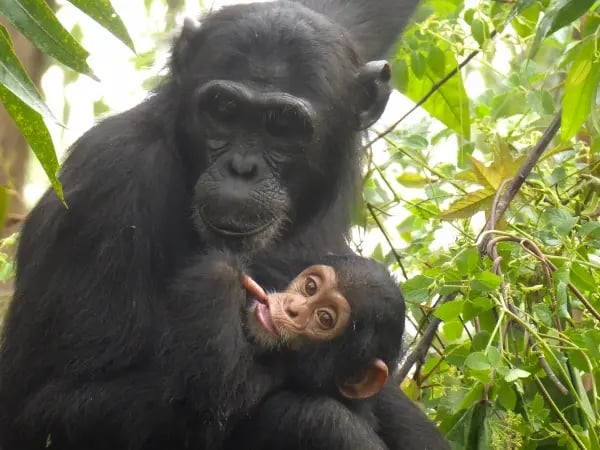 Wagaisa
.webp?width=600&height=450&name=bccp_individual%20chimp%20page%20-%20mairirwe_the%20mairirwe%20chimpanzees%20(1).webp) Mairirwe
Mairirwe
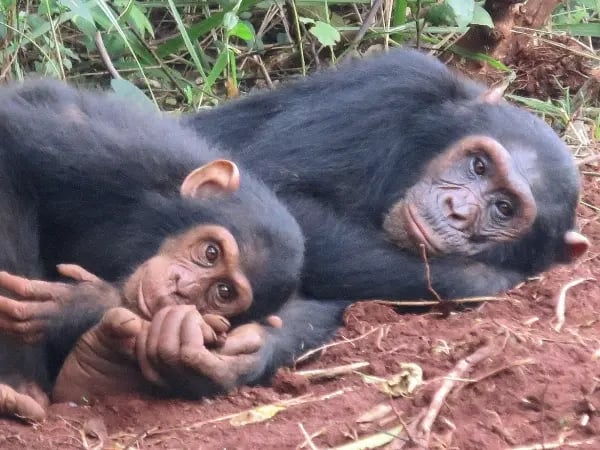 Kyabasengya
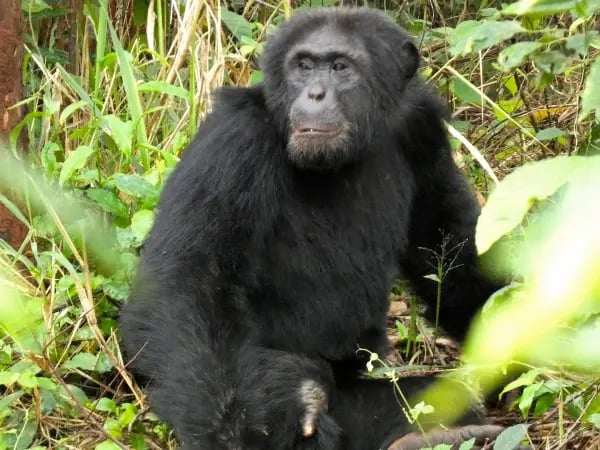 Kihomboza
.webp?width=600&height=450&name=bccp_individual%20chimp%20page%20-%20kiraira-kasunga_the%20kiraira%E2%80%93kasunga%20chimpanzees%20(1).webp) Kiraira-Kasunga
Kiraira-Kasunga
 Blogs & Updates
 Videos
 Publications
Do Chimpanzees Use Tools?
Yes — chimpanzees are among the most prolific tool-users in the animal kingdom, second only to humans in the range and complexity of tools they make and use in the wild. Tool use in chimpanzees isn't a rare curiosity; it's a well-documented, widespread behaviour that varies by population and is passed down through generations by observation and practice.
Termite and ant fishing
One of the most famous examples, first documented by Jane Goodall in the 1960s, is "fishing" for termites or ants. A chimpanzee selects a thin, flexible stick or stem, strips off the leaves, and inserts it carefully into a termite mound. When the insects bite onto the stick, the chimpanzee withdraws it and eats them off, sometimes repeating the process for extended feeding sessions.
Nut cracking with stone tools
In parts of West Africa, chimpanzees use stones or hard pieces of wood as hammers and anvils to crack open tough nut shells — a technique that requires real skill and is typically learned over years of watching adults and practising as juveniles. Young chimpanzees often go through a long, clumsy learning period before mastering the technique, much like a child learning a manual skill.
Sponges, wedges and improvised tools
Chimpanzees have been observed chewing leaves into an absorbent wad and using it as a sponge to soak up water from tree hollows they couldn't otherwise reach. Others use sticks as levers or wedges, and some populations use leaves to wipe themselves clean — genuinely tool-assisted hygiene behaviour.
Hunting tools
In some populations, chimpanzees have been recorded sharpening sticks with their teeth to create crude spears, used to jab at smaller prey such as bushbabies hiding in tree hollows — one of the clearest examples of a wild non-human animal manufacturing a weapon for a specific purpose.
Tool use is learned, not instinctive
Perhaps the most striking part of chimpanzee tool use is that it's cultural, not hard-wired. Different chimpanzee communities, even living under similar environmental conditions, have distinct "tool kits" — some populations crack nuts with stones, others in the same forest type never do. Young chimpanzees learn these specific local techniques by carefully watching adults, often over years, and passing the skill on to the next generation. That is genuine social learning, not instinct.
How scientists study wild tool use
Documenting tool use in the wild is painstaking work. Researchers spend years habituating a chimpanzee community to human observers before the chimps behave naturally around people, then record behaviour systematically — sometimes with camera traps at termite mounds or nut-cracking sites — to build up a reliable picture of which techniques a specific community uses, how often, and who is using them. This is exactly the kind of sustained, patient fieldwork that long-term projects like Bulindi's daily chimpanzee monitoring are built on: understanding a specific community's behaviour requires watching it consistently over years, not visiting occasionally.
Are humans really the only tool-makers?
For a long time, tool-making was considered one of the defining traits separating humans from other animals. Jane Goodall's original observations of wild chimpanzee tool use in the 1960s directly overturned that assumption, and decades of subsequent research have shown chimpanzees don't just use objects opportunistically — they modify raw materials with clear intent, teach techniques to their young, and maintain distinct local traditions. It remains one of the strongest pieces of evidence for the deep behavioural and cognitive continuity between humans and our closest living relatives.
Why this matters for conservation
Tool-using traditions are tied directly to a chimpanzee community's specific home range and the resources available there. When forest is fragmented or cleared — as has happened extensively around Bulindi in Western Uganda — a community can lose access to the very trees, insects, or nut species its particular tool traditions depend on. Protecting habitat isn't only about protecting individual chimpanzees; it's about protecting the conditions that let unique, learned cultural behaviours survive from one generation to the next.
This is part of why the Bulindi Chimpanzee & Community Project places so much emphasis on daily monitoring and forest enrichment — understanding exactly how a specific chimpanzee community uses its habitat, and working to keep that habitat intact, rather than applying a generic conservation template.
A few more examples worth knowing
Beyond termite fishing and nut cracking, some chimpanzee populations use large leaves as makeshift umbrellas or seat cushions, break off branches to use as clubs during aggressive displays, and modify sticks into probes to extract honey from beehives — often tolerating painful stings to reach a high-value food source. Each of these behaviours has been documented repeatedly at specific field sites, reinforcing that they're genuine, community-specific traditions rather than one-off curiosities. These traditions are rarely written down anywhere except in field researchers' notebooks, which is exactly why sustained observation matters so much for understanding and protecting them.
Related Reading
- How Do Chimpanzees Communicate?
- Inside a Chimpanzee Community: Social Structure Explained
- What Do Chimpanzees Eat? A Complete Guide
- Why Are Chimpanzees Endangered?
Meet the Real Chimps of Bulindi
BCCP monitors six wild chimpanzee communities in the Budongo–Bugoma Corridor, each with its own named members and story. Meet the chimps we protect and follow their lives.
Curious to learn more or help protect a wild chimpanzee community's habitat? Support the Bulindi Chimpanzee & Community Project.