
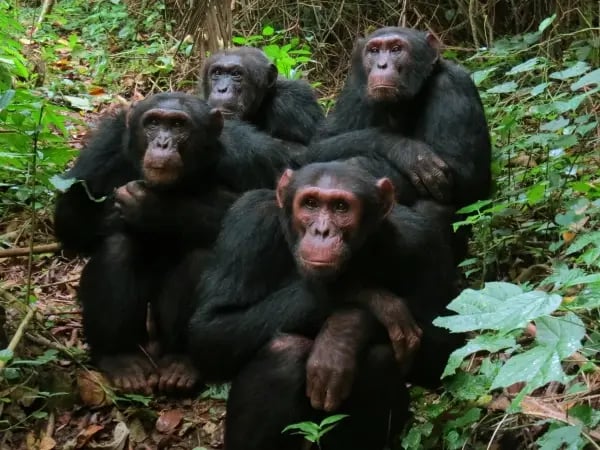
 Bulindi
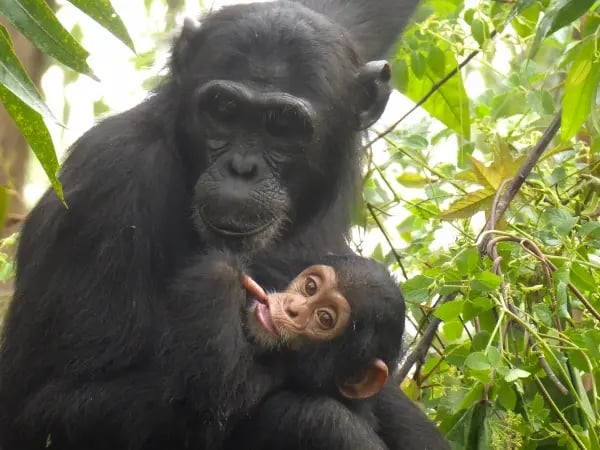 Wagaisa
.webp?width=600&height=450&name=bccp_individual%20chimp%20page%20-%20mairirwe_the%20mairirwe%20chimpanzees%20(1).webp) Mairirwe
Mairirwe
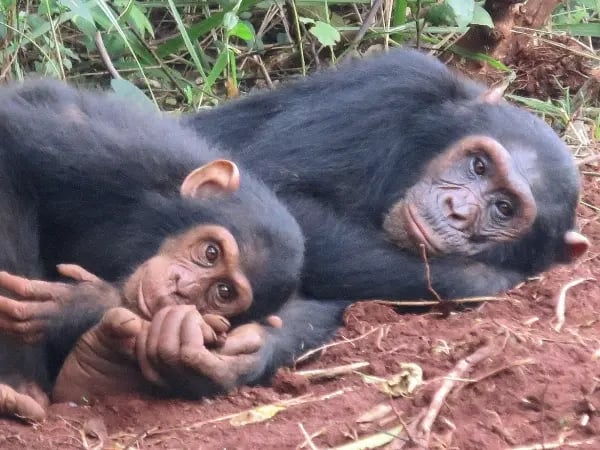 Kyabasengya
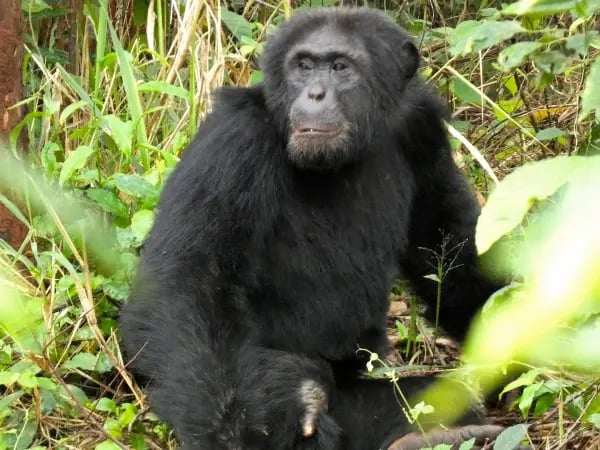 Kihomboza
.webp?width=600&height=450&name=bccp_individual%20chimp%20page%20-%20kiraira-kasunga_the%20kiraira%E2%80%93kasunga%20chimpanzees%20(1).webp) Kiraira-Kasunga
Kiraira-Kasunga
 Blogs & Updates
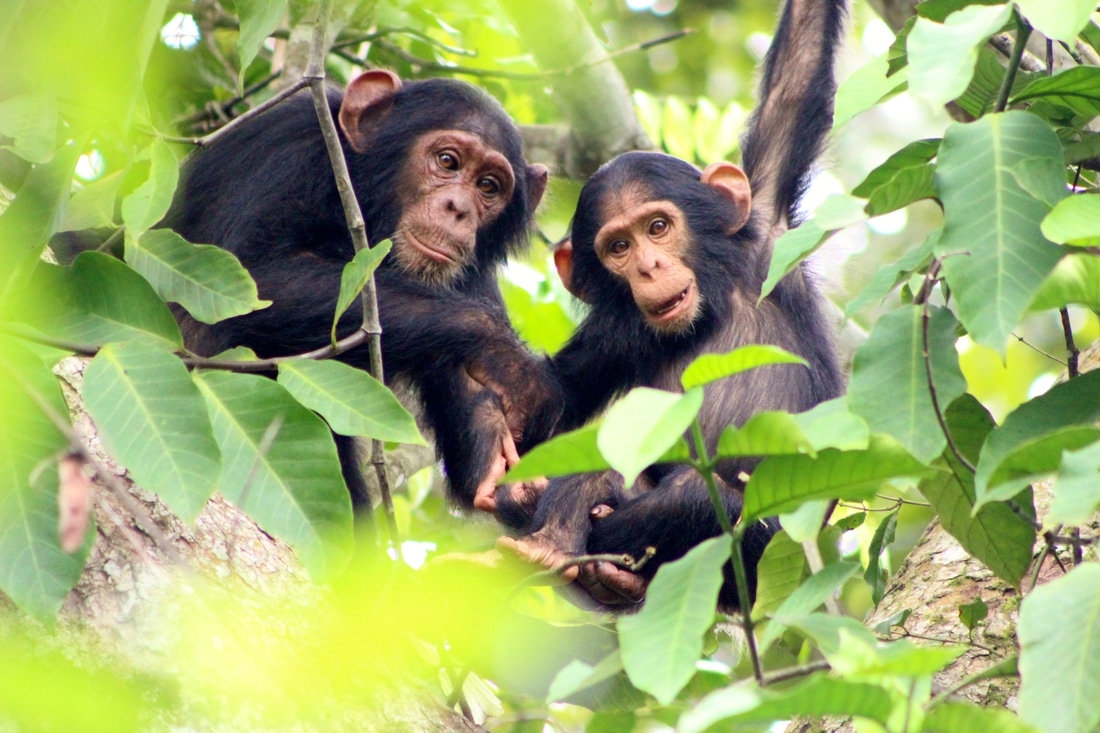
 Videos
 Publications
How Do Chimpanzees Communicate?
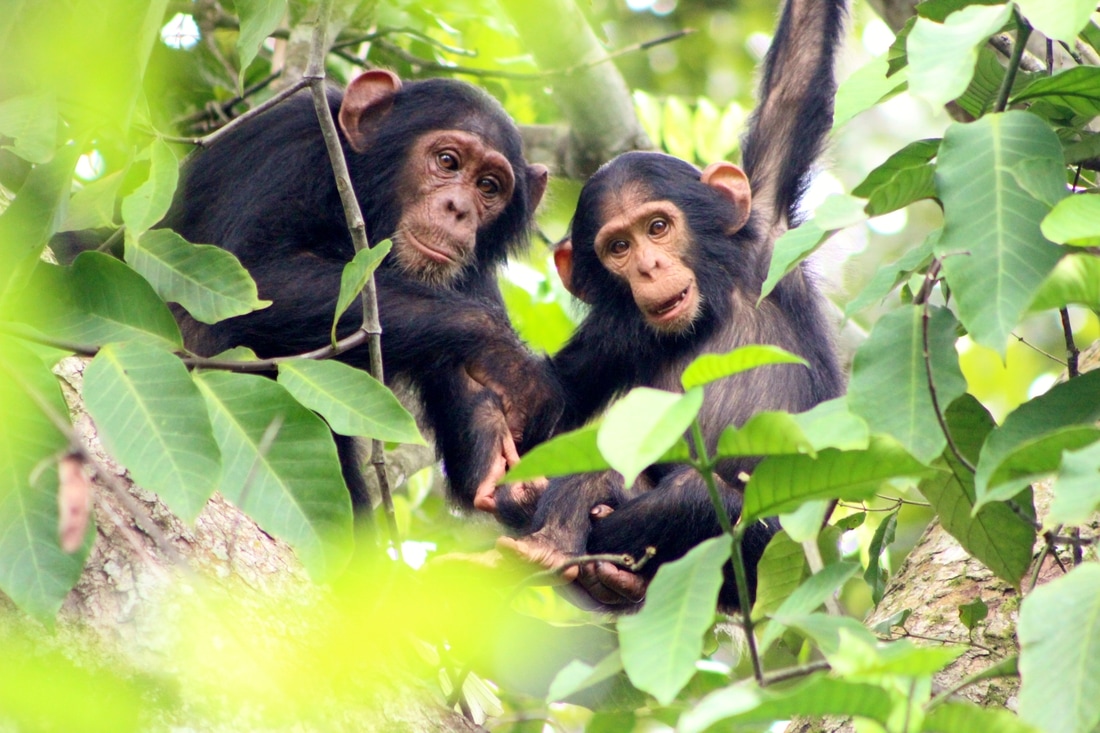
Chimpanzees communicate through a layered combination of vocal calls, facial expressions, gestures, and body posture — a system flexible enough to convey excitement, alarm, reassurance, rank, and intent within a fast-moving social group. It isn't language in the human sense, but it's one of the richest communication systems in the animal kingdom.
Vocal calls
Chimpanzees have a varied vocal repertoire, each call tied to a specific context:
- Pant-hoots — a loud, rising-and-falling call used to announce location, excitement, or arrival at a good food source. It can carry more than a kilometre through dense forest, letting scattered subgroups stay in contact.
- Screams — signal distress, fear, or conflict, often triggering support from nearby allies.
- Pant-grunts — a submissive greeting directed at higher-ranking individuals, reinforcing the group's social hierarchy without physical confrontation.
- Barks and waa-barks — used in alarm or aggressive contexts, warning others of a threat or signalling readiness to confront one.
Facial expressions
Chimpanzee faces are remarkably expressive, and several expressions map closely onto human equivalents. The "play face" — a relaxed, open mouth with lower teeth showing — closely resembles a human laugh and appears during play and tickling. A "fear grin," baring the teeth with lips pulled back, signals submission or anxiety rather than aggression, the opposite of how the expression might first appear to a human observer.
Gestures and body language
Chimpanzees use dozens of distinct gestures — reaching out a hand to request food or support, drumming on tree buttresses to signal location or mood over long distances, embracing to reassure a distressed group member after conflict, and grooming, which serves both a practical hygiene function and a deep social bonding one. Posture matters too: a hunched, small stance signals submission, while standing tall with hair bristling signals dominance or threat.
What chimpanzees understand from others
Chimpanzees don't just produce signals — they interpret them, including from humans. They can follow a human's pointing gesture or gaze direction to locate hidden food, understand certain human vocal cues, and in structured studies, learn to use symbols or simple sign language to request items or convey basic wants. This receptive flexibility is part of what makes chimpanzees so responsive to skilled human caregivers and researchers who work closely with them.
Do chimpanzees have "language"?
Strictly speaking, no — chimpanzee communication lacks the open-ended grammar and infinite combinability that define human language. But the line is blurrier than it once seemed. Chimpanzees combine gestures and vocalisations in context-dependent ways, adjust their signals depending on whether an audience is present, and in captive studies have learned to use symbol systems or sign language to request specific items, showing a level of referential communication once thought unique to humans. Most researchers now describe chimpanzee communication as a rich, flexible system that shares deep roots with human language rather than being entirely separate from it.
Why this matters for field conservation
Understanding chimpanzee communication isn't just academically interesting — it's a practical tool for conservation teams working alongside wild communities. Recognising alarm calls, aggressive displays, and subtle stress signals lets researchers track a community's wellbeing and social dynamics without needing to interfere. At Bulindi, in Western Uganda, the project team's daily monitoring of the local chimpanzee community depends heavily on reading exactly these signals — understanding how the group is responding, day to day, to a changing, human-shared landscape, including the specific behavioural adjustments individuals have developed for navigating the road that cuts through their territory.
That close, ongoing observation is only possible because of sustained, funded fieldwork — the kind that a small conservation project depends on donor support to maintain.
What decades of research have taught us
Long-term study sites, some running continuously since the 1960s, have shown that chimpanzee communication isn't fixed or purely instinctive — specific calls, gestures, and even grooming customs can vary meaningfully between neighbouring communities, suggesting a genuine social and cultural dimension layered on top of biological instinct. This kind of finding only emerges from sustained observation over many years; a single visit or short study could never reveal these subtle, community-specific patterns.
Why continuous observation matters
Because so much of chimpanzee communication is contextual — the same gesture can mean different things depending on rank, relationship, and circumstance — reliably interpreting it requires researchers who know individual chimpanzees personally, sometimes over years or decades. That continuity of knowledge is exactly what's at stake when a small field project loses funding: not just data collection, but an irreplaceable, accumulated understanding of one specific community. Losing that continuity doesn't just pause a project temporarily — it can permanently erase years of accumulated, individual-level understanding that can never be fully reconstructed once a field team is forced to scale back. That accumulated knowledge is a genuine conservation asset in its own right, not just a research curiosity.
Related Reading
- Inside a Chimpanzee Community: Social Structure Explained
- What Do Chimpanzees Eat? A Complete Guide
- Chimpanzee IQ: How Scientists Test Ape Intelligence
- Apes vs. Monkeys: What's the Real Difference?
Meet the Real Chimps of Bulindi
BCCP monitors six wild chimpanzee communities in the Budongo–Bugoma Corridor, each with its own named members and story. Meet the chimps we protect and follow their lives.
Support the Bulindi Chimpanzee & Community Project to help keep that work going.