
 Bulindi
 Wagaisa
.webp?width=600&height=450&name=bccp_individual%20chimp%20page%20-%20mairirwe_the%20mairirwe%20chimpanzees%20(1).webp) Mairirwe
Mairirwe
 Kyabasengya
 Kihomboza
.webp?width=600&height=450&name=bccp_individual%20chimp%20page%20-%20kiraira-kasunga_the%20kiraira%E2%80%93kasunga%20chimpanzees%20(1).webp) Kiraira-Kasunga
Kiraira-Kasunga
 Blogs & Updates
 Videos
 Publications
Chimpanzee Culture: Do Chimps Have Traditions?
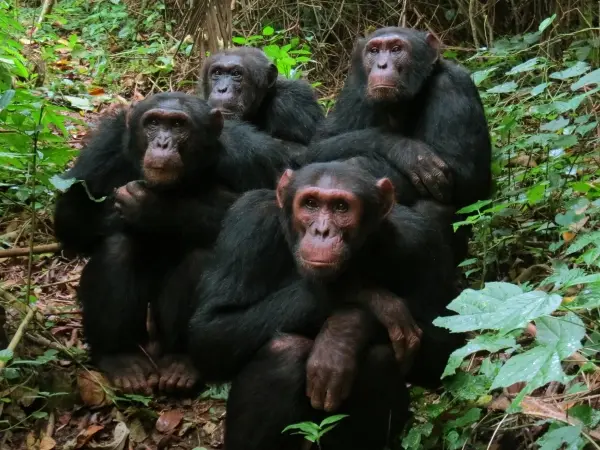
Different wild chimpanzee communities have distinct behaviours — specific tool-use techniques, grooming customs, even particular gestures — that vary from one population to the next despite similar habitats, and are passed down through observation rather than instinct. Researchers increasingly describe this as genuine chimpanzee culture.
What "culture" means in this context
In animal behaviour research, culture refers to behaviours that are socially learned and transmitted between individuals, rather than genetically hardwired or independently discovered by each individual. For a behaviour to count as cultural, it typically needs to vary between populations living in similar environments, and to be learned through observation of others rather than instinct alone.
Tool-use traditions as the clearest example
This is where chimpanzee culture has been most rigorously documented. Some communities crack nuts using stone or wooden hammers and anvils; neighbouring communities in similar forest, with access to the same nut species, never develop this technique at all. Some populations fish for termites with long, thin sticks prepared a specific way; others target ants instead, using a different tool-preparation method entirely. These aren't differences explained by environment alone — they're learned, local traditions.
Social customs beyond tool use
Beyond tools, researchers have documented community-specific grooming handclasp styles, distinct greeting gestures, and even different approaches to courtship behaviour between neighbouring chimpanzee populations. Some of these customs appear to spread through a community the way a habit or fashion might spread through a human social group — one individual adopts it, others copy it, and it becomes a recognisable local pattern.
How young chimpanzees learn cultural behaviours
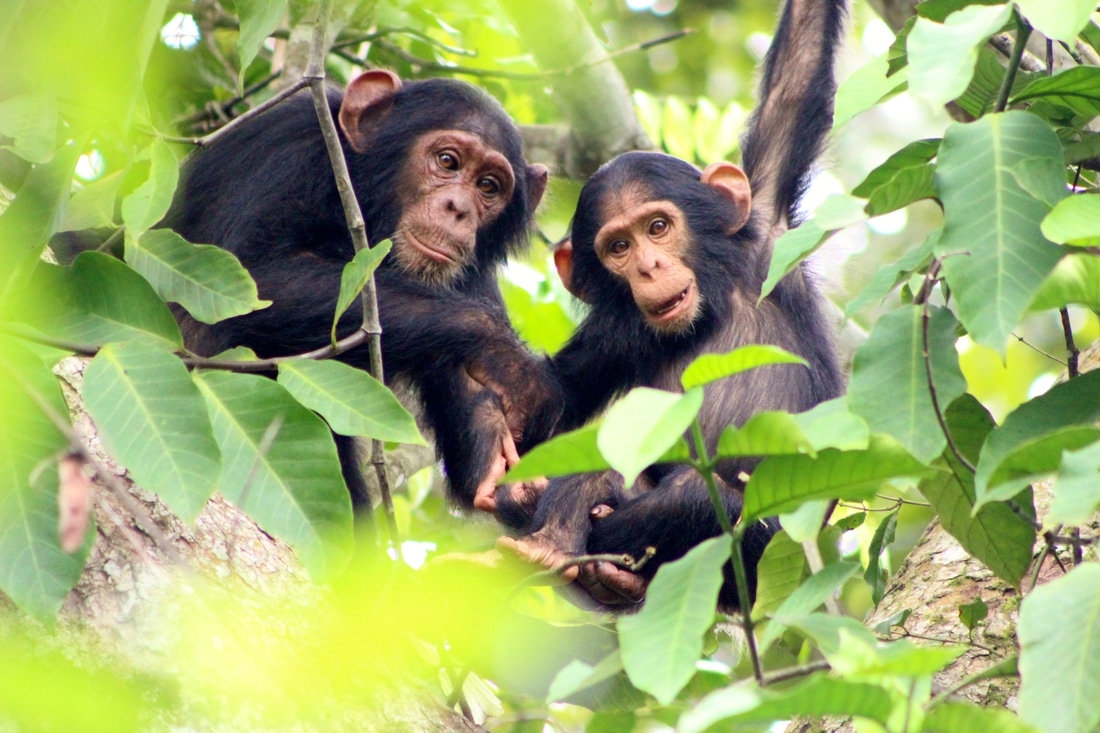
Young chimpanzees learn these local traditions by closely watching and imitating adults, often over years of practice before mastering a specific technique. This extended learning period is a big part of why chimpanzee childhood is so long compared to most other mammals — there's simply a lot of locally specific, culturally transmitted knowledge to absorb.
Why this matters for conservation, not just science
If chimpanzee behaviour is genuinely cultural — learned and transmitted locally, not simply hardwired — then losing a specific wild community doesn't just mean losing individual animals. It means losing a unique, non-repeatable set of local traditions that took generations to develop and can't simply be "restored" by moving in chimpanzees from elsewhere. This raises the conservation stakes of protecting specific communities, not just the species as a whole.
What Bulindi's chimpanzees might teach us
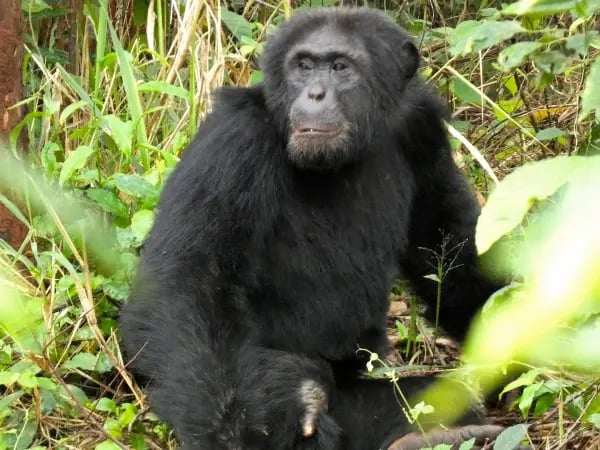
The chimpanzee community the Bulindi Chimpanzee & Community Project monitors in Western Uganda has its own set of locally learned behaviours, including — as documented in a multi-year study — a specific, learned strategy for safely crossing a busy road that cuts through their territory. That's a genuinely modern example of exactly this kind of cultural adaptation: a behaviour developed and passed down within this one specific community in response to a hazard their ancestors never faced.
Why sustained field presence is essential to studying this
Documenting genuine cultural variation requires years of consistent observation of a known community — a single visit or short study could never reveal subtle, locally specific customs built up over generations. This is exactly the kind of insight that depends on long-term, well-funded field projects rather than occasional survey work.
The bigger picture
Chimpanzee culture is a genuinely active, evolving area of research, and every additional well-studied wild community adds to a growing picture of just how behaviourally diverse and locally adaptive this species really is — one more reason protecting specific populations, in specific landscapes, matters as much as protecting the species in the abstract.
Quick FAQ
Do bonobos show cultural variation too? Yes, though bonobo cultural research is less extensive than chimpanzee research, partly because fewer wild bonobo sites have been studied continuously over multiple decades.
Can a chimpanzee community lose a cultural tradition? Yes — if the individuals who know a specific technique die without passing it on, or if the resources the technique depends on disappear, a local tradition can be lost entirely, even if the wider species survives.
Is chimpanzee culture recognised as scientifically legitimate? Yes — it's a well-established area of primatology, backed by decades of comparative behavioural data across many independently studied wild communities. As more wild communities are studied over sufficiently long timeframes, researchers continue to uncover new examples of local cultural variation — a reminder that there is likely still far more chimpanzee culture yet to be documented than has been captured so far.
Some researchers now argue that documenting and preserving these cultural variations should be considered an explicit conservation goal in its own right, alongside the more familiar priorities of protecting habitat and population numbers. Every wild community lost to habitat destruction or poaching takes its own unique cultural record with it — a genuinely irreplaceable loss layered on top of the loss of the individuals themselves.
Related Reading
- Oldest Chimpanzee Ever Recorded
- Chimpanzee Facial Expressions
- Do Chimpanzees Laugh?
- What Is a Primate?
Meet the Real Chimps of Bulindi
BCCP monitors six wild chimpanzee communities in the Budongo–Bugoma Corridor, each with its own named members and story. Meet the chimps we protect and follow their lives.
Support the Bulindi Chimpanzee & Community Project to help protect one community's unique cultural traditions.