

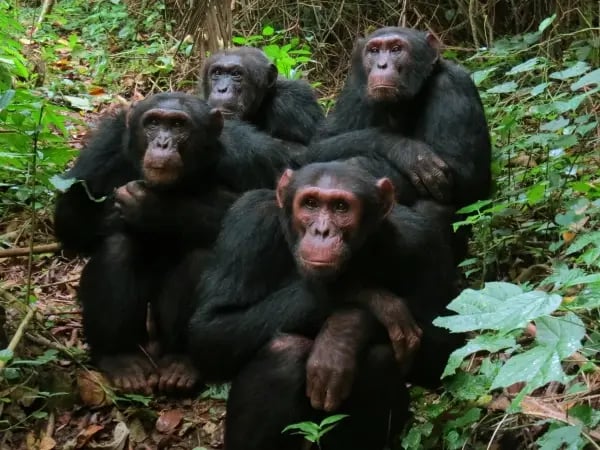
 Bulindi
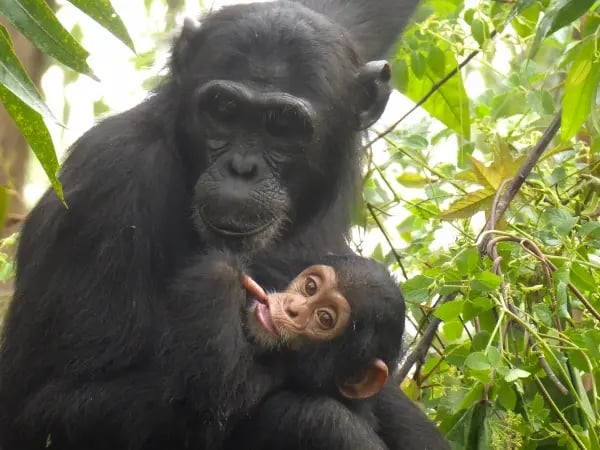 Wagaisa
.webp?width=600&height=450&name=bccp_individual%20chimp%20page%20-%20mairirwe_the%20mairirwe%20chimpanzees%20(1).webp) Mairirwe
Mairirwe
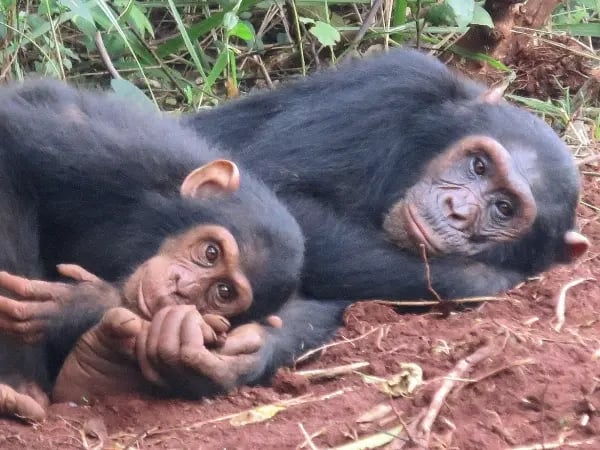 Kyabasengya
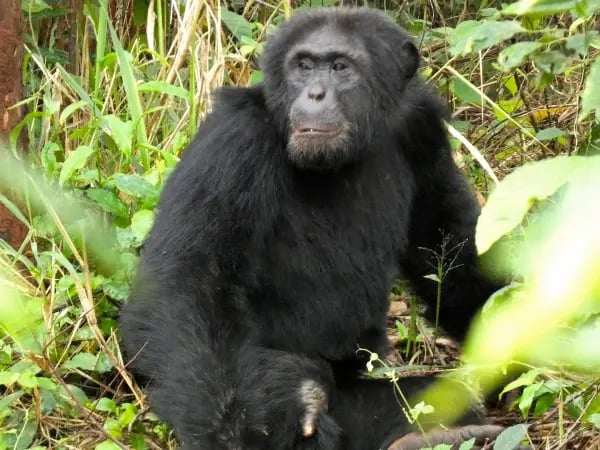 Kihomboza
.webp?width=600&height=450&name=bccp_individual%20chimp%20page%20-%20kiraira-kasunga_the%20kiraira%E2%80%93kasunga%20chimpanzees%20(1).webp) Kiraira-Kasunga
Kiraira-Kasunga
 Blogs & Updates
 Videos
 Publications
Do Chimpanzees Laugh?
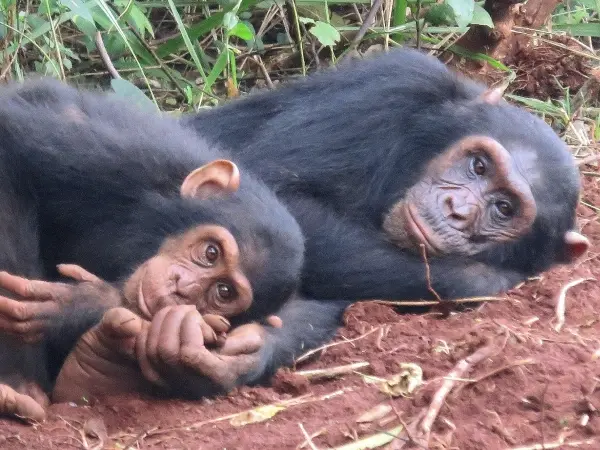
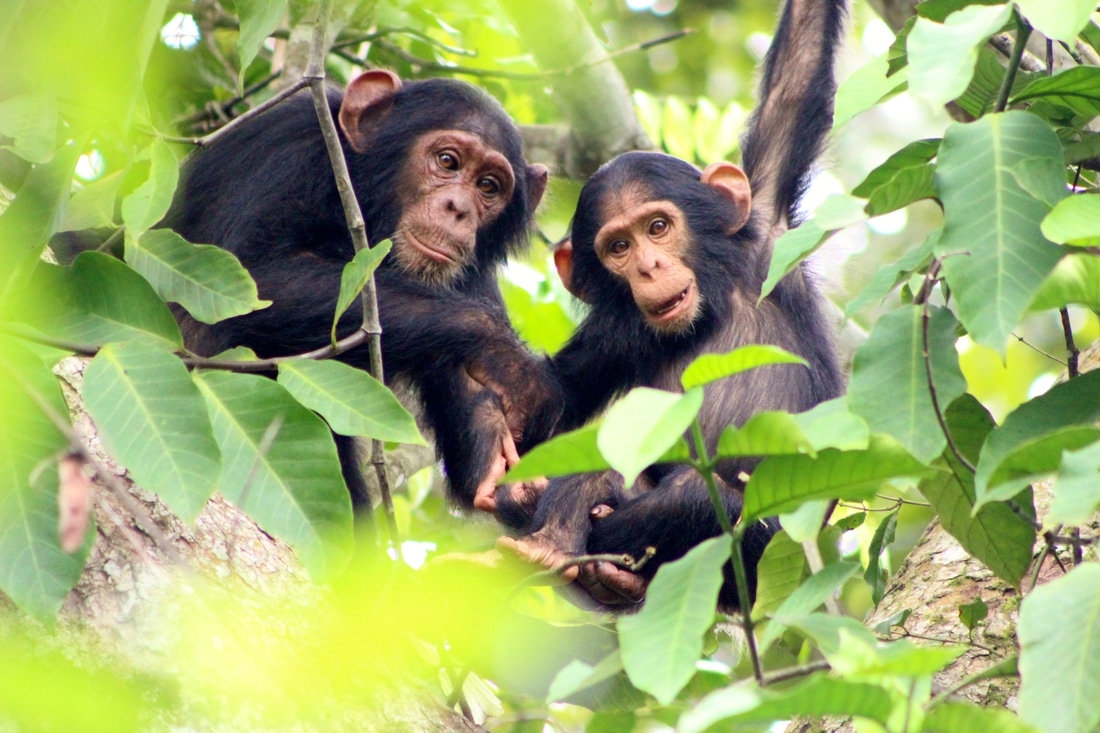
Yes — chimpanzees produce a distinctive, breathy panting sound during play and tickling that researchers widely consider a genuine form of laughter, sharing deep evolutionary roots with human laughter rather than simply resembling it by coincidence.
What chimpanzee laughter actually sounds like
Chimpanzee laughter is a rhythmic, panting vocalisation — audibly different from a human laugh, produced on both the inhale and exhale rather than primarily on the exhale as in humans, but occurring in strikingly similar social contexts: play, tickling, and chasing games, particularly among juveniles.
The research behind this claim
Comparative studies analysing the acoustic structure of laughter-like vocalisations across great apes and humans found that these calls share a common evolutionary origin, with the physical structure of the sounds tracing a recognisable pattern across chimpanzees, gorillas, orangutans, and humans — evidence that laughter isn't a uniquely human invention but an ancient, shared trait modified over millions of years of separate evolution.
Context matters as much as the sound
What convinces researchers this is genuine laughter, not just a coincidentally similar sound, is the context in which it occurs — almost exclusively during play, tickling, and physical games, paired with the relaxed "play face" expression, mirroring exactly the social circumstances that trigger laughter in young children.
Tickling responses specifically
Chimpanzees respond to tickling — particularly on the belly, neck, and underarms, similar ticklish zones to humans — with the same panting laughter sound, and appear to actively seek out and enjoy the interaction, often soliciting more tickling by presenting the ticklish area again once the interaction pauses.
Do other great apes laugh too?
Yes — similar laughter-like vocalisations have been documented in bonobos, gorillas, and orangutans, though with subtle acoustic differences between species reflecting their different evolutionary paths since diverging from a shared ancestor. Bonobos, in particular, show frequent playful vocalisation consistent with this pattern, fitting their generally more relaxed social structure.
What this tells us about emotional capacity
The presence of laughter-like behaviour across great apes supports a broader scientific view that positive emotional states — not just distress or fear, which are easier to document — are a genuine, shared feature of great ape psychology, not a uniquely human trait layered on top of otherwise simple animal instinct.
Why this matters for how people think about chimpanzees
Recognising that chimpanzees genuinely experience something like joy and playfulness, expressed in a form recognisably related to human laughter, reshapes how their welfare and conservation get discussed. It's harder to view a species as simply "wildlife" once its capacity for something as relatable as laughter during play is well documented by serious scientific research.
Observing this in a wild community
Field researchers monitoring wild chimpanzee communities, including the one the Bulindi Chimpanzee & Community Project observes daily in Western Uganda, regularly document play behaviour and its accompanying vocalisations among juveniles as part of understanding the community's overall social health — a thriving, socially healthy community typically shows frequent, relaxed play, while a community under significant stress may show it far less often.
The bottom line
Chimpanzee laughter isn't just an appealing anecdote — it's a genuinely studied, evolutionarily rooted behaviour that connects directly to broader questions about emotion, wellbeing, and the deep shared history between humans and our closest living relatives.
Quick FAQ
Do chimpanzees laugh at things other than tickling? Play and chasing games are the main documented triggers, though researchers continue to study whether other contexts might also reliably produce this vocalisation.
Is chimpanzee laughter contagious like human laughter can be? Some evidence suggests laughter-like vocalisations can spread within a play group, similar to contagious laughter in humans, though this remains an active area of study.
Do young chimpanzees laugh more than adults? Yes — play behaviour, and the laughter that accompanies it, is considerably more common among juveniles than adults, mirroring a broadly similar pattern in humans. It's a small, delightful fact with real weight behind it — evidence that the emotional lives of our closest living relatives are considerably richer, and more familiar, than a purely instinct-driven view of wildlife would suggest.
Researchers continue to investigate exactly how widespread and how socially contagious this behaviour is across different wild chimpanzee communities, adding further nuance to an already well-established finding. That alone is worth remembering the next time someone dismisses wildlife conservation as purely a numbers exercise. For a species already recognised as remarkably intelligent, tool-using, and socially sophisticated, this small, playful detail rounds out a fuller, more genuinely relatable picture of what's actually at stake in protecting them. It is a small joy worth protecting alongside everything else. Recognising it changes how the whole species is understood. It is a small, genuine window into a much larger emotional world.
Related Reading
- How Long Do Chimpanzees Live? Lifespan in the Wild vs. Captivity
- 50 Fascinating Chimpanzee Facts
- Do Chimpanzees Use Tools?
- Why Are Chimpanzees Endangered?
Meet the Real Chimps of Bulindi
BCCP monitors six wild chimpanzee communities in the Budongo–Bugoma Corridor, each with its own named members and story. Meet the chimps we protect and follow their lives.
Support the Bulindi Chimpanzee & Community Project to help protect wild chimpanzees and the rich emotional lives they lead.