
 Bulindi
 Wagaisa
.webp?width=600&height=450&name=bccp_individual%20chimp%20page%20-%20mairirwe_the%20mairirwe%20chimpanzees%20(1).webp) Mairirwe
Mairirwe
 Kyabasengya
 Kihomboza
.webp?width=600&height=450&name=bccp_individual%20chimp%20page%20-%20kiraira-kasunga_the%20kiraira%E2%80%93kasunga%20chimpanzees%20(1).webp) Kiraira-Kasunga
Kiraira-Kasunga
 Blogs & Updates
 Videos
 Publications
Chimpanzee vs. Bonobo: What's the Difference?
Chimpanzees and bonobos are so closely related that early primatologists mistook bonobos for a smaller subspecies of chimpanzee well into the 20th century. Both belong to the genus Pan, both share more than 98% of our own DNA, and both are humanity's closest living relatives alongside each other. But spend time with researchers who study either species and you'll quickly hear that they are, in temperament and society, almost opposites.
Physical differences
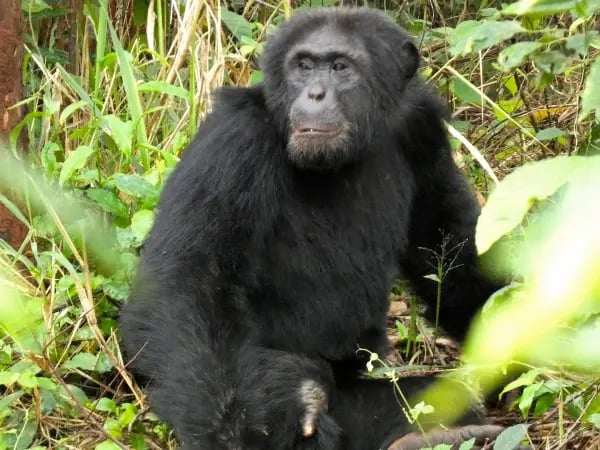
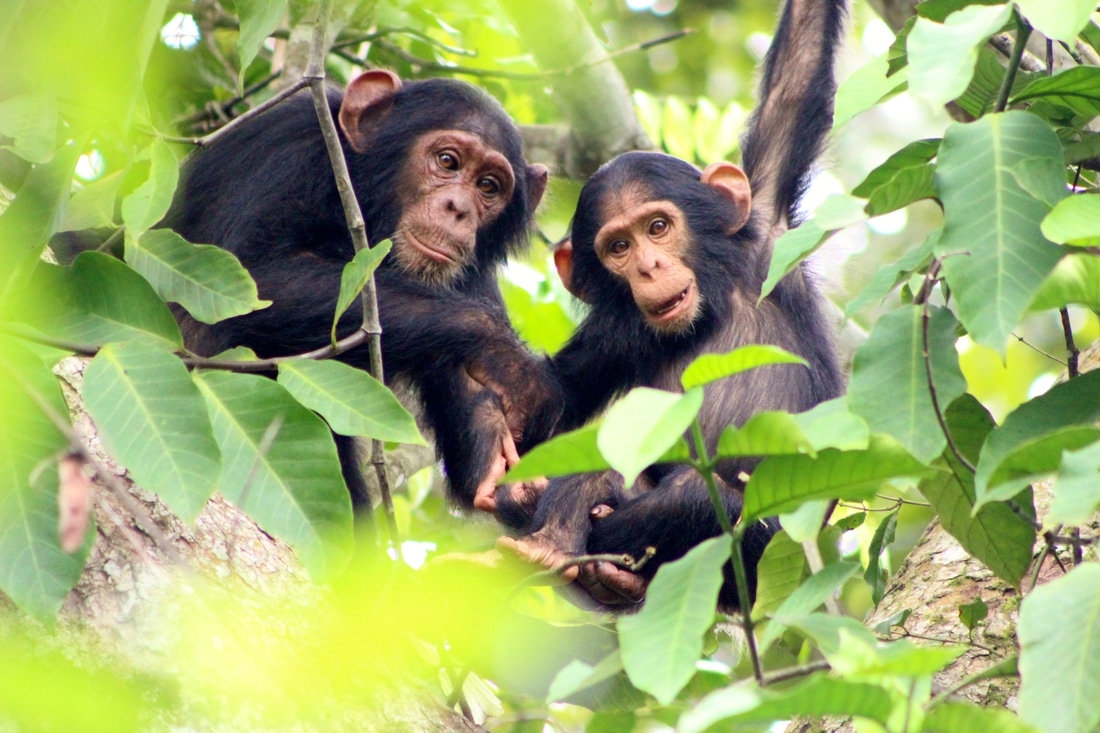
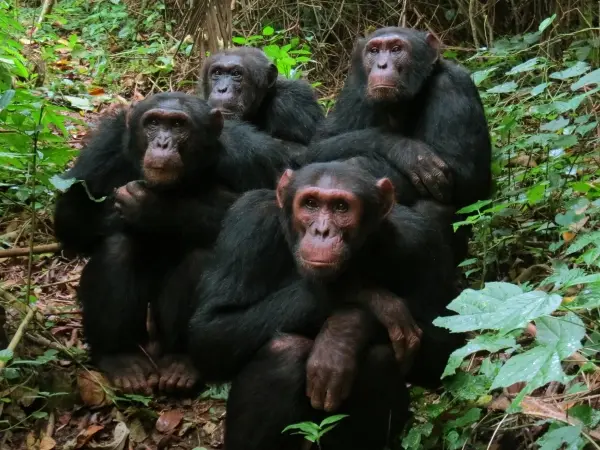
Bonobos are generally slighter than chimpanzees — smaller heads, a more slender build, longer legs relative to their arms, and pink lips that stand out against a black face. Chimpanzees are stockier and more muscular, with broader shoulders built for the rough-and-tumble of a more physically competitive social life. Both walk on their knuckles and are equally at home in trees, but a trained eye can usually tell them apart at a glance.
Where they live
This is one of the clearest distinctions: bonobos exist in the wild only in the Democratic Republic of the Congo, south of the Congo River. Chimpanzees range much more widely, across more than twenty countries in West and Central Africa, from Senegal to Uganda and Tanzania — including the forest fragments of Western Uganda where the Bulindi Chimpanzee & Community Project works. The Congo River itself is believed to be the reason the two species diverged roughly one to two million years ago: chimpanzee ancestors were cut off from bonobo ancestors and evolved along separate paths ever since.
Social structure and behaviour
This is where the two species really part ways. Chimpanzee communities are patriarchal and can be openly aggressive — males compete for dominance, form shifting alliances, and in some documented cases wage sustained, lethal conflict with neighbouring communities. Bonobo society, by contrast, is female-led and markedly more relaxed. Conflict between bonobo groups is rare, tension within a group is frequently defused through social bonding rather than aggression, and food is shared far more readily. Neither species is more "peaceful" in some simple moral sense — both are shaped by the different ecological pressures of their ranges — but the contrast is real and well documented across decades of field research.
Intelligence and communication
Both species show sophisticated problem-solving, tool use, and rich vocal and gestural communication. Differences here are subtler than the social contrasts and still actively studied — bonobos tend to show more tolerance and cooperative behaviour in experimental tasks, while chimpanzees have been observed using a wider variety of tools in the wild, from termite-fishing sticks to stone hammers for cracking nuts.
Conservation status
Both species are classified as Endangered, and both face the same underlying threats: habitat loss as forest is cleared for agriculture, poaching, and disease. Because bonobos live in one country and a smaller range, they are arguably even more vulnerable to a single regional shock. Chimpanzees, despite their wider range, are under severe pressure in fragmented habitats like those in Western Uganda, where shrinking forest increasingly pushes chimpanzee communities into contact — and conflict — with local farmland.
Why it matters
Understanding the difference between these two species isn't just a trivia point — it shapes how conservation has to work. A chimpanzee community living in a patchwork of forest and farmland, like those the Bulindi Chimpanzee & Community Project (BCCP) monitors daily in Western Uganda, needs a different strategy to a bonobo population in a single contiguous forest block. BCCP's approach — replanting forest corridors, reducing crop-raiding through forest enrichment, and working directly with the local communities who share the landscape with the chimps — reflects exactly the kind of species- and site-specific thinking real conservation demands.
Quick comparison
| Chimpanzee | Bonobo | |
|---|---|---|
| Range in the wild | West & Central Africa, 20+ countries | DR Congo only, south of the Congo River |
| Build | Stockier, more muscular | Slighter, longer-legged |
| Social leadership | Male-dominated | Female-led |
| Inter-group conflict | Can be lethal | Rare |
| Conservation status | Endangered | Endangered |
A common misconception
Bonobos were long called "pygmy chimpanzees," a name that stuck for decades after their formal scientific description in 1929 and still causes confusion today. It's misleading on two counts: bonobos aren't simply a smaller version of chimpanzees, and the size difference between the two species is much less pronounced than the old name implies. The two are better understood as sister species that took very different evolutionary paths after being separated by the same river millions of years ago — not one being a miniature version of the other.
Frequently confused species
Bonobos and chimpanzees are sometimes lumped together with gorillas in casual conversation, but gorillas are a separate genus entirely — larger-bodied, generally calmer toward humans, and native to different, non-overlapping parts of Central Africa. Getting these distinctions right matters beyond trivia: donors and the public support conservation work more effectively when they understand which species, in which specific location, actually needs it.
Related Reading
- Apes vs. Monkeys: What's the Real Difference?
- Chimpanzee vs. Gorilla: How Do They Compare?
- How Strong Is a Chimpanzee?
- Why Are Chimpanzees Endangered?
Meet the Real Chimps of Bulindi
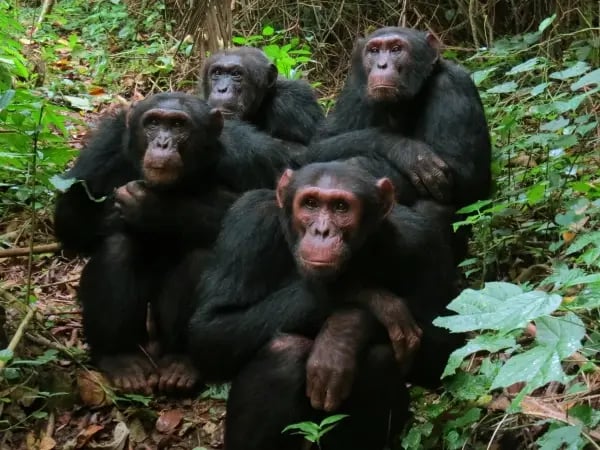
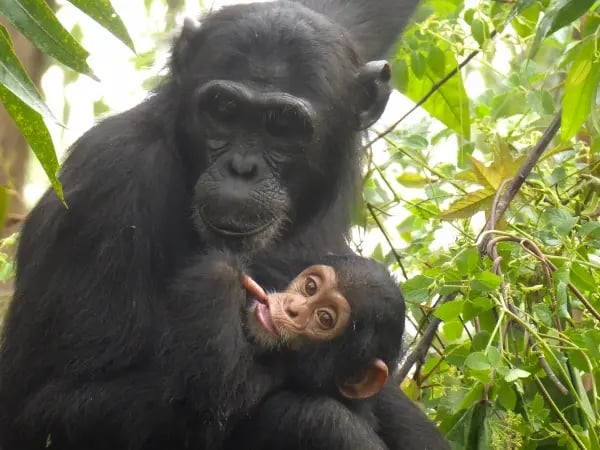
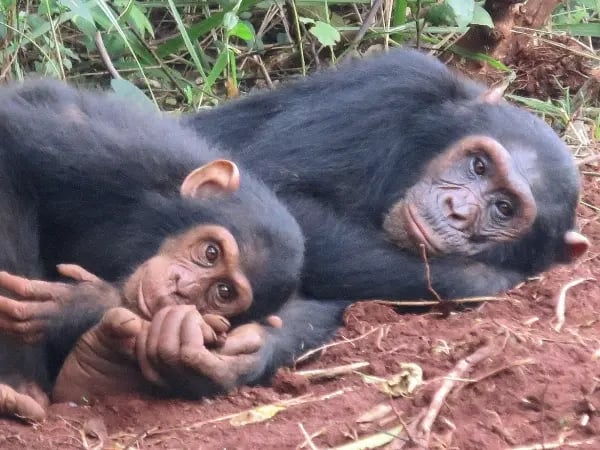
BCCP monitors six wild chimpanzee communities in the Budongo–Bugoma Corridor, each with its own named members and story. Meet the chimps we protect and follow their lives.
If you'd like to help protect one of these remarkable populations, you can support the Bulindi Chimpanzee & Community Project directly.