

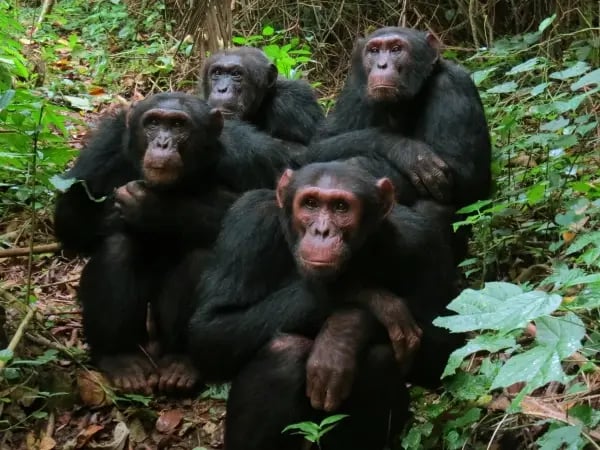
 Bulindi
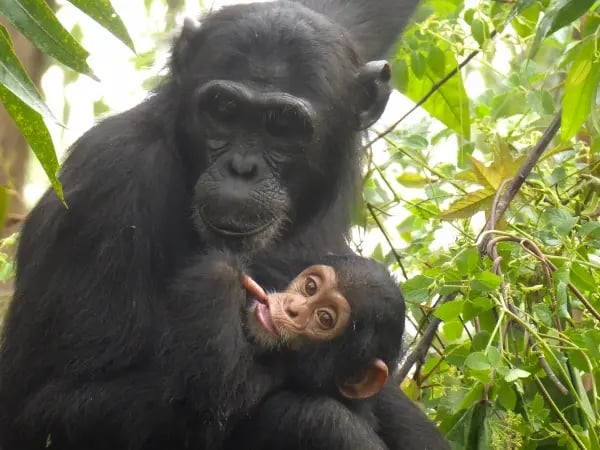 Wagaisa
.webp?width=600&height=450&name=bccp_individual%20chimp%20page%20-%20mairirwe_the%20mairirwe%20chimpanzees%20(1).webp) Mairirwe
Mairirwe
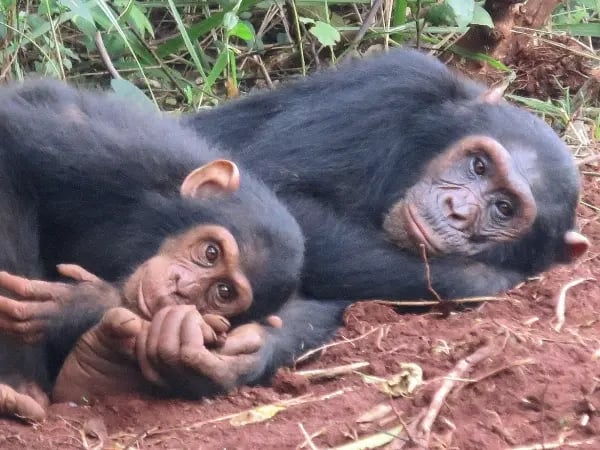 Kyabasengya
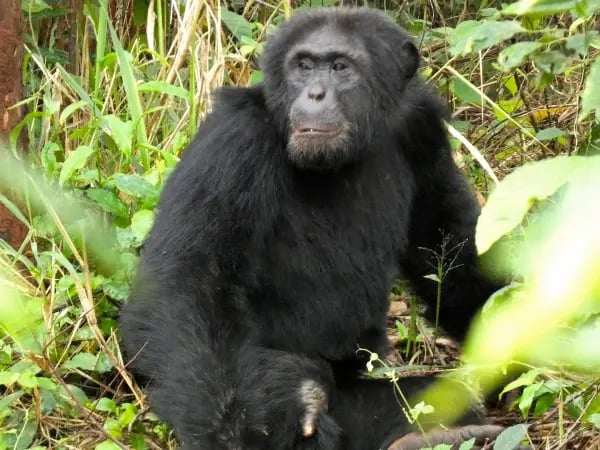 Kihomboza
.webp?width=600&height=450&name=bccp_individual%20chimp%20page%20-%20kiraira-kasunga_the%20kiraira%E2%80%93kasunga%20chimpanzees%20(1).webp) Kiraira-Kasunga
Kiraira-Kasunga
 Blogs & Updates
 Videos
 Publications
.png?width=72&height=70&name=IMG%20(1).png) Free eBook
Free eBook
Chimpanzee vs. Elephant Intelligence: Comparing Animal Smarts
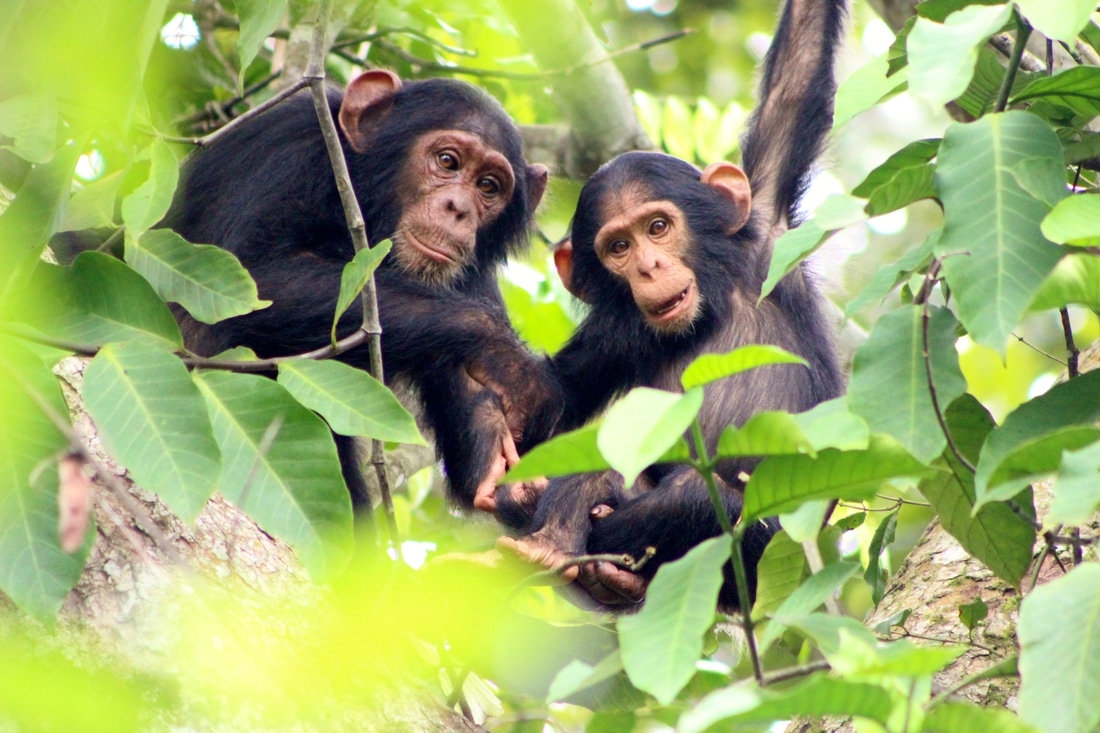
Chimpanzees and elephants are routinely named alongside dolphins and corvids as the most cognitively sophisticated non-human animals on the planet. But their intelligence evolved to solve very different problems, in very different bodies, which makes a direct comparison more interesting — and more complicated — than a simple ranking.
Brain size in context
An elephant's brain weighs around 5kg, the largest of any land animal, compared to roughly 350–400g for a chimpanzee. Raw brain size, however, is a poor measure of intelligence on its own — much of an elephant's brain is dedicated to processing an enormous body, powerful trunk dexterity, and long-range infrasound hearing. What matters more is the proportion of brain tissue devoted to higher-order processing, and on that count both species show substantial development in the regions associated with memory, planning, and social reasoning.
Tool use
Chimpanzees are the more prolific and varied tool-users of the two. Wild chimpanzee populations fashion probes for termite-fishing, use stone hammers and anvils to crack hard nuts, and even sharpen sticks as hunting spears in some regions — with different tool traditions passed down within specific communities, a hallmark of culture. Elephants use tools too, if less frequently: swatting flies with branches, using bark or mud as sunscreen, and plugging waterholes with chewed bark to prevent evaporation. Chimpanzee tool use is broader and more habitual; elephant tool use is real but comparatively occasional.
Self-awareness
Both species pass a genuine benchmark of self-recognition: the mirror test, in which an animal uses a mirror to investigate a mark placed on its own body rather than reacting as if seeing another individual. Chimpanzees were among the first non-human animals shown to pass this test, and Asian elephants have since demonstrated the same capacity — placing both species in a very short list of animals, alongside dolphins and magpies, credited with this level of self-awareness.
Memory and social bonds
Elephants are famous for long-term memory, particularly for tracking the locations of scattered water sources across decades and recognising dozens of other elephants by sight, sound, and scent even after years of separation. Matriarchs lead family groups drawing on remembered experience of drought years and safe routes. Chimpanzees also maintain long-term social memory — recognising community members and tracking shifting alliances over years — but their social intelligence leans more toward political manoeuvring: forming and breaking coalitions, tracking who supported whom in past conflicts, and adjusting behaviour accordingly.
Grief and empathy
Elephants display some of the most well-documented grief-like behaviour in the animal kingdom, including lingering near and gently touching the remains of dead herd members, sometimes returning to a site repeatedly. Chimpanzees, too, show clear signs of distress around dying or dead group members, including extended vigils and, in some observed cases, behaviour resembling consolation of grieving individuals. Both provide compelling evidence that emotional depth is not unique to humans.
Problem-solving and cognition tasks
In controlled studies, chimpanzees have demonstrated striking working-memory abilities — in one well-known Japanese study, young chimpanzees outperformed human adults on a rapid number-sequence memory task. Elephants have shown strong cooperative problem-solving, including coordinating with a partner to pull a rope from both ends simultaneously to access food, understanding that success depends on a partner's participation. Each species excels at tasks suited to its own ecological demands rather than one being straightforwardly "smarter" than the other.
So which is smarter?
There isn't a single scientifically meaningful answer, because intelligence is multidimensional. Chimpanzees edge ahead on manual tool manufacture and use, culture, and short-term working memory tasks. Elephants edge ahead on long-term spatial memory, matriarchal social knowledge, and possibly the depth of observed grief responses. Comparing them is less about crowning a winner and more about appreciating how differently intelligence can evolve when a species has hands built for tool-making versus a trunk built for manipulation and a body that never forgets a well-worn migration route.
Quick FAQ
Do chimpanzees and elephants ever interact in the wild? Yes, across parts of Central and East Africa their ranges overlap, and chimpanzees are generally wary of elephants, giving them a wide berth rather than interacting directly.
Which animal has the larger brain relative to body size? Chimpanzees have a notably higher brain-to-body mass ratio than elephants, since elephants carry an enormous body that dilutes the relative size of even a very large brain.
Are elephants considered as intelligent as great apes? Most comparative cognition researchers place elephants in the same top tier as great apes and dolphins, though each excels in different specific cognitive domains rather than one being uniformly "more intelligent."
Related Reading
- Chimpanzee vs. Dolphin Intelligence
- Primate vs. Other Mammal Intelligence: Where Do Apes Rank?
- Orangutan vs. Chimpanzee Intelligence
Meet the Real Chimps of Bulindi
BCCP monitors six wild chimpanzee communities in the Budongo–Bugoma Corridor, each with its own named members and story. Meet the chimps we protect and follow their lives.
Want to make a difference and support our conservation efforts? Donate today