

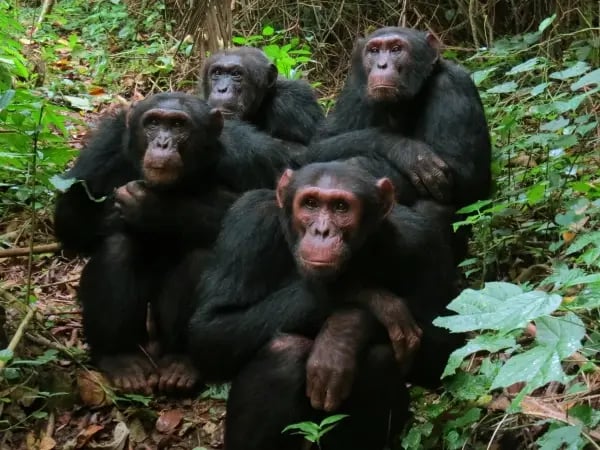
 Bulindi
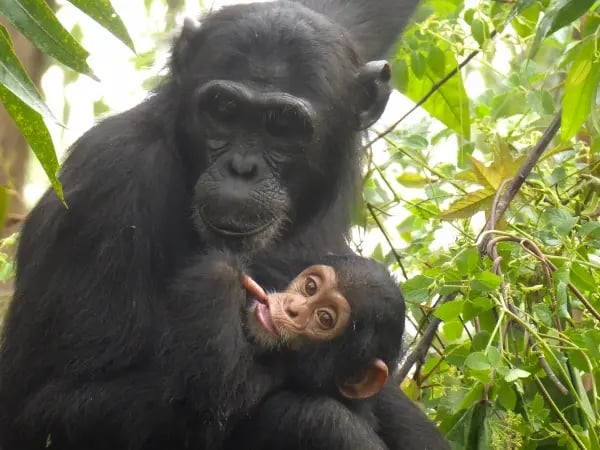 Wagaisa
.webp?width=600&height=450&name=bccp_individual%20chimp%20page%20-%20mairirwe_the%20mairirwe%20chimpanzees%20(1).webp) Mairirwe
Mairirwe
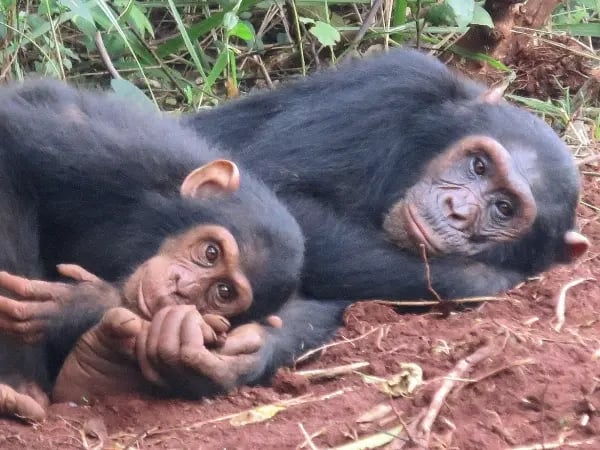 Kyabasengya
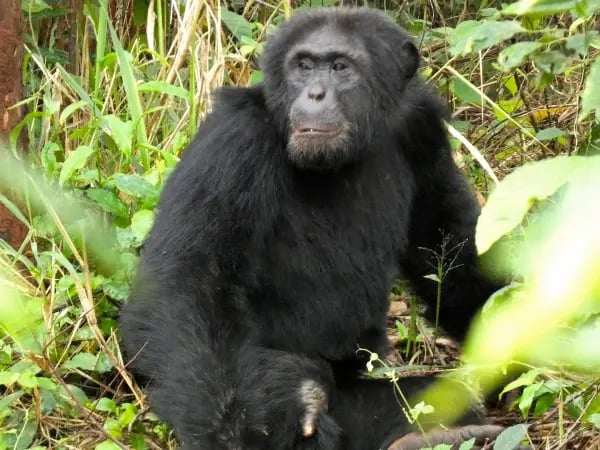 Kihomboza
.webp?width=600&height=450&name=bccp_individual%20chimp%20page%20-%20kiraira-kasunga_the%20kiraira%E2%80%93kasunga%20chimpanzees%20(1).webp) Kiraira-Kasunga
Kiraira-Kasunga
 Blogs & Updates
 Videos
 Publications
.png?width=72&height=70&name=IMG%20(1).png) Free eBook
Free eBook
Primate vs. Other Mammal Intelligence: Where Do Apes Rank?
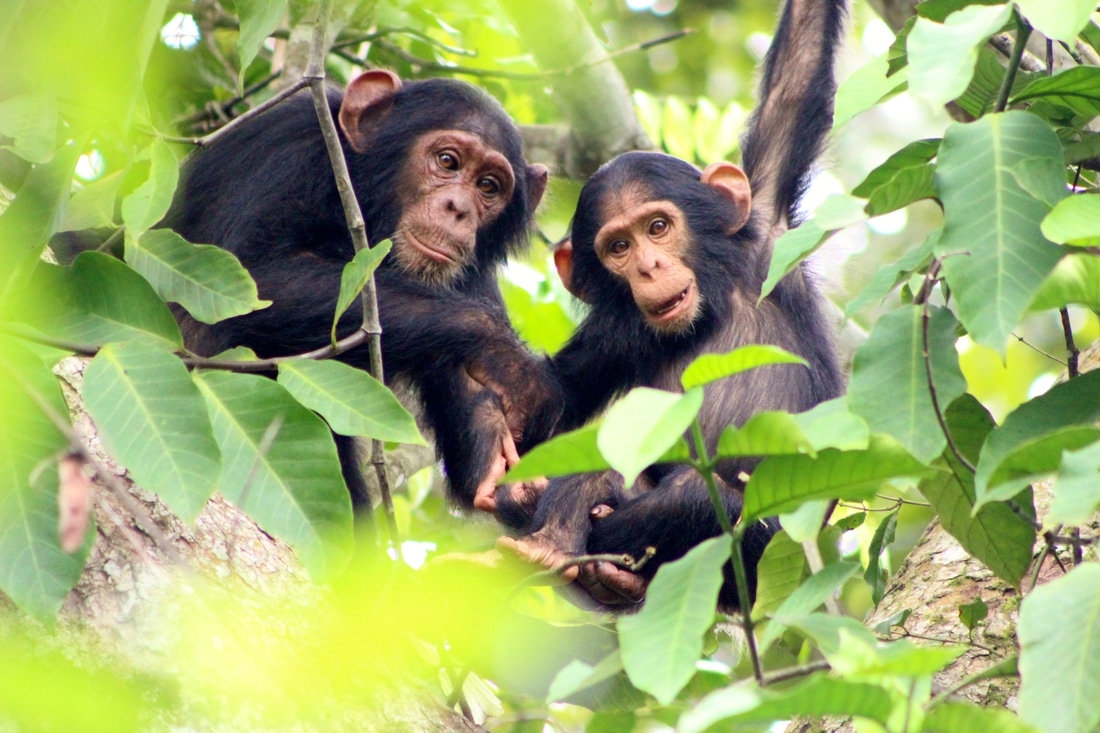
Great apes are almost always near the top of any list of the world's smartest animals, but they don't have the field to themselves. Elephants, dolphins, pigs, and even certain birds regularly show up alongside chimpanzees, gorillas, and orangutans in comparative cognition research — which raises a genuinely interesting question: where do apes actually rank, and against what?
Why "smartest animal" is the wrong question
Comparative psychologists generally avoid ranking animal intelligence on a single scale, because intelligence isn't one thing — it's a collection of separate abilities: tool use, self-recognition, memory, social reasoning, communication, and problem-solving, each shaped by a species' specific ecological needs. A more useful approach is to compare how different species perform across these specific domains, rather than crowning one universal winner.
Great apes: tool use and culture
Chimpanzees remain the benchmark for hand-based tool use among non-human animals, with distinct regional tool traditions passed down within specific communities — a form of culture. Orangutans and gorillas also use tools, if less prolifically, and all four great apes pass the mirror self-recognition test, indicating genuine self-awareness. This combination of manual dexterity, tool culture, and self-recognition places great apes consistently at or near the top of most comparative intelligence assessments.
Elephants: memory and empathy
Elephants carry the largest brain of any land animal and are famous for long-term spatial memory, tracking water sources and safe migration routes across decades, alongside recognising dozens of other individuals over years of separation. Asian elephants pass the mirror test, and elephants show documented grief-like behaviour around dead herd members. On memory and emotional depth specifically, elephants arguably rival or exceed great apes, even if their tool use is far less frequent.
Cetaceans: communication and problem-solving underwater
Dolphins and other whales operate in an entirely different sensory world, built around echolocation and underwater sound. Bottlenose dolphins pass the mirror test, use tools such as marine sponges in coordinated cultural traditions, and develop individual "signature whistles" that function like names — a level of individual vocal labelling not clearly documented in great apes. Complex, multi-level male alliance networks in some dolphin populations are considered among the most sophisticated social structures outside humans and great apes.
Pigs and other surprising contenders
Among more familiar mammals, pigs consistently outperform expectations in cognition studies, showing strong spatial memory, social learning from other pigs, and problem-solving abilities that rival dogs in some tasks, despite far less research attention than the more charismatic species. Dogs, meanwhile, show a different kind of intelligence shaped by domestication: exceptional social reading of human cues, including following pointing gestures more reliably than chimpanzees do, a skill dogs likely evolved specifically through thousands of years living alongside people.
Corvids: intelligence without a mammal brain at all
It's worth noting that some of the most sophisticated tool use and problem-solving in the entire animal kingdom comes from outside mammals altogether. Crows and ravens manufacture and use tools, plan for future needs, and in some experiments outperform young children on certain causal reasoning tasks — remarkable given that bird brains are organised completely differently from the mammalian neocortex that underlies primate, elephant, and cetacean cognition.
So where do great apes actually rank?
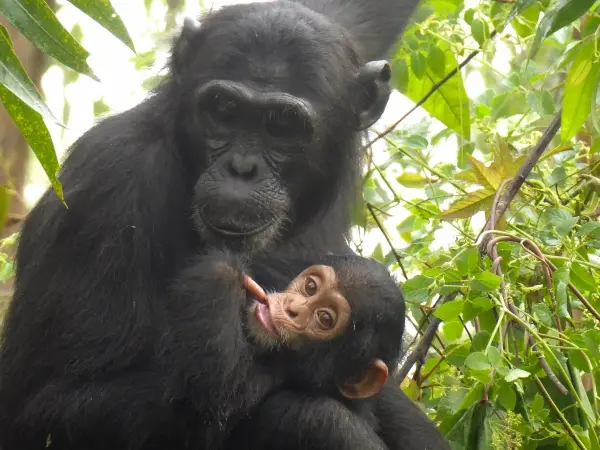
Across most comparative assessments, great apes sit in a small top tier alongside elephants, dolphins, and corvids — species that combine several cognitive domains at a high level rather than excelling in just one. What sets great apes apart within that group is the sheer combination of manual tool manufacture, self-recognition, complex multi-year social strategy, and genetic and physiological closeness to humans, which is precisely why chimpanzee behaviour so often reads as recognisably, sometimes unsettlingly, familiar to us.
Why this matters for conservation
Recognising that chimpanzee intelligence sits within this broader context — not uniquely superior, but part of a small group of animals capable of tool use, self-awareness, and deep social bonds — strengthens rather than weakens the case for protecting them. A species this cognitively and emotionally complex experiences habitat loss, social disruption, and human conflict in ways that matter, which is exactly what motivates BCCP's work protecting wild chimpanzee communities in the Budongo–Bugoma Corridor.
Quick FAQ
Are chimpanzees the smartest animal after humans? Not definitively — chimpanzees rank among a small top tier of highly cognitive species alongside elephants, dolphins, and some corvids, each excelling in different specific domains.
What single test best measures animal intelligence? There isn't one — researchers use a range of tests, including the mirror self-recognition test, tool-use observation, memory tasks, and social problem-solving, since no single measure captures intelligence as a whole.
Why do birds like crows show ape-level intelligence with such different brains? It's a striking example of convergent evolution — corvid brains are organised very differently from mammalian brains, yet still produce sophisticated tool use and planning, showing that advanced cognition can evolve through more than one biological route.
Related Reading
- Chimpanzee vs. Elephant Intelligence: Comparing Animal Smarts
- Chimpanzee vs. Dolphin Intelligence
- Orangutan vs. Chimpanzee Intelligence
Meet the Real Chimps of Bulindi
BCCP monitors six wild chimpanzee communities in the Budongo–Bugoma Corridor, each with its own named members and story. Meet the chimps we protect and follow their lives.
Want to make a difference and support our conservation efforts? Donate today