

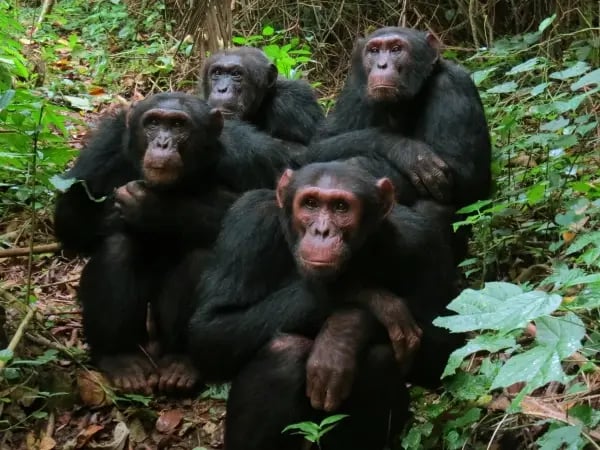
 Bulindi
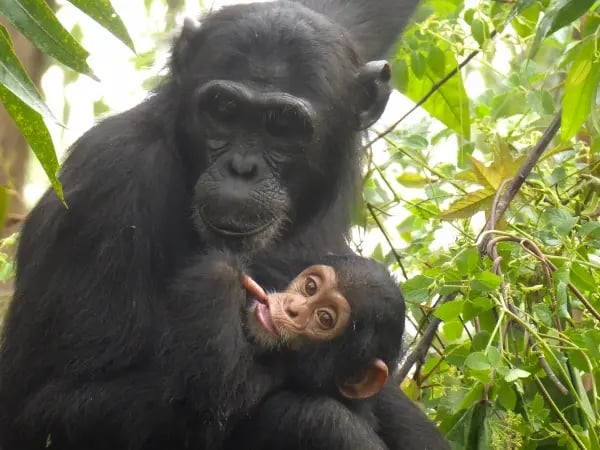 Wagaisa
.webp?width=600&height=450&name=bccp_individual%20chimp%20page%20-%20mairirwe_the%20mairirwe%20chimpanzees%20(1).webp) Mairirwe
Mairirwe
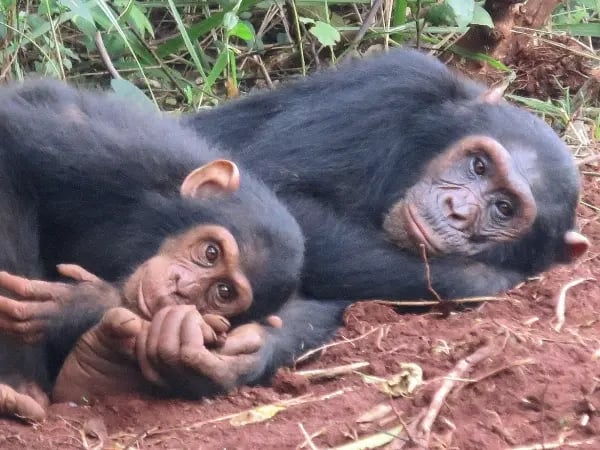 Kyabasengya
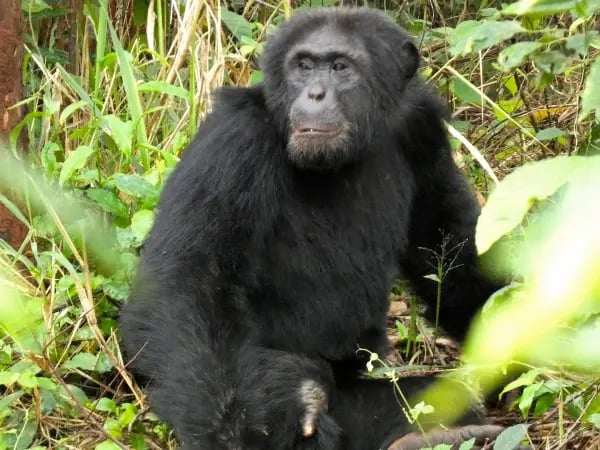 Kihomboza
.webp?width=600&height=450&name=bccp_individual%20chimp%20page%20-%20kiraira-kasunga_the%20kiraira%E2%80%93kasunga%20chimpanzees%20(1).webp) Kiraira-Kasunga
Kiraira-Kasunga
 Blogs & Updates
 Videos
 Publications
Human-Wildlife Conflict: What Are the Real Solutions?
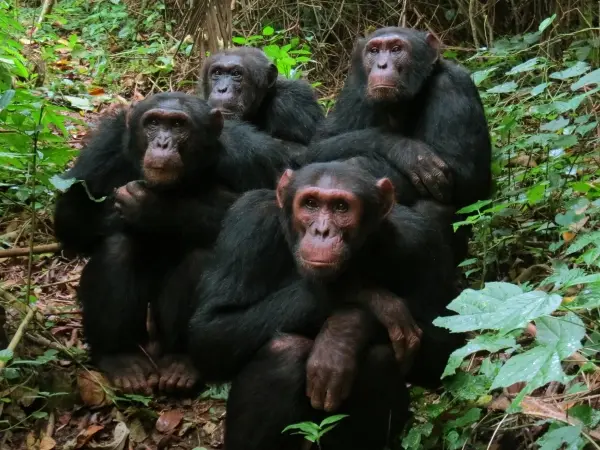
Human-wildlife conflict is one of the most persistent challenges in conservation, and it rarely has a single solution. In Western Uganda, where wild chimpanzees survive in shrinking forest fragments surrounded by farmland, human-chimpanzee conflict is a daily, practical problem — not an abstract policy debate — and the Bulindi Chimpanzee & Community Project's work offers a clear, field-tested case study in what actually reduces it.
Why the conflict happens
As forest is cleared for agriculture, chimpanzees lose the natural food sources they'd normally rely on across the seasons. When fruit and other wild foods are scarce, chimpanzees turn to the next available option — crops growing at the forest edge. For a farming family, crop losses are a direct threat to their income and food security. For the chimpanzees, coming into a farmer's field brings them into direct, sometimes dangerous, contact with people. Neither side is acting unreasonably — both are responding to a shrinking, shared landscape.
Solution 1: Restore natural food sources
One of the most effective long-term interventions is forest enrichment planting — deliberately replenishing forest with the natural food plants chimpanzees prefer. This directly reduces the incentive to raid crops in the first place, tackling the root cause rather than just the symptom.
Solution 2: Reconnect fragmented habitat
Isolated forest fragments force chimpanzees to travel across open farmland to find food or reach other chimpanzee communities, increasing both conflict and physical danger. Corridor replanting along rivers helps reconnect these fragments, giving chimpanzees safer routes that don't require crossing farmland or roads as often.
Solution 3: Reduce local communities' dependence on the forest
Conflict isn't only driven by chimpanzee behaviour — it's also driven by how much pressure local communities are forced to put on the forest to meet basic needs. Programmes that provide real alternatives make a measurable difference:
- Education sponsorship for local schoolchildren reduces the financial pressure that can push families to clear more land.
- Support for small household projects, like livestock rearing, creates income that doesn't depend on expanding farmland into chimpanzee habitat.
- Energy-saving stoves cut firewood demand, directly reducing pressure on the remaining forest.
- Access to clean water, through village boreholes, improves household health and reduces time and resource pressure on families.
Solution 4: Daily monitoring and rapid response
Ongoing, on-the-ground monitoring of the chimpanzee community lets a conservation team understand exactly how the chimps are using the landscape day to day — including how they're adapting to specific hazards, such as the behavioural strategies Bulindi's chimpanzees have developed for crossing a busy road through their territory. That real-time understanding is what allows conservation strategy to respond to actual, current conditions instead of outdated assumptions.
Solution 5: Community education
Long-term reduction in conflict also depends on local understanding of why chimpanzees behave the way they do and why protecting them matters — which is why conservation education programmes for local schools and communities run alongside the practical, on-the-ground interventions.
What doesn't work — and why it's tempting anyway
A few approaches are common but rarely deliver lasting results. Purely punitive measures against crop-raiding chimpanzees address the symptom for a single season at best, without changing the underlying food scarcity driving the behaviour. Physical barriers like fencing are expensive to install and maintain across long forest-farmland boundaries, and chimpanzees are resourceful enough to find gaps over time. And short-term outreach — a single awareness campaign or a one-off community meeting — rarely shifts behaviour on its own, because the economic pressures driving conflict don't disappear after one conversation. These approaches are tempting because they're faster and cheaper than sustained, multi-year programmes, but field experience across East Africa consistently shows they don't hold up without the slower work of restoring habitat and supporting livelihoods alongside them.
The real lesson: no single fix works alone
None of these five approaches is sufficient by itself. Restoring forest food sources without addressing community livelihoods just shifts the pressure elsewhere. Supporting communities without restoring habitat leaves chimpanzees without enough natural food regardless. The Bulindi Chimpanzee & Community Project's model — treating forest conservation and community development as one integrated programme, backed by daily monitoring — reflects what field experience has shown actually works in a landscape where humans and chimpanzees are never going to be fully separated again.
Measuring whether it's working
Because conflict reduction plays out gradually, credible programmes track concrete indicators over time — reported crop losses, frequency of chimpanzee sightings near farmland, and community attitudes toward the local chimpanzee population — rather than relying on anecdote. Consistent daily monitoring of the chimpanzee community itself is what makes this kind of tracking possible, turning conflict reduction from a hopeful assumption into something that can actually be assessed year over year.
Related Reading
- Why Do Rainforests Matter?
- Wildlife Snares: A Hidden Threat to Chimpanzees
- Chimpanzee Poaching: What It Is and Why It Happens
- What Is a Primate?
Meet the Real Chimps of Bulindi
BCCP monitors six wild chimpanzee communities in the Budongo–Bugoma Corridor, each with its own named members and story. Meet the chimps we protect and follow their lives.
You can help sustain this work directly — support the Bulindi Chimpanzee & Community Project.