

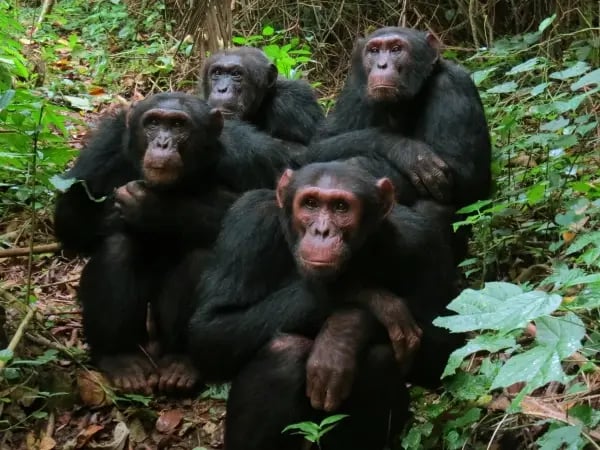
 Bulindi
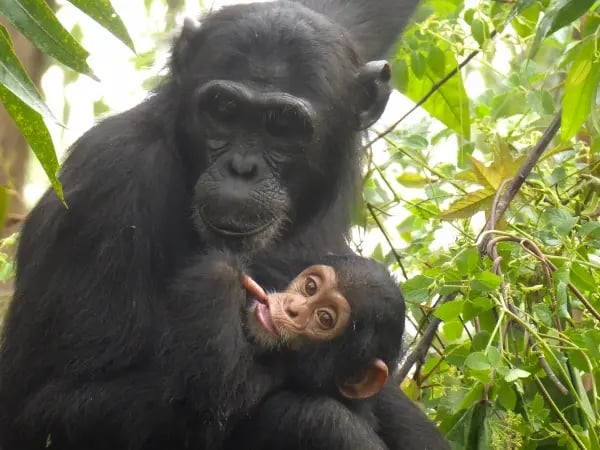 Wagaisa
.webp?width=600&height=450&name=bccp_individual%20chimp%20page%20-%20mairirwe_the%20mairirwe%20chimpanzees%20(1).webp) Mairirwe
Mairirwe
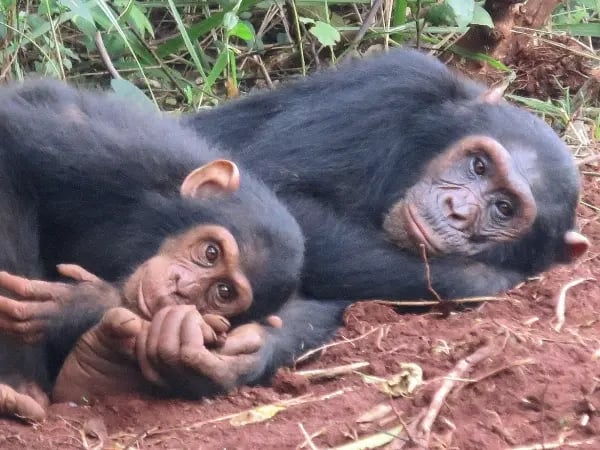 Kyabasengya
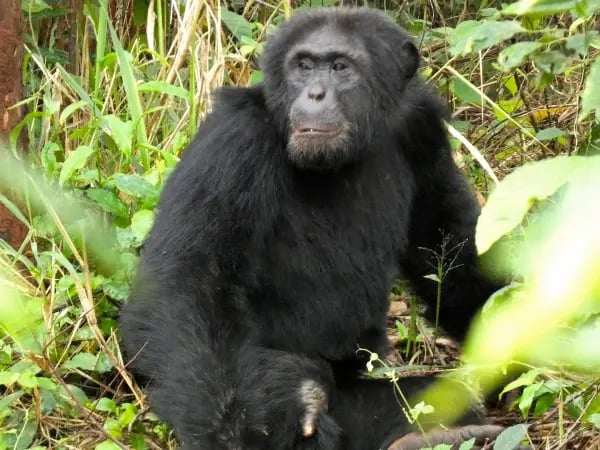 Kihomboza
.webp?width=600&height=450&name=bccp_individual%20chimp%20page%20-%20kiraira-kasunga_the%20kiraira%E2%80%93kasunga%20chimpanzees%20(1).webp) Kiraira-Kasunga
Kiraira-Kasunga
 Blogs & Updates
 Videos
 Publications
.png?width=72&height=70&name=IMG%20(1).png) Free eBook
Free eBook
Silverback Gorilla vs. Chimpanzee Strength
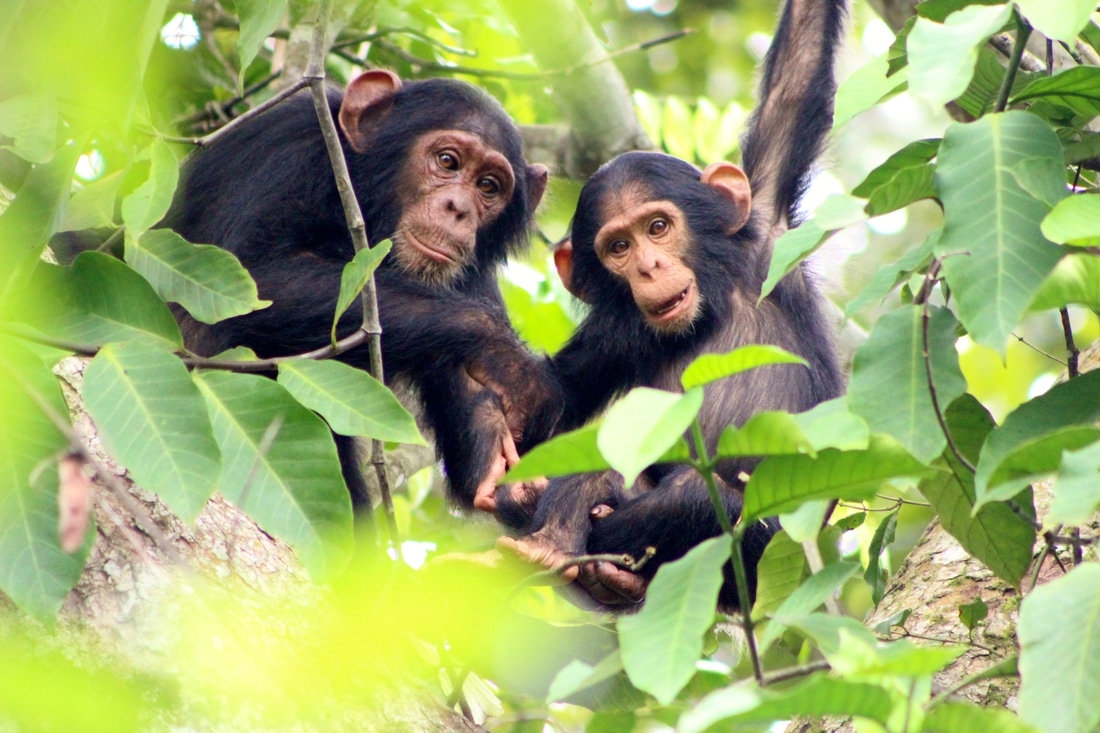
Few animal comparisons attract more myth and exaggeration than great ape strength. Claims that a chimpanzee is "five times stronger than a man" or that a silverback gorilla can "lift a car" circulate endlessly online, and the reality, while still genuinely impressive, is more nuanced than either headline suggests.
Size difference first
Before comparing strength, it's worth being clear about scale: an adult male silverback gorilla typically weighs 140–180kg, roughly two to three times the weight of an adult male chimpanzee at 40–70kg. Simply by being so much larger, a silverback has a huge built-in advantage in raw, absolute strength — more muscle mass moving more weight will always outperform a smaller animal in most direct measures of force.
Pound-for-pound: the chimpanzee edge
Where chimpanzees stand out is strength relative to body size. Long-standing claims that chimps are five to eight times stronger than humans trace back to poorly controlled experiments from the early 20th century. A rigorous 2017 study published in the journal PNAS reassessed chimpanzee muscle performance and found their skeletal muscle produces roughly 1.35 times more force per unit of muscle mass than human muscle — a real and meaningful advantage, driven by a higher proportion of fast-twitch muscle fibres, but far more modest than the "chimps are five times stronger" myth suggests.
What about gorillas?
Gorillas haven't been subjected to the same detailed muscle-fibre research as chimpanzees, largely because studying a 180kg wild silverback safely is far harder than studying captive chimps. Estimates of gorilla strength are therefore less precise, but given their far greater muscle mass, more robust skeletal structure built for supporting immense body weight, and similarly high proportion of fast-twitch fibres typical of great apes generally, a silverback's absolute strength output is assumed to substantially exceed a chimpanzee's, even if the two species turn out to have broadly comparable strength-per-kilogram of muscle.
Real-world evidence
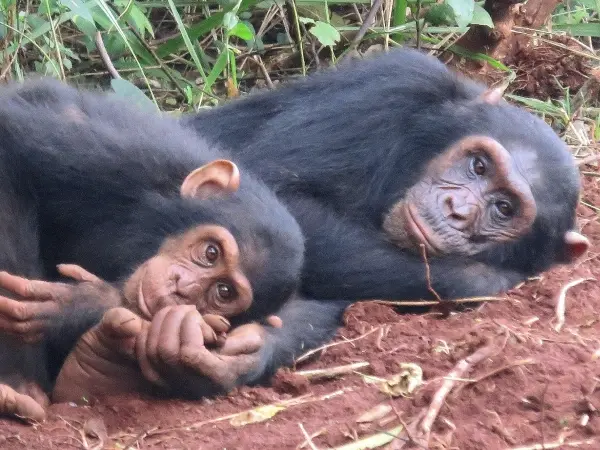
Documented feats give a sense of scale. Wild gorillas have been observed bending and breaking thick bamboo stalks and small trees with ease as part of normal foraging and nest-building behaviour. Chimpanzees, despite their smaller size, have been recorded dragging and breaking branches far heavier than their own body weight, and captive chimpanzees have on rare, well-documented occasions caused serious injuries to adult humans, underlining that even the "more modest" pound-for-pound advantage translates into genuinely dangerous force when directed at a person.
Why the strength difference exists
The core explanation lies in muscle fibre composition and leverage rather than raw muscle volume alone. Great apes generally carry a higher percentage of fast-twitch fibres than humans, who evolved comparatively more slow-twitch, endurance-oriented muscle suited to long-distance walking and running. This trade-off means humans have superior stamina, while chimpanzees and gorillas are built for short, explosive bursts of climbing, branch-breaking, and physical display — strength suited to an arboreal and forest-floor lifestyle rather than sustained long-distance movement.
Why this matters beyond curiosity
Understanding real ape strength has practical conservation relevance. It's part of why direct human contact with wild or habituated great apes carries genuine safety protocols, and why field researchers and community members living alongside chimpanzees, as in the Budongo–Bugoma Corridor where BCCP works, are trained in specific behavioural guidelines for encounters — not because chimpanzees are aggressive by nature, but because their physical strength, even at a fraction of internet-myth proportions, deserves genuine respect.
Quick FAQ
Is it true chimps are five times stronger than humans? No — that figure comes from flawed early-20th-century experiments; a 2017 muscle-fibre study found the real advantage is closer to 1.35 times more force per unit of muscle mass, still significant but far less than the popular myth.
Could a chimpanzee overpower a silverback gorilla? Almost certainly not in a direct contest — a silverback's far greater body mass and muscle volume give it a decisive advantage despite any pound-for-pound similarities in muscle fibre performance.
Why are great apes so much stronger than humans of similar muscle mass? A higher proportion of fast-twitch muscle fibres and different muscle attachment points give apes more explosive force output, a trade-off against the endurance-oriented muscle humans evolved for long-distance walking and running.
Has anyone ever measured gorilla strength directly? Direct measurement is rare and difficult given the size and rarity of wild silverbacks, so most figures cited for gorillas remain estimates drawn from observed behaviour, comparative anatomy, and extrapolation from better-studied chimpanzee muscle physiology rather than controlled strength tests.
Separating myth from measured science
Much of the enduring confusion around great ape strength traces back to decade-old claims that were never rigorously tested, repeated so often in documentaries and articles that they hardened into accepted fact. Modern comparative physiology takes a more careful approach, measuring actual muscle fibre composition and force output rather than relying on anecdote. The result is a picture that's arguably more impressive, not less: real, measurable biological differences that explain why these animals move, climb, and forage the way they do, without needing exaggeration to make the case for just how remarkable great ape physiology really is.
Related Reading
- Bonobo vs. Chimpanzee vs. Gorilla: The Three Compared
- Great Ape Brain Size Compared: Chimp, Gorilla, Orangutan, Bonobo
- Chimpanzee vs. Human Strength, Fact-Checked
Meet the Real Chimps of Bulindi
BCCP monitors six wild chimpanzee communities in the Budongo–Bugoma Corridor, each with its own named members and story. Meet the chimps we protect and follow their lives.
Want to make a difference and support our conservation efforts? Donate today