

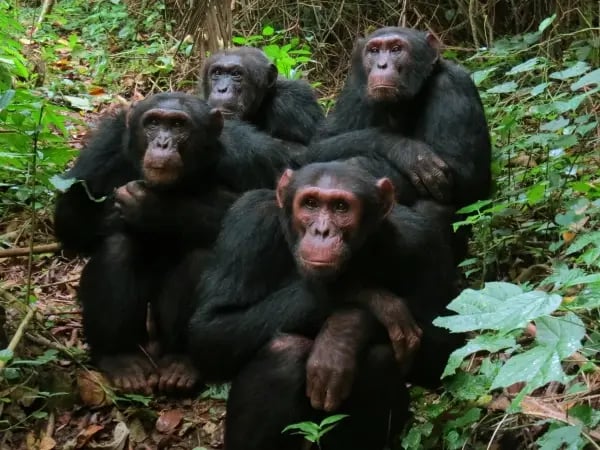
 Bulindi
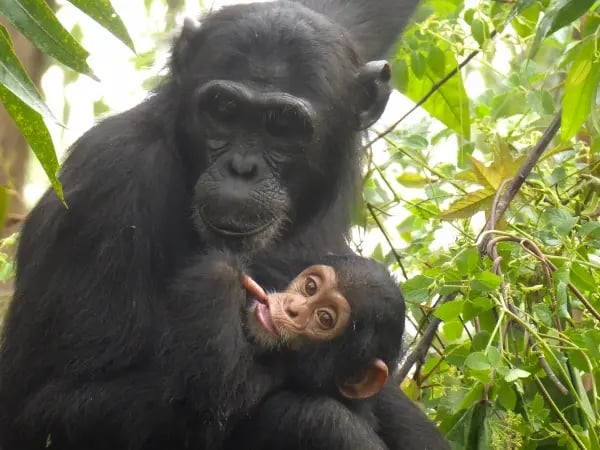 Wagaisa
.webp?width=600&height=450&name=bccp_individual%20chimp%20page%20-%20mairirwe_the%20mairirwe%20chimpanzees%20(1).webp) Mairirwe
Mairirwe
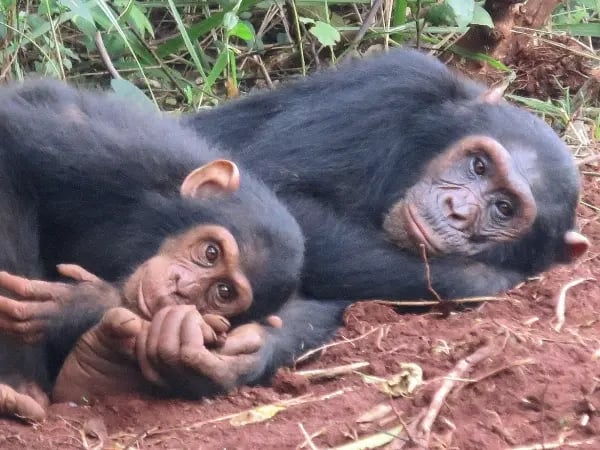 Kyabasengya
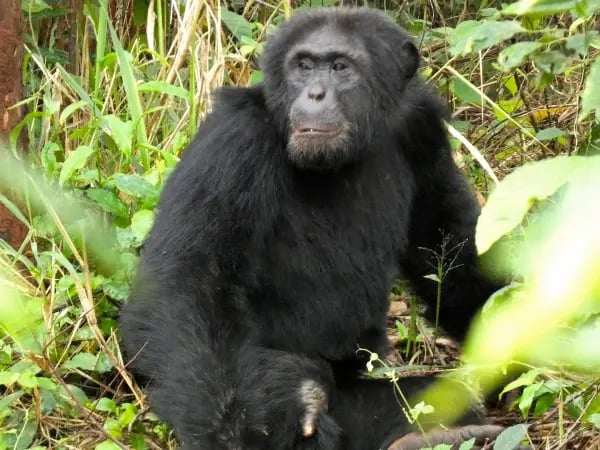 Kihomboza
.webp?width=600&height=450&name=bccp_individual%20chimp%20page%20-%20kiraira-kasunga_the%20kiraira%E2%80%93kasunga%20chimpanzees%20(1).webp) Kiraira-Kasunga
Kiraira-Kasunga
 Blogs & Updates
 Videos
 Publications
Where Do Wild Chimpanzees Live Today?
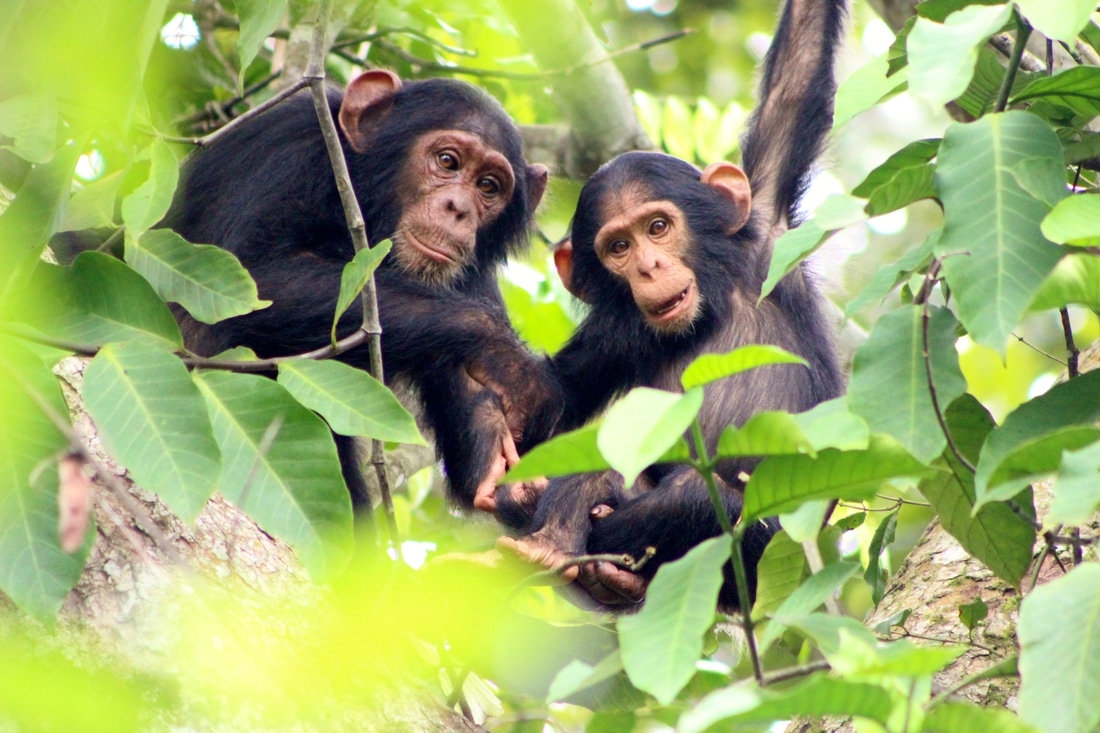
Wild chimpanzees are found across a broad band of West, Central, and East Africa, but their range today is a fraction of what it once was — increasingly fragmented into isolated pockets of forest surrounded by farmland and settlement.
The historical range
Chimpanzees historically ranged across a near-continuous belt of forest and woodland savanna from Senegal in the west to Tanzania and Uganda in the east, with an estimated population of around one million individuals a century ago spread across this vast territory.
The current range
Today, wild chimpanzees are found in more than 20 countries across this same general region, but the total population has fallen to somewhere between 170,000 and 300,000, and — critically — that population is far more fragmented than the historical range implies. Continuous forest connecting distant populations has largely been replaced by isolated forest blocks separated by agricultural land.
Four recognised subspecies
Chimpanzees are divided into four recognised subspecies across their range: the Western, Central, Nigeria-Cameroon, and Eastern chimpanzee. Each faces a somewhat different combination of threats and population trends — the Western chimpanzee subspecies, for instance, has declined an estimated 80% in recent decades and is now Critically Endangered, a considerably steeper decline than some other subspecies.
Eastern chimpanzees in Uganda and Tanzania
Uganda's wild chimpanzee population belongs to the Eastern chimpanzee subspecies, which also includes populations in Tanzania, Rwanda, Burundi, and the eastern Democratic Republic of Congo. Populations within this subspecies vary considerably in size and habitat security, from well-protected national park populations to smaller, more exposed communities surviving in fragmented forest outside formal protected areas.
Fragmented forest outside protected areas
Not every wild chimpanzee population lives within a national park or formal reserve. A significant number, including the community the Bulindi Chimpanzee & Community Project works with in Western Uganda, survive in forest fragments on unprotected or only partially protected land, directly adjacent to farmland and villages — a genuinely different, and in some ways more precarious, situation than a population within a well-established protected area.
Why unprotected, fragmented populations matter
These populations are easy to overlook in broad conservation discussions that focus on flagship national parks, but they represent a real and significant share of the total remaining wild chimpanzee population. Protecting them requires a genuinely different conservation model — one built around community engagement, forest restoration, and conflict reduction rather than simply enforcing a park boundary.
What this means for conservation strategy
Understanding where wild chimpanzees actually live today — not just historically, but in their current, heavily fragmented reality — is essential for directing conservation resources effectively. A population surviving in unprotected farmland-adjacent forest, like Bulindi's, needs forest enrichment, corridor replanting, and community livelihood support; a population within an established reserve may face a different balance of threats and require different tools.
Quick FAQ
Which country has the largest wild chimpanzee population? Estimates vary and are periodically revised, but several Central and West African countries, including the Democratic Republic of Congo, are believed to hold some of the largest remaining populations.
Do chimpanzee populations in different countries interbreed? Only where their ranges remain physically connected — populations separated by significant distance or major geographic barriers are effectively isolated from each other genetically.
Are there wild chimpanzees anywhere outside Africa? No — chimpanzees are native exclusively to Africa; any chimpanzees found elsewhere are in captivity, sanctuaries, or zoos rather than wild, self-sustaining populations.
Why unprotected populations deserve more attention
Populations surviving outside formal protected areas, like Bulindi's, often receive far less conservation funding and public attention than those within well-known national parks, despite facing comparable or even greater day-to-day risk — an imbalance worth correcting given how significant a share of the world's remaining chimpanzees they represent. Comprehensive, up-to-date range-wide population surveys remain genuinely difficult and expensive to conduct across such a large, often remote geographic area, meaning current estimates should be understood as careful approximations rather than a precise, continuously updated census. Genetic studies comparing chimpanzee populations across different countries have also revealed meaningful variation even within a single recognised subspecies, suggesting conservation planning may eventually need to consider finer-grained population units rather than subspecies classification alone.
Whatever the precise population figures ultimately turn out to be, the clear overall trend — a shrinking, increasingly fragmented range — is exactly what makes sustained, site-specific conservation work so urgent today. Every unprotected fragment that receives sustained conservation investment adds real, if modest, ground back to a species whose total range has been shrinking for over a century. That steady, patient work is precisely what determines whether the map looks any better a decade from now.
Related Reading
- The Albertine Rift: Uganda's Biodiversity Hotspot
- What "Endangered" Actually Means (IUCN Explained)
- Great Apes and Climate Change
- Why Are Chimpanzees Endangered?
Meet the Real Chimps of Bulindi
BCCP monitors six wild chimpanzee communities in the Budongo–Bugoma Corridor, each with its own named members and story. Meet the chimps we protect and follow their lives.
Support the Bulindi Chimpanzee & Community Project to help protect one of these unprotected, fragmented chimpanzee populations directly. This growing genetic understanding may eventually reshape how conservation resources are allocated across chimpanzees' range, potentially prioritising genetically distinct populations that current broad subspecies categories don't fully capture.