

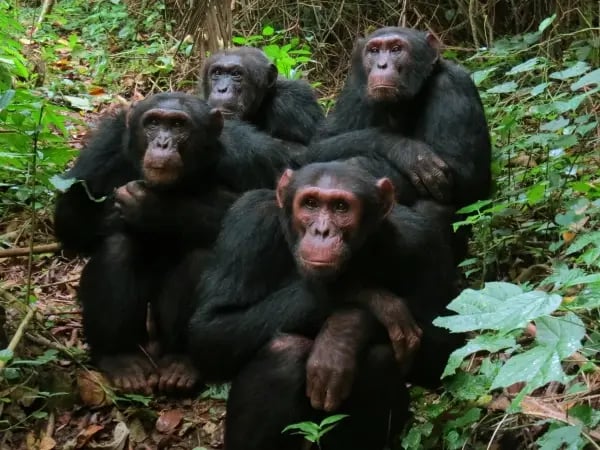
 Bulindi
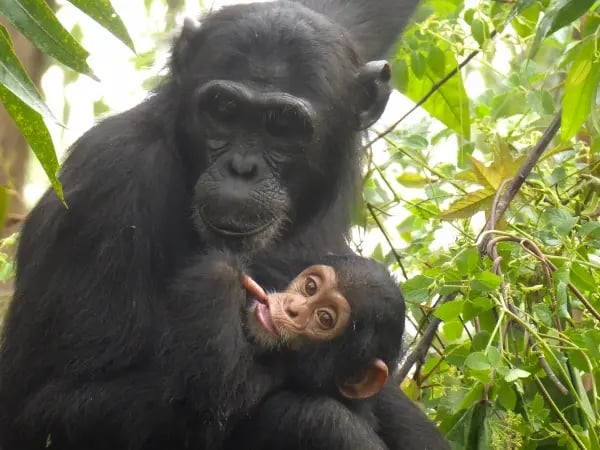 Wagaisa
.webp?width=600&height=450&name=bccp_individual%20chimp%20page%20-%20mairirwe_the%20mairirwe%20chimpanzees%20(1).webp) Mairirwe
Mairirwe
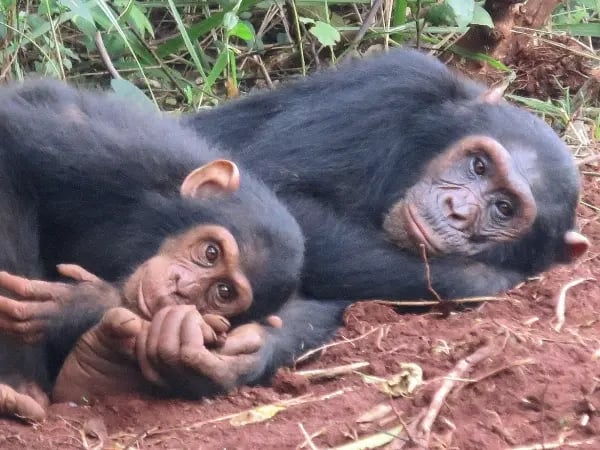 Kyabasengya
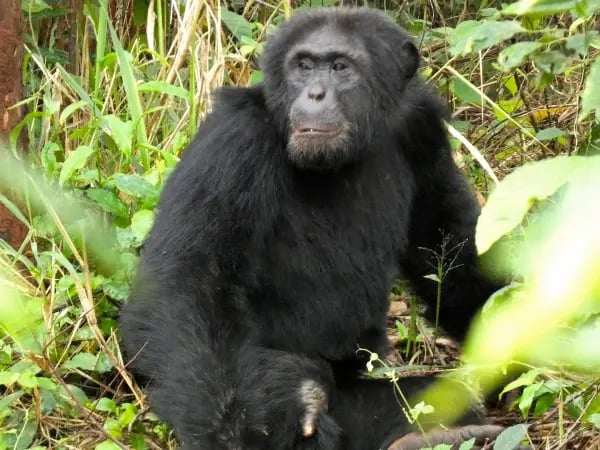 Kihomboza
.webp?width=600&height=450&name=bccp_individual%20chimp%20page%20-%20kiraira-kasunga_the%20kiraira%E2%80%93kasunga%20chimpanzees%20(1).webp) Kiraira-Kasunga
Kiraira-Kasunga
 Blogs & Updates
 Videos
 Publications
Baby Chimpanzees: Early Life and Development
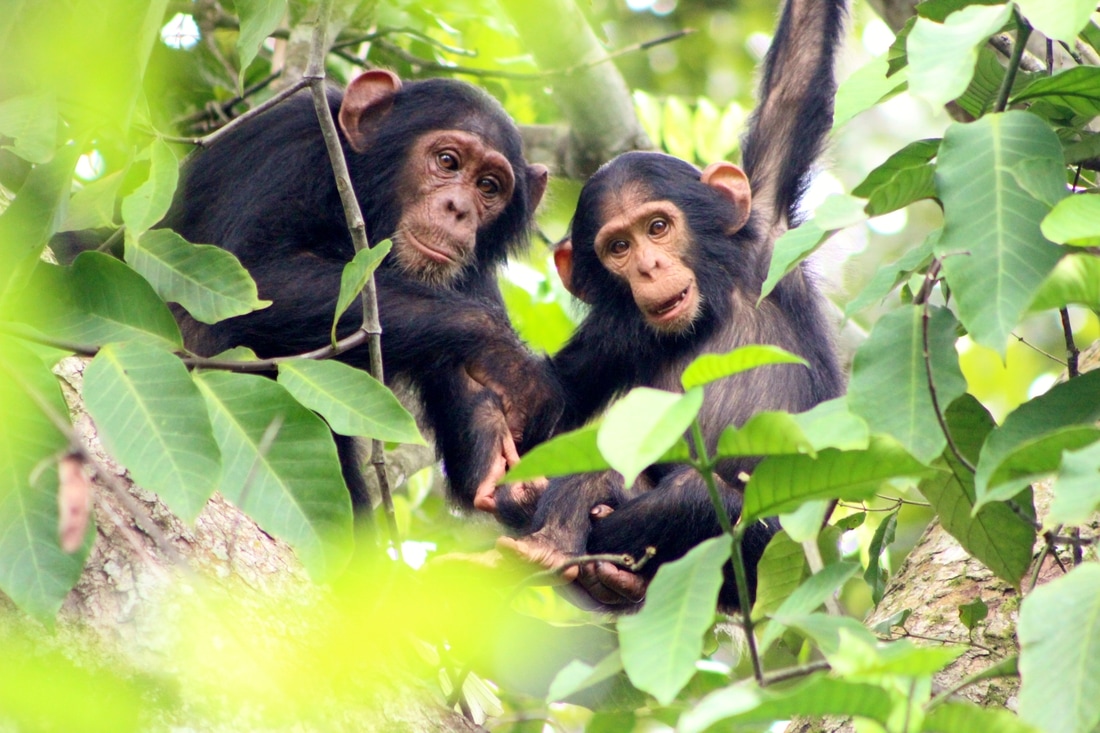
Baby chimpanzees go through one of the longest, most intensive developmental periods of any non-human primate — a slow, carefully staged process that shapes almost everything about how chimpanzee society and culture actually function.
The first months: total dependence
A newborn chimpanzee is entirely helpless, unable to move independently and reliant on instinctively clinging to its mother's fur from birth. For the first several months, an infant rarely leaves direct physical contact with its mother, who carries it constantly while feeding, resting, and travelling.
Learning to move independently
Around six months to a year, infants begin riding on their mother's back rather than clinging to her front, and start short bursts of independent movement nearby, always staying close enough to retreat to her immediately at any sign of danger or uncertainty.
The juvenile learning period
From roughly age two through the early juvenile years, young chimpanzees spend enormous amounts of time observing and imitating adults — watching how they use tools, what they eat, how they navigate social interactions, and how to read the community's social hierarchy. This isn't passive absorption; young chimpanzees actively practice tool use for years before mastering techniques like nut-cracking or termite-fishing.
Weaning
Nursing typically continues for up to five years, gradually decreasing as a young chimpanzee incorporates more solid food into its diet. This long nursing period, far longer than most mammals, reflects chimpanzees' broader slow-life-history strategy — investing heavily in fewer offspring over a longer lifespan.
Play and social learning
Play is a major part of juvenile chimpanzee life, particularly among young males, who engage in extensive play-fighting that helps develop the physical and social skills needed for adult rank competition. Young females typically stay closer to their mothers during this period, absorbing social strategy through observation rather than the more physical play patterns typical of young males.
Adolescence and independence
Adolescent chimpanzees gradually spend more time away from their mothers, building independent social relationships and, in the case of many females, eventually transferring to a neighbouring community. Male chimpanzees typically remain in their birth community for life, spending adolescence building the social relationships and alliances that will matter for rank competition in adulthood.
Why this long childhood matters for conservation
Because chimpanzee development takes years — and because so much of a chimpanzee's crucial knowledge (tool use, social norms, safe navigation of a changing landscape) is learned rather than instinctive — losing a mother at any point during this long developmental window can be devastating for a young chimpanzee's survival and future prospects, not just in the short term but for skills it may never fully acquire.
Protecting mothers and infants together
This is a core reason conservation work focused on a specific wild community, like the Bulindi Chimpanzee & Community Project's daily monitoring in Western Uganda, pays such close attention to mother-infant pairs specifically — understanding that protecting a small population's long-term future depends directly on protecting the mothers currently raising the next generation.
Quick FAQ
At what age do baby chimpanzees start eating solid food? Infants begin sampling solid food within the first year, though nursing continues alongside it for several more years as the primary nutrition source gradually shifts.
Do baby chimpanzees play with other infants? Yes — infant and juvenile play, both with peers and with older siblings, is common and plays an important role in developing physical coordination and social skills.
How long does it take a chimpanzee to reach full independence? Full weaning happens around age five, but genuine social and reproductive maturity isn't reached until the early-to-mid teens, reflecting one of the longest childhoods of any non-human primate.
Why the first years matter most
Because so much of what a chimpanzee needs to survive is learned rather than instinctive, disruption during this long developmental window — through habitat loss, the death of a mother, or forced displacement — can have consequences that last a lifetime, making early-life protection a genuine conservation priority. Researchers have also noted that orphaned infants who receive some form of surrogate care, whether from another female or in a rehabilitation setting, can still develop many core skills successfully, though outcomes vary considerably depending on the infant's age and the quality of care received. Sanctuaries caring for orphaned chimpanzees have developed increasingly sophisticated rehabilitation approaches over the decades, often incorporating surrogate mothering and extended peer-group integration specifically designed to replicate, as closely as possible, the developmental experiences a wild infant would otherwise have missed.
Supporting this kind of careful, patient developmental science and field monitoring is, in a very direct sense, an investment in the next generation of a small, fragile wild population's future.
Related Reading
- Chimpanzee Memory: The Famous Ayumu Test
- Chimpanzee Culture: Do Chimps Have Traditions?
- Oldest Chimpanzee Ever Recorded
- Apes vs. Monkeys: What's the Real Difference?
Meet the Real Chimps of Bulindi
BCCP monitors six wild chimpanzee communities in the Budongo–Bugoma Corridor, each with its own named members and story. Meet the chimps we protect and follow their lives.
Support the Bulindi Chimpanzee & Community Project to help protect chimpanzee mothers and infants in the wild. These rehabilitation techniques continue to improve as sanctuaries share knowledge and best practice across institutions, gradually raising survival and successful reintegration outcomes for orphaned infants across the conservation sector as a whole.