

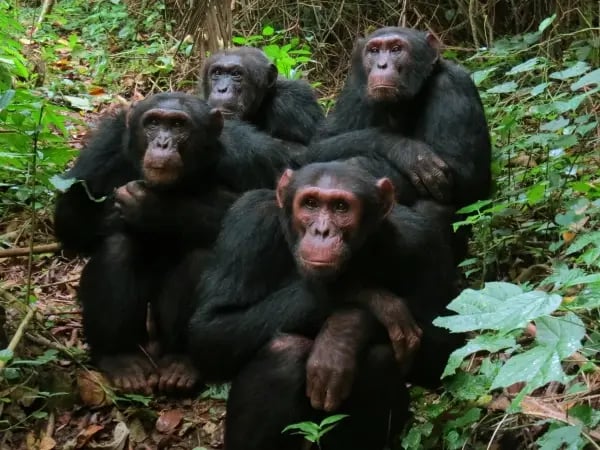
 Bulindi
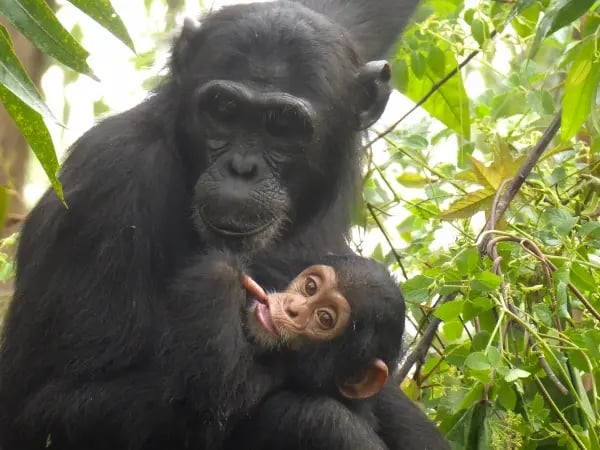 Wagaisa
.webp?width=600&height=450&name=bccp_individual%20chimp%20page%20-%20mairirwe_the%20mairirwe%20chimpanzees%20(1).webp) Mairirwe
Mairirwe
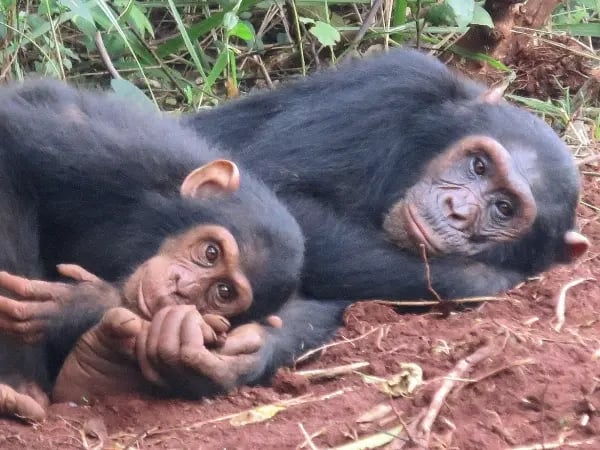 Kyabasengya
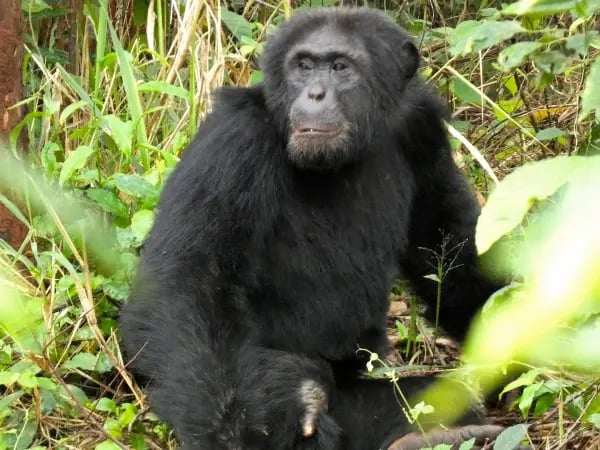 Kihomboza
.webp?width=600&height=450&name=bccp_individual%20chimp%20page%20-%20kiraira-kasunga_the%20kiraira%E2%80%93kasunga%20chimpanzees%20(1).webp) Kiraira-Kasunga
Kiraira-Kasunga
 Blogs & Updates
 Videos
 Publications
Chimpanzee Aggression: Causes and Context
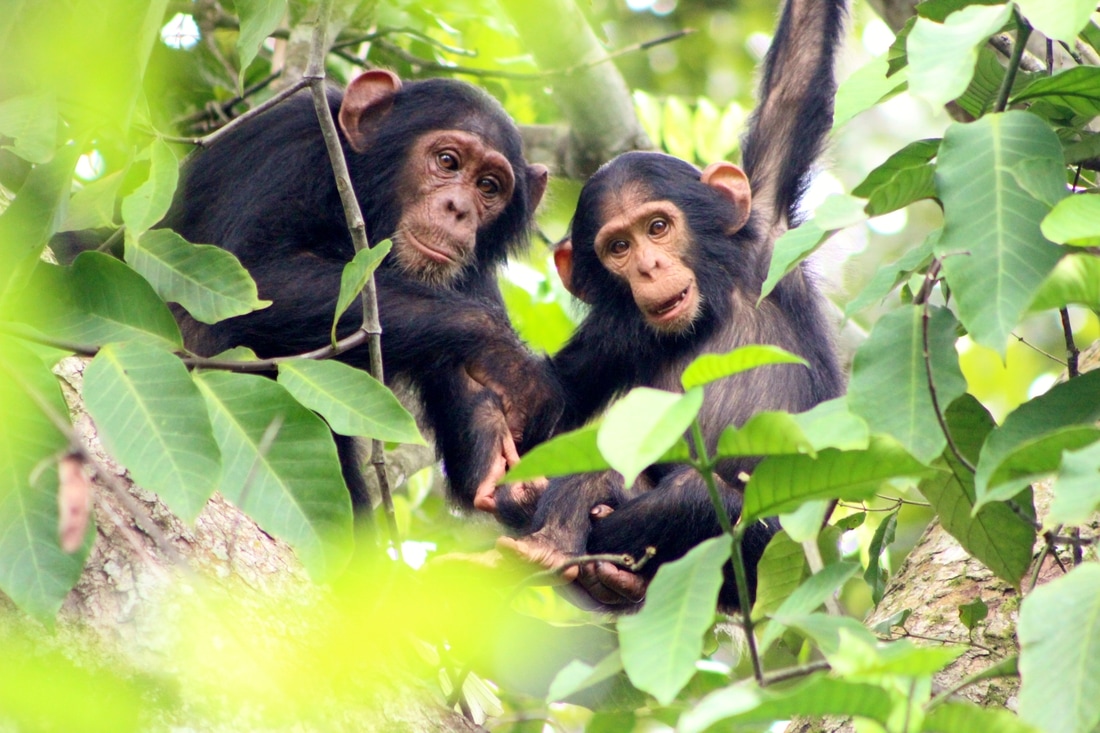
Chimpanzees have a well-documented capacity for aggression — both between individuals within a community and, more seriously, between neighbouring communities — that sets them apart from many other primate species. Understanding what actually drives this behaviour matters for both accurate science communication and effective conservation.
Within-community aggression: rank and competition
Chimpanzee communities are organised around a male dominance hierarchy, and aggression — from bluff displays to genuine physical confrontation — is a normal part of establishing and maintaining rank. Higher rank generally brings better access to food, mating opportunities, and social support, giving individuals real incentive to compete, sometimes aggressively, for position.
Coalitions and political aggression
Male chimpanzees frequently form alliances specifically to challenge a higher-ranking individual together, a strategy that requires real social calculation about who to ally with and when to act. This kind of coordinated, strategic aggression is one of the more striking parallels between chimpanzee and human political behaviour documented by researchers.
Between-community conflict: territorial patrols
Adult male chimpanzees patrol the boundaries of their community's territory, and encounters with neighbouring communities can escalate into serious, occasionally lethal conflict. Long-term field studies have documented sustained periods of intergroup violence at several well-studied sites, a genuinely significant behavioural finding when it was first documented, since sustained lethal conflict between groups was assumed to be uniquely human at the time.
What actually triggers aggression
Aggression in chimpanzees is rarely random — it's typically tied to competition over resources (food, territory, or mates), social rank challenges, or defence against a perceived threat. Resource scarcity in particular tends to raise aggression levels, since competition over a limited food supply directly increases the stakes of any given interaction.
How habitat pressure changes aggression patterns
This is where conservation and behaviour intersect. As forest is fragmented and cleared, chimpanzee communities are forced into smaller ranges with less natural food, heightening competition both within and between communities. Some researchers have observed increased aggression and stress-related behaviour in chimpanzee populations facing significant habitat pressure — a troubling secondary effect of deforestation beyond the more obvious loss of physical space.
Aggression toward humans
Direct aggression toward humans is relatively uncommon in undisturbed habitat, since wild chimpanzees generally prefer to avoid people. But as fragmented habitats like those in Western Uganda force more frequent contact between chimpanzee communities and farming communities, the potential for tense, sometimes dangerous encounters — in both directions — rises accordingly.
Why reducing conflict pressure matters so much
Because habitat pressure is such a clear driver of both aggression and conflict, restoring natural food sources and reconnecting fragmented forest are genuinely effective ways to reduce tension — both within chimpanzee communities and between chimpanzees and the people who share their landscape. This is central to the Bulindi Chimpanzee & Community Project's approach in Western Uganda: forest enrichment planting and corridor replanting directly address the resource scarcity that drives so much of this pressure.
The bigger picture
Chimpanzee aggression is a real, well-documented part of their natural behaviour — but it's also a behaviour that intensifies under the specific pressures of habitat loss and resource scarcity. Addressing those root pressures is a genuine, evidence-based conservation strategy, not just a side effect of "saving forest" in the abstract.
Quick FAQ
Do female chimpanzees show the same level of aggression as males? Generally less — female conflict tends to be quieter and less physically escalated than the visible, often dramatic aggression associated with male rank competition.
Can chimpanzee aggression be reduced through habituation to researchers? Habituation affects how chimpanzees respond to human presence specifically, but doesn't meaningfully change underlying social dynamics or aggression patterns within the community itself.
Is lethal intergroup conflict common? It's been documented at several long-term study sites but isn't a constant, everyday occurrence — it tends to happen in specific circumstances tied to territorial boundaries and resource competition.
Reducing pressure reduces conflict
Because so much chimpanzee aggression is tied to resource competition rather than pure temperament, conservation interventions that restore natural food and safe movement between forest fragments have a genuine, measurable calming effect — not by changing chimpanzee nature, but by removing much of the scarcity driving the conflict in the first place. Some long-term field sites have also documented individual chimpanzees developing distinct, recognisable temperaments over their lifetime — some consistently more prone to conflict than others — suggesting personality plays a meaningful role alongside the broader social and ecological drivers of aggression. Researchers increasingly emphasise that documenting aggression accurately, without either sensationalising or downplaying it, matters for public understanding — chimpanzees are neither simple, peaceful icons nor frightening monsters, but a genuinely complex species whose behaviour reflects real, identifiable ecological and social pressures.
Related Reading
- Chimpanzee Gestation and Birth Explained
- Chimpanzee Sign Language: Can Chimps "Talk"?
- Do Chimpanzees Attack Humans?
- Apes vs. Monkeys: What's the Real Difference?
Meet the Real Chimps of Bulindi
BCCP monitors six wild chimpanzee communities in the Budongo–Bugoma Corridor, each with its own named members and story. Meet the chimps we protect and follow their lives.
Support the Bulindi Chimpanzee & Community Project to help reduce these pressures in Western Uganda. Field guides working alongside researchers have also developed practical experience reading early warning signs of rising tension within a community, valuable frontline knowledge that complements formal academic research on the subject.
Not ready to donate yet? Start with our free guide: Protecting Bulindi’s Chimpanzees — a short field guide to how this conservation work actually happens on the ground.