

 Bulindi
 Wagaisa
.webp?width=600&height=450&name=bccp_individual%20chimp%20page%20-%20mairirwe_the%20mairirwe%20chimpanzees%20(1).webp) Mairirwe
Mairirwe
 Kyabasengya
 Kihomboza
.webp?width=600&height=450&name=bccp_individual%20chimp%20page%20-%20kiraira-kasunga_the%20kiraira%E2%80%93kasunga%20chimpanzees%20(1).webp) Kiraira-Kasunga
Kiraira-Kasunga
 Blogs & Updates
 Videos
 Publications
Why Do Chimpanzees Fight?
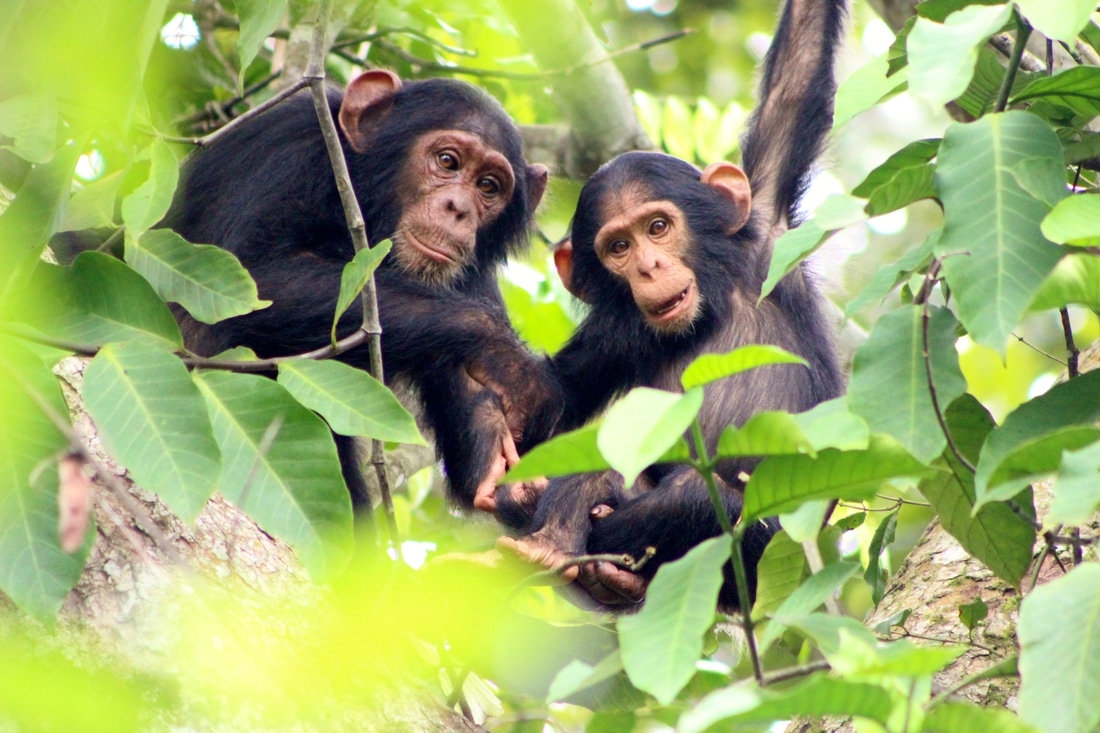
Chimpanzee conflict ranges from minor scuffles over rank to serious, occasionally lethal violence between rival communities. Understanding what actually triggers this behaviour — and how habitat pressure changes it — matters for both accurate science communication and real-world conservation strategy.
Rank disputes within a community
Much chimpanzee conflict happens within a single community, tied directly to the ongoing competition for social rank among males. Higher rank brings tangible benefits — better food access, more mating opportunities, and greater social influence — giving individuals real incentive to challenge rivals, sometimes through bluff displays alone, sometimes through genuine physical confrontation.
Coalition-based conflict
Chimpanzees frequently form alliances specifically to challenge a dominant male together, since a single lower-ranking individual is unlikely to succeed alone. This kind of coordinated, socially strategic conflict is one of the clearest examples of genuinely political behaviour documented in a non-human species.
Conflict between neighbouring communities
Adult male chimpanzees patrol their territory's boundaries, and encounters with a neighbouring community can escalate into serious, sometimes fatal violence. Long-term field studies at several well-known research sites have documented sustained periods of intergroup conflict, sometimes resulting in the death or displacement of entire smaller communities over a period of years.
Resource competition as a driver
Territorial conflict is fundamentally about resources — access to fruit trees, safe foraging space, and mating opportunities with females from neighbouring communities. When food is abundant and territory is large relative to community size, conflict tends to be less frequent; when resources tighten, competition — and the fighting that comes with it — tends to intensify.
How habitat fragmentation changes the picture
This is where deforestation becomes directly relevant. As forest is cleared and fragmented, chimpanzee communities are squeezed into smaller ranges with fewer natural resources, and neighbouring communities that once had ample separation are pushed into more frequent contact and competition. Some researchers have linked increased habitat pressure directly to elevated aggression and conflict in affected chimpanzee populations.
Conflict and the stress of a shrinking world
Beyond direct injury, sustained conflict and habitat pressure appear to raise stress-related physiological markers in affected chimpanzees, with potential knock-on effects for health, reproduction, and long-term community stability — a less visible, but still serious, consequence of habitat fragmentation.
Reducing the pressures that drive conflict
Because resource scarcity is such a clear driver of chimpanzee conflict, restoring natural food sources through forest enrichment planting, and reconnecting fragmented habitat through corridor replanting, directly reduce the competitive pressure that fuels both within-community and between-community aggression. This is central to the Bulindi Chimpanzee & Community Project's conservation approach in Western Uganda — addressing the root resource pressures rather than only observing the conflict that results from them.
Quick FAQ
Do chimpanzees ever reconcile after a fight? Yes — post-conflict reconciliation behaviour, including grooming and embracing, is well documented and appears to help repair relationships and reduce ongoing tension after a dispute.
Is chimpanzee warfare a scientifically accepted term? Some researchers do use "warfare" to describe sustained, organised intergroup lethal conflict, given its similarities to certain patterns of human conflict, though the term remains debated among primatologists.
Can outside observers trigger chimpanzee aggression? Poorly managed human presence or provisioning can alter natural aggression patterns, which is why responsible research and tourism programmes follow strict behavioural protocols to minimise this kind of interference.
Turning the science into action
Since resource scarcity is such a clear, well-documented driver of chimpanzee conflict, funding forest restoration isn't just an abstract environmental gesture — it's a concrete way to reduce a specific, measurable behavioural pressure on a wild community, backed directly by field research findings. Some researchers have also drawn direct comparisons between documented chimpanzee intergroup conflict and certain patterns of human warfare, a controversial but influential line of research that has shaped broader scientific debate about the evolutionary roots of organised violence. Understanding these patterns has also informed captive chimpanzee management, since sanctuaries and zoos now design social groupings deliberately to minimise the kind of resource competition and crowding known to elevate aggression risk in wild populations facing similar pressures.
A clear-eyed understanding of chimpanzee conflict, grounded in real research rather than assumption, ultimately supports smarter, more targeted conservation funding decisions rather than reactive, poorly evidenced interventions. None of this research suggests chimpanzee conflict is inevitable or unmanageable — quite the opposite, it points directly toward practical, fundable interventions that measurably reduce it. Recognising this distinction between root cause and symptom is exactly what separates effective conservation strategy from simple crisis management after the fact. It is, in the end, a genuinely hopeful finding rather than a discouraging one.
Related Reading
- Baby Chimpanzees: Early Life and Development
- Chimpanzee Memory: The Famous Ayumu Test
- Chimpanzee Culture: Do Chimps Have Traditions?
- What Is a Primate?
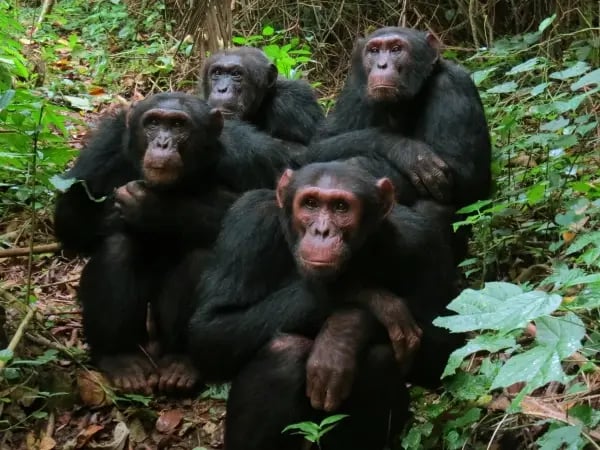
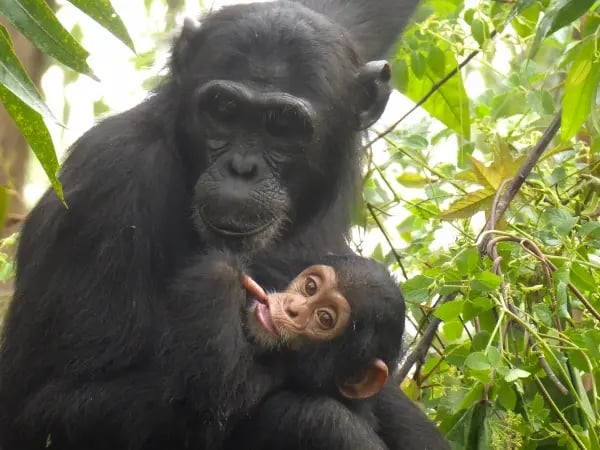
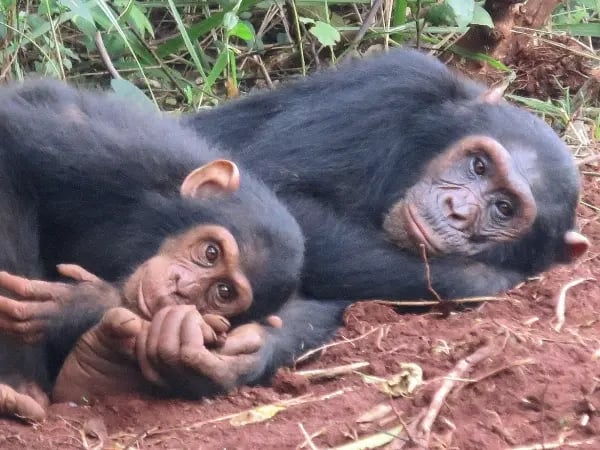
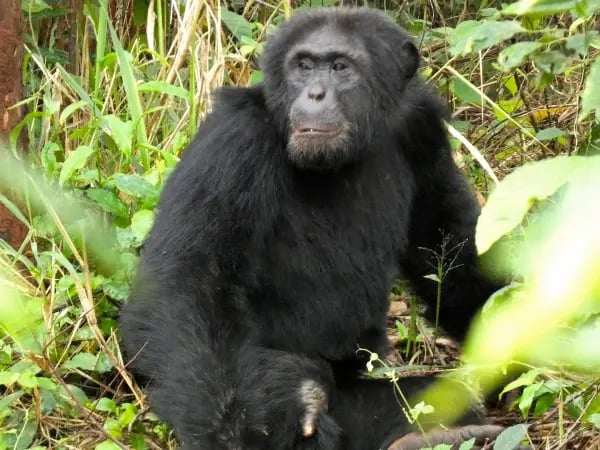
Meet the Real Chimps of Bulindi
BCCP monitors six wild chimpanzee communities in the Budongo–Bugoma Corridor, each with its own named members and story. Meet the chimps we protect and follow their lives.
Support the Bulindi Chimpanzee & Community Project to help reduce these pressures on wild chimpanzee communities. This research has also shaped broader public understanding of primate behaviour generally, helping counter oversimplified portrayals of chimpanzees as either uniformly gentle or uniformly violent in popular media coverage.