

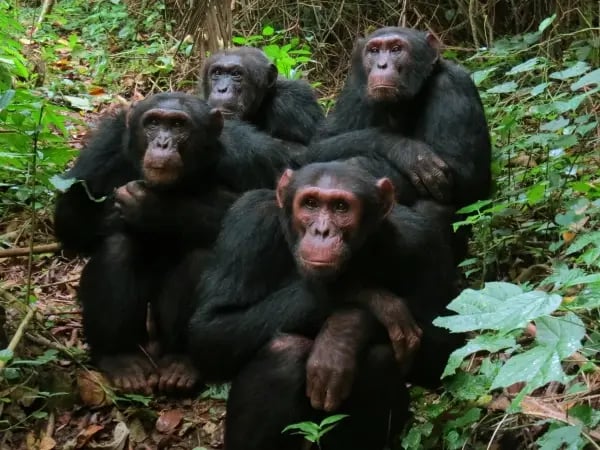
 Bulindi
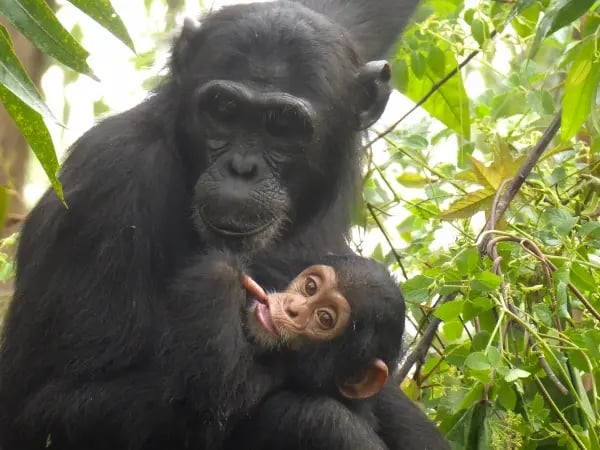 Wagaisa
.webp?width=600&height=450&name=bccp_individual%20chimp%20page%20-%20mairirwe_the%20mairirwe%20chimpanzees%20(1).webp) Mairirwe
Mairirwe
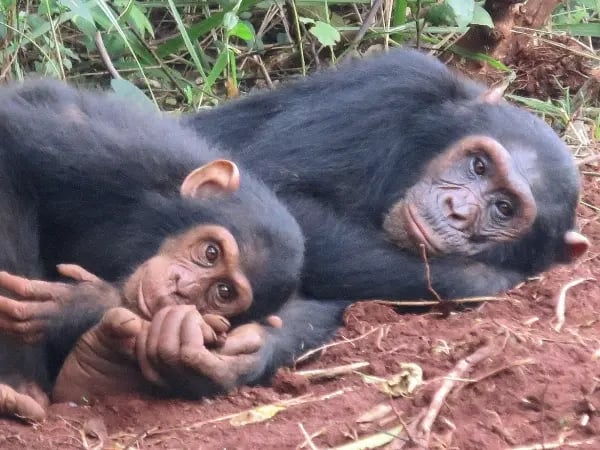 Kyabasengya
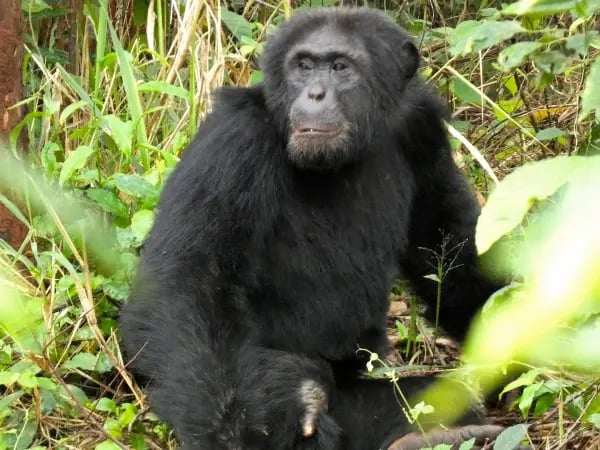 Kihomboza
.webp?width=600&height=450&name=bccp_individual%20chimp%20page%20-%20kiraira-kasunga_the%20kiraira%E2%80%93kasunga%20chimpanzees%20(1).webp) Kiraira-Kasunga
Kiraira-Kasunga
 Blogs & Updates
 Videos
 Publications
Chimpanzee Family Structure Explained
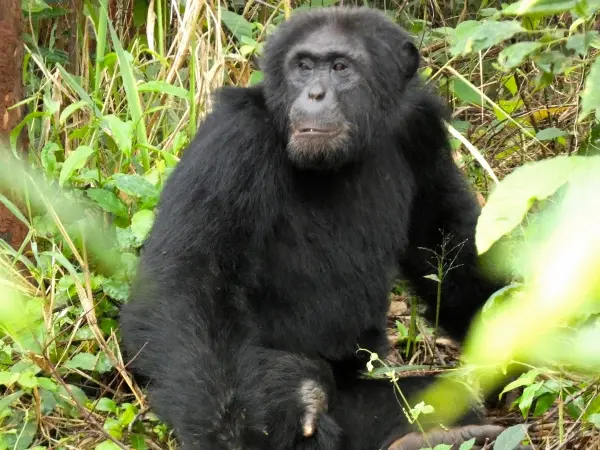
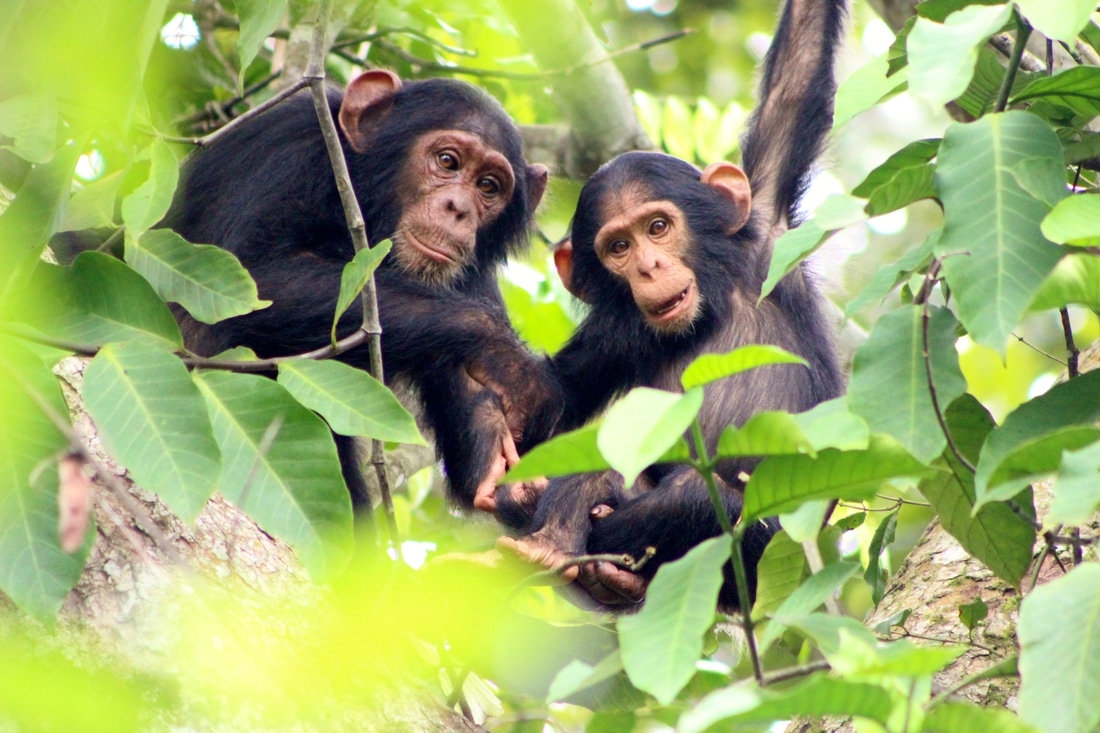
Chimpanzees don't form nuclear families in any sense familiar to humans — there's no pair-bonded couple raising offspring together. Instead, chimpanzee "family" is built almost entirely around the mother-offspring relationship, nested within a much larger community structure.
The core unit: mother and offspring
The strongest, most enduring bond in chimpanzee society is between a mother and her offspring. Mothers nurse infants for up to five years and often maintain a close relationship with their offspring well into adulthood — some of the longest-documented social bonds in chimpanzee communities exist between adult mothers and their grown children.
Siblings
Because chimpanzee mothers typically space births 5–6 years apart, siblings often grow up with a significant age gap between them, and older siblings sometimes play a real role in helping care for or protect a younger sibling — a behaviour that also gives young chimpanzees valuable practice in social and caregiving skills before having offspring of their own.
Fathers: a different kind of role
Chimpanzees don't form the pair-bonds seen in some other species, and paternity within a community is often unclear even to researchers without genetic testing, since females typically mate with multiple males. This means individual fathers generally don't play a direct, identifiable caregiving role the way mothers do — though male chimpanzees do provide a broader, indirect form of protection simply by defending the community's territory as a whole.
The wider community as an extended structure
Beyond the mother-offspring bond, chimpanzees live within a much larger community — sometimes upwards of 100 individuals — organised through shifting alliances, a male rank hierarchy, and long-term relationships that function somewhat like an extended family network, even without direct genetic ties in every case.
Female transfer between communities
In many chimpanzee populations, females leave their birth community around adolescence and join a neighbouring one, a pattern that helps maintain genetic diversity but also means many adult females are, in a sense, building a new "family" network of relationships from scratch in a community they weren't born into.
Why chimpanzee "family" structure matters for conservation
Understanding these bonds has real practical implications. The loss of a mother to poaching, disease, or human-wildlife conflict is especially devastating — not just for that individual, but often for dependent offspring who may not survive without her care, particularly if they are still very young. This is one reason protecting adult females specifically is such a conservation priority in small, fragmented populations.
Tracking family bonds in the field
The Bulindi Chimpanzee & Community Project's daily monitoring work in Western Uganda involves tracking individual relationships within its known chimpanzee community — understanding specific mother-offspring bonds, sibling relationships, and how the loss or addition of individual community members affects the group's overall stability and long-term prospects.
Quick FAQ
Do chimpanzees recognise their own fathers? Evidence is mixed, but some studies suggest chimpanzees may show subtly different behaviour toward likely paternal relatives, even without a socially recognised father-offspring bond in the way mothers and offspring share.
Do siblings stay close as adults? Sibling bonds, particularly between individuals of the same sex who remain in the same community, can persist into adulthood and sometimes translate into political alliance or mutual support.
Is there such a thing as a chimpanzee "orphan"? Yes — infants who lose their mother before reaching independence face serious survival challenges, and in some documented cases, another female or older sibling has taken on a caregiving role.
Why protecting mothers protects families
Given how central the mother-offspring bond is to chimpanzee social structure, protecting adult females specifically has an outsized effect on a community's overall stability — the loss of one mother can ripple through multiple offspring and, in some cases, an entire social network built around her. Long-term field sites that have tracked multiple chimpanzee generations have also revealed that family relationship patterns can shift measurably over decades as a community's overall composition and rank structure evolves, adding a genuinely historical dimension to this kind of research. Genetic testing has increasingly supplemented behavioural observation in modern chimpanzee research, allowing scientists to confirm paternity and more distant kinship ties that pure observation alone could never reliably establish, adding real precision to our understanding of these family networks.
A clearer picture of these bonds also helps conservation teams communicate more effectively with donors and the public about exactly why protecting specific individuals, not just abstract population numbers, genuinely matters. Recognising chimpanzee family life in these concrete terms makes an abstract conservation appeal feel considerably more real, grounded in specific relationships rather than distant population statistics alone.
Related Reading
- Why Do Chimpanzees Fight?
- Baby Chimpanzees: Early Life and Development
- Chimpanzee Memory: The Famous Ayumu Test
- Apes vs. Monkeys: What's the Real Difference?
Meet the Real Chimps of Bulindi
BCCP monitors six wild chimpanzee communities in the Budongo–Bugoma Corridor, each with its own named members and story. Meet the chimps we protect and follow their lives.
Support the Bulindi Chimpanzee & Community Project to help protect these family bonds in the wild. These genetic findings have occasionally revealed unexpected relationships within a community that pure behavioural observation had missed entirely, adding real nuance to researchers' understanding of chimpanzee social bonds and kinship.