

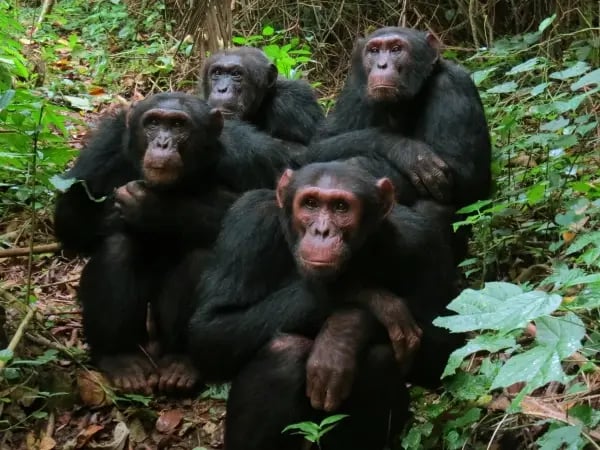
 Bulindi
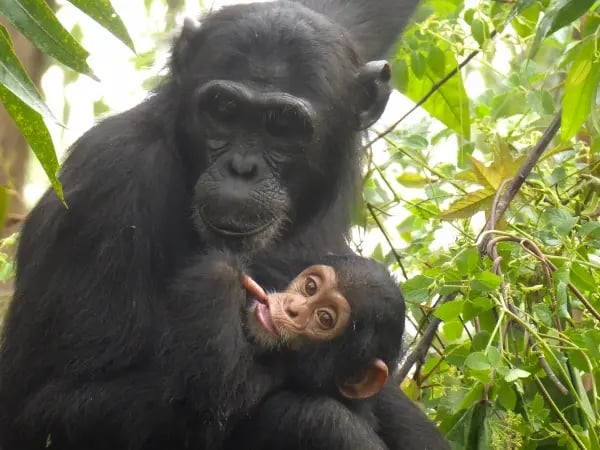 Wagaisa
.webp?width=600&height=450&name=bccp_individual%20chimp%20page%20-%20mairirwe_the%20mairirwe%20chimpanzees%20(1).webp) Mairirwe
Mairirwe
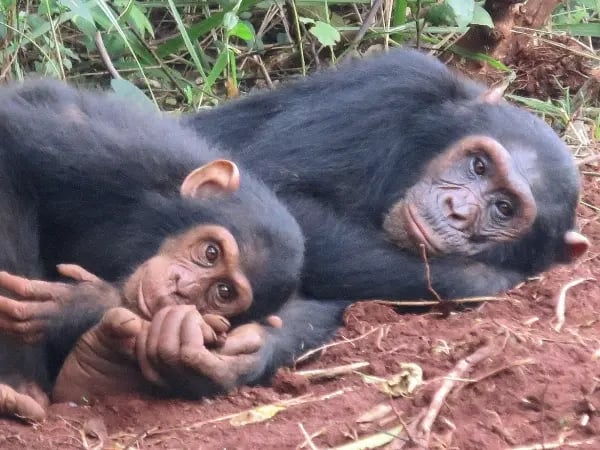 Kyabasengya
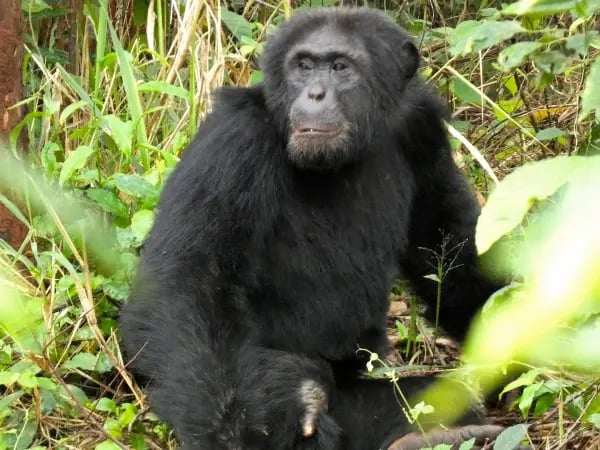 Kihomboza
.webp?width=600&height=450&name=bccp_individual%20chimp%20page%20-%20kiraira-kasunga_the%20kiraira%E2%80%93kasunga%20chimpanzees%20(1).webp) Kiraira-Kasunga
Kiraira-Kasunga
 Blogs & Updates
 Videos
 Publications
Gorilla vs. Orangutan
Gorillas and orangutans are both great apes, both critically important to conservation, and both often confused with each other in casual conversation — yet they've never shared a habitat in the wild, and their daily lives look remarkably different.
Different continents entirely
Gorillas are exclusively African, found in Central Africa across two species — western and eastern gorillas — each with further recognised subspecies. Orangutans are found only in South East Asia, on the islands of Borneo and Sumatra. Like chimpanzees and orangutans, gorillas and orangutans have never overlapped in range; their evolutionary paths diverged long before either reached their current geography.
Size and build
Gorillas are the largest living primates — adult male gorillas can weigh 140–180kg, considerably heavier than an adult male orangutan, which typically weighs 50–90kg. Gorillas have a heavier, more terrestrial build suited to their largely ground-based lifestyle, while orangutans are built for life almost entirely in the trees, with the longest arms relative to body size of any great ape.
Social structure
This is one of the sharpest contrasts among all great apes. Gorillas live in small, stable family groups led by a dominant silverback male, with relatively low internal conflict once the hierarchy is established. Orangutans are largely solitary — adult males and females typically forage alone, coming together mainly to mate, making them one of the least social great apes.
Diet
Gorillas eat mostly leaves, stems, and shoots, an adaptation to a mostly ground-based, folivorous diet. Orangutans rely much more heavily on fruit, tracking often unpredictable fruiting cycles across the Bornean and Sumatran forest canopy — a diet that makes them especially vulnerable when forest is cleared or fragmented.
Tool use
Orangutans use tools more frequently than gorillas in the wild — sticks to extract seeds or insects, leaves as makeshift umbrellas or gloves — though tool use varies significantly between different wild orangutan populations. Gorillas use tools far less often, though instances have been documented, including using sticks to test water depth before wading.
Conservation status
Both are in serious trouble. Mountain gorillas and Cross River gorillas are Critically Endangered, while other gorilla subspecies are Endangered. Sumatran and Tapanuli orangutans are Critically Endangered, driven overwhelmingly by rainforest clearing for palm oil plantations — one of the most severe, well-documented drivers of great ape habitat loss anywhere in the world.
Why comparing them matters for conservation strategy
Gorilla conservation and orangutan conservation look almost nothing alike in practice, despite both protecting a great ape. Gorilla work often centres on protecting intact montane or lowland forest blocks and managing tourism carefully around habituated groups. Orangutan work centres heavily on halting industrial-scale rainforest clearing and rehabilitating orphaned individuals through dedicated sanctuaries. Neither model transfers directly to chimpanzee conservation in a fragmented, farmland-adjacent landscape like Western Uganda's — which is exactly why the Bulindi Chimpanzee & Community Project's approach is built specifically around forest enrichment, corridor replanting, and community livelihood support tailored to how chimpanzees actually live in that particular landscape.
The broader point
Gorillas, orangutans, and chimpanzees are all great apes facing serious threats, but "great ape conservation" isn't one single strategy — it's several different, carefully tailored approaches, each shaped by a species' specific biology, geography, and social structure.
Quick FAQ
Which is more closely related to humans? Neither is closer than the other in a simple sense — chimpanzees and bonobos are humanity's closest living relatives, with gorillas next, and orangutans more distant still on the great ape family tree.
Do gorillas and orangutans ever interact in captivity? Zoos generally house them in entirely separate enclosures, since their space, social, and dietary needs differ enough that co-housing isn't practical or appropriate.
Which lives longer in the wild? Both have broadly similar wild lifespans, generally in the 35–40 year range, though captive individuals of both species can live considerably longer under veterinary care. Whichever species a donor chooses to support, the underlying lesson holds: effective great ape conservation is never generic — it has to be built around one species, in one specific landscape, addressing the pressures that population actually faces day to day.
Zoos and conservation organisations increasingly present great ape species side by side specifically to highlight these contrasts, helping visitors and donors understand that supporting "great apes" in the abstract means very different things depending on which specific species and habitat is actually involved. Neither species can wait for a slower, more generic approach to conservation funding — both need targeted, sustained investment now. Every additional dollar directed at one specific, well-understood population — rather than spread thin across a vague, generic appeal — tends to produce measurably better outcomes for the species it actually protects, whichever one that happens to be. A clear-eyed comparison like this one is a small but useful start.
Related Reading
- Chimpanzee vs. Bonobo: What's the Difference?
- Apes vs. Monkeys: What's the Real Difference?
- Chimpanzee vs. Gorilla: How Do They Compare?
- 50 Fascinating Chimpanzee Facts
Meet the Real Chimps of Bulindi
BCCP monitors six wild chimpanzee communities in the Budongo–Bugoma Corridor, each with its own named members and story. Meet the chimps we protect and follow their lives.
Support the Bulindi Chimpanzee & Community Project to help fund chimpanzee-specific conservation work in Uganda.
Not ready to donate yet? Start with our free guide: Protecting Bulindi’s Chimpanzees — a short field guide to how this conservation work actually happens on the ground.