

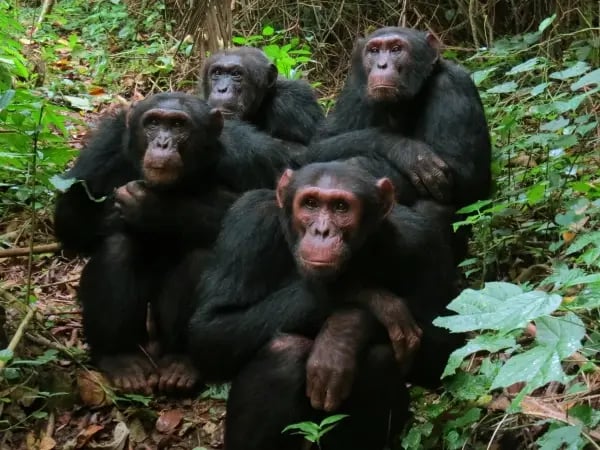
 Bulindi
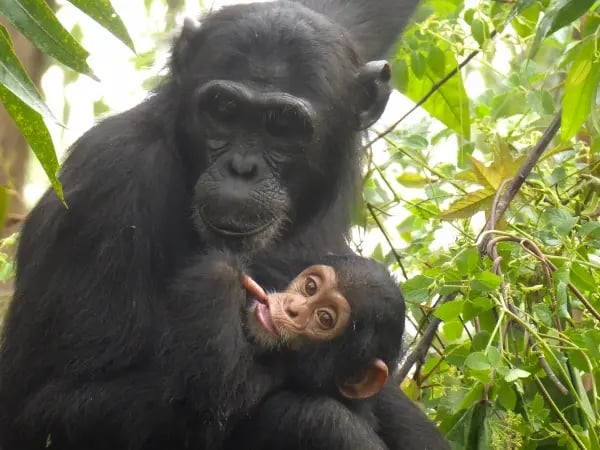 Wagaisa
.webp?width=600&height=450&name=bccp_individual%20chimp%20page%20-%20mairirwe_the%20mairirwe%20chimpanzees%20(1).webp) Mairirwe
Mairirwe
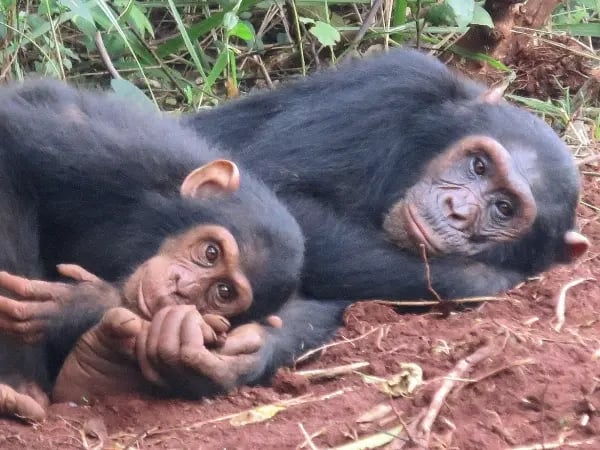 Kyabasengya
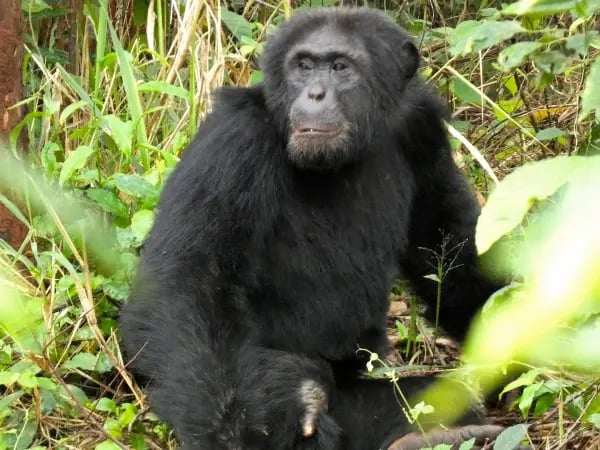 Kihomboza
.webp?width=600&height=450&name=bccp_individual%20chimp%20page%20-%20kiraira-kasunga_the%20kiraira%E2%80%93kasunga%20chimpanzees%20(1).webp) Kiraira-Kasunga
Kiraira-Kasunga
 Blogs & Updates
 Videos
 Publications
How Smart Are Chimpanzees, Really?
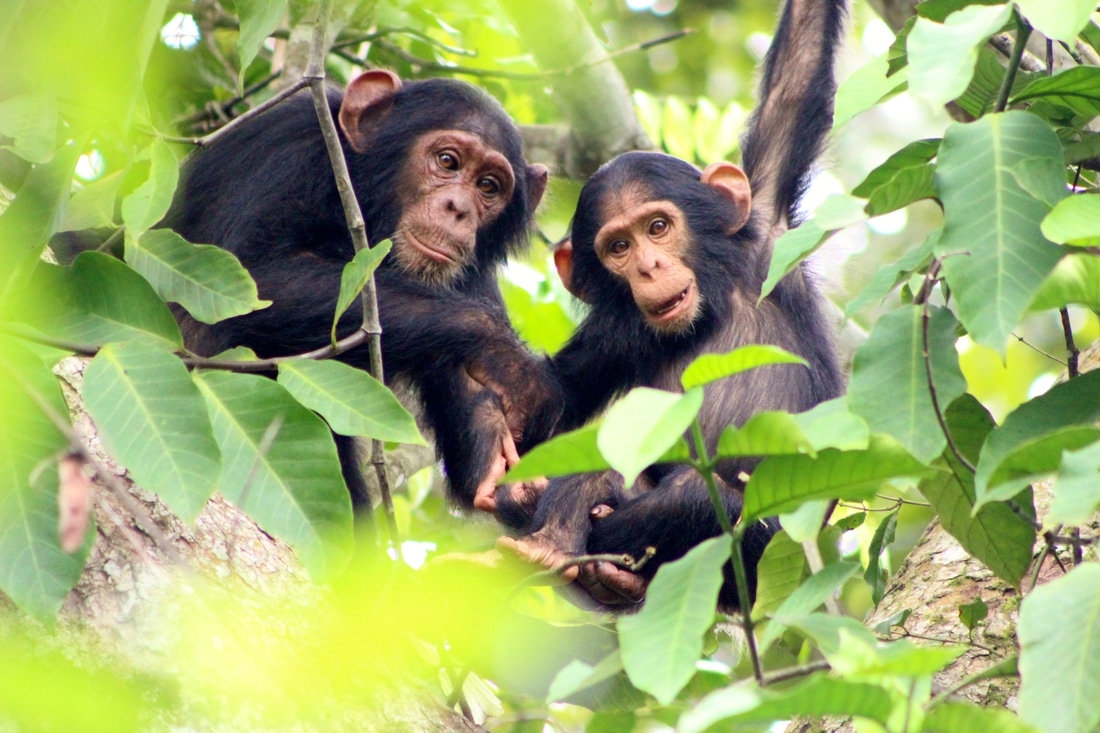
Chimpanzee intelligence is often described in superlatives, and much of it is genuinely well-earned — but it's worth looking honestly at what "smart" actually means for a species whose cognition evolved to solve very different problems than ours.
Tool use: genuinely sophisticated
Wild chimpanzees make and use a wide range of tools — termite-fishing sticks, stone or wooden hammers for cracking nuts, leaf sponges for drinking water, and occasionally sharpened sticks used in hunting. Crucially, these behaviours are learned through years of observation and practice, and specific tool traditions vary between neighbouring chimpanzee communities — genuine cultural transmission, not pure instinct.
Memory: sometimes better than ours
In certain controlled memory tasks — briefly memorising the position of numbers flashed on a screen, for instance — young chimpanzees have actually outperformed human adults, a striking finding that upended assumptions about human cognitive superiority being universal across every mental task.
Self-awareness
Chimpanzees reliably pass the mirror self-recognition test, touching a mark on their own body visible only in a mirror's reflection — one of relatively few animal species known to demonstrate this level of self-awareness under controlled testing.
Social intelligence
Chimpanzee society demands real cognitive sophistication: tracking rank, forming and maintaining strategic alliances, recognising when to challenge a rival and when to back down, and remembering past favours and slights over long periods. Some researchers argue this constant social complexity is exactly what shaped chimpanzees' particular cognitive strengths.
Communication
In controlled studies, chimpanzees have learned to use symbol systems or sign language to request items and answer simple questions, showing a genuine, if limited, capacity for referential communication. In the wild, chimpanzees combine vocal calls, facial expressions, and gestures into a flexible, context-sensitive communication system of real complexity.
Where chimpanzee intelligence differs from human intelligence
Chimpanzees don't show the same capacity for open-ended, recursive language or the kind of long-term cumulative cultural technology that defines human civilisation. Their intelligence is best understood as deep and sophisticated within the specific domains that matter for their own social and ecological life — not simply a "lesser version" of human intelligence on a single universal scale.
Why this matters for conservation
Recognising the genuine depth of chimpanzee cognition changes how their conservation should be understood — not as protecting a simple, instinct-driven animal, but a species capable of learning, planning, and adapting behaviour to a changing world. That adaptive capacity is visible directly in the wild: the Bulindi chimpanzee community in Western Uganda has developed specific, observable behavioural strategies for safely crossing a busy road that runs through their territory — a genuine, learned response to a modern, human-created hazard.
The honest answer
Chimpanzees are remarkably intelligent, in ways that are sometimes directly comparable to human cognition and sometimes shaped by entirely different pressures. That intelligence is precisely what makes their ongoing habitat loss such a loss — not just of a species, but of a genuinely sophisticated, adaptive way of understanding and navigating the world.
Quick FAQ
Do chimpanzees understand cause and effect? Yes — this is demonstrated clearly through their tool use, which requires understanding that a specific action (inserting a stick into a termite mound) produces a specific, predictable result.
Can chimpanzees deceive other chimpanzees? Researchers have documented behaviour consistent with deception — for instance, an individual hiding food from a dominant chimpanzee — suggesting a genuine understanding of what other individuals can and cannot perceive.
Is chimpanzee intelligence the same across all populations? Base cognitive capacity appears broadly similar across the species, though specific learned skills and tool traditions vary meaningfully between different wild communities.
Why this intelligence is worth protecting
A species capable of tool innovation, strategic social reasoning, and genuine adaptive learning represents millions of years of evolutionary refinement — refinement that, once lost through extinction, can never be recovered. That's a large part of why chimpanzee conservation carries weight well beyond simple biodiversity accounting. It's also worth noting that assessing animal intelligence fairly is genuinely difficult methodologically, since any test inevitably reflects some human assumptions about what counts as smart in the first place, a limitation researchers actively grapple with when designing new comparative cognition studies. Public fascination with chimpanzee intelligence has, if anything, grown over recent decades, driven partly by viral video clips of specific cognitive feats — though researchers caution that isolated viral moments rarely capture the fuller, more nuanced scientific picture built up through years of careful, systematic study.
This growing public appreciation for chimpanzee cognition has, in turn, strengthened broader support for great ape welfare standards across research, sanctuary, and zoo settings worldwide over the past few decades.
Related Reading
- Chimpanzee Aggression: Causes and Context
- Chimpanzee Gestation and Birth Explained
- Chimpanzee Sign Language: Can Chimps "Talk"?
- Apes vs. Monkeys: What's the Real Difference?
Meet the Real Chimps of Bulindi
BCCP monitors six wild chimpanzee communities in the Budongo–Bugoma Corridor, each with its own named members and story. Meet the chimps we protect and follow their lives.
Support the Bulindi Chimpanzee & Community Project to help protect wild chimpanzee populations in Uganda. Universities and research institutions have increasingly opened this kind of cognitive research to public outreach and education, helping translate technical findings into material genuinely accessible to non-specialist audiences and donors alike.