

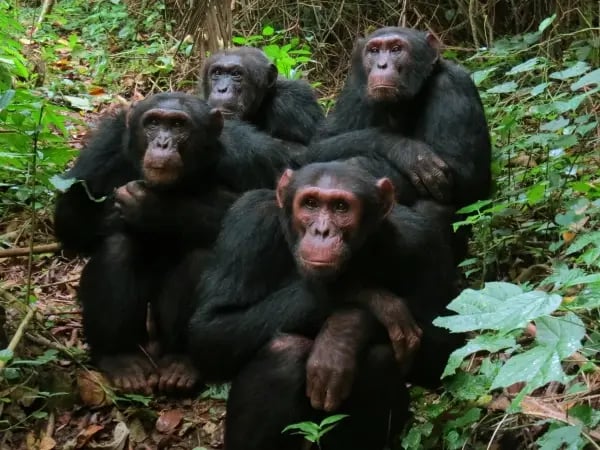
 Bulindi
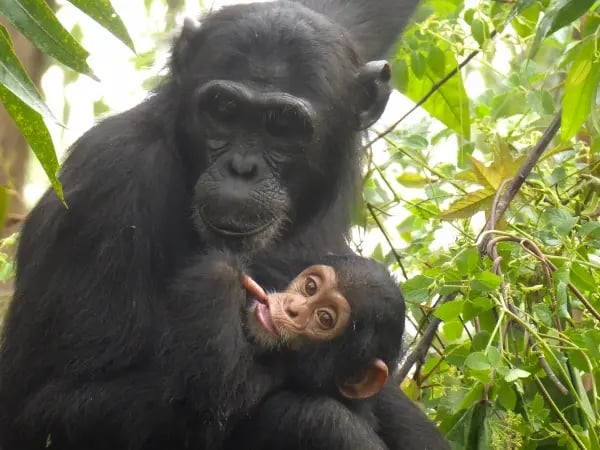 Wagaisa
.webp?width=600&height=450&name=bccp_individual%20chimp%20page%20-%20mairirwe_the%20mairirwe%20chimpanzees%20(1).webp) Mairirwe
Mairirwe
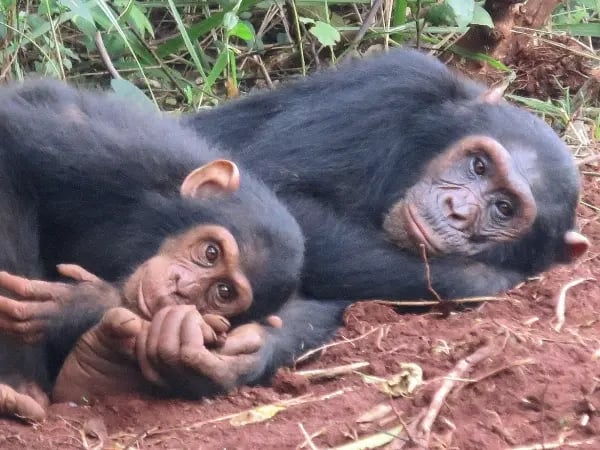 Kyabasengya
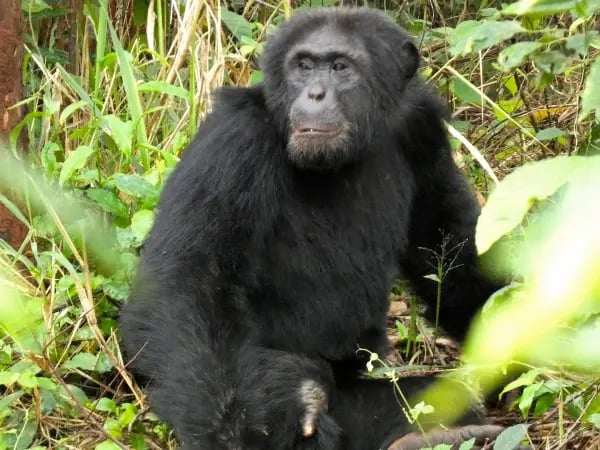 Kihomboza
.webp?width=600&height=450&name=bccp_individual%20chimp%20page%20-%20kiraira-kasunga_the%20kiraira%E2%80%93kasunga%20chimpanzees%20(1).webp) Kiraira-Kasunga
Kiraira-Kasunga
 Blogs & Updates
 Videos
 Publications
What Is a Wildlife Corridor?
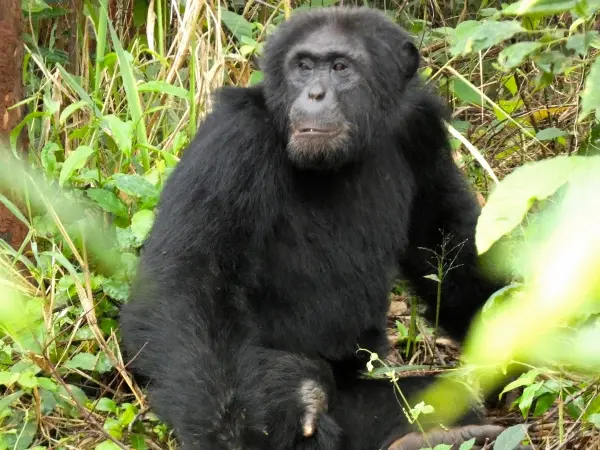
A wildlife corridor is a strip of connected habitat — often replanted forest along a river or valley — that links two otherwise separated patches of natural habitat, allowing animals to move between them without crossing dangerous open ground. For species surviving in fragmented landscapes, corridors can be the difference between genuine long-term viability and slow, isolated decline.
Why fragmentation is worse than it first appears
When a once-continuous forest is broken into smaller patches by farmland or roads, the total amount of remaining forest matters less than most people assume — what matters just as much is whether those patches are connected. Isolated fragments, even collectively containing a reasonable amount of forest, generally can't support the same population health as the same total area in a single connected block.
What corridors actually do
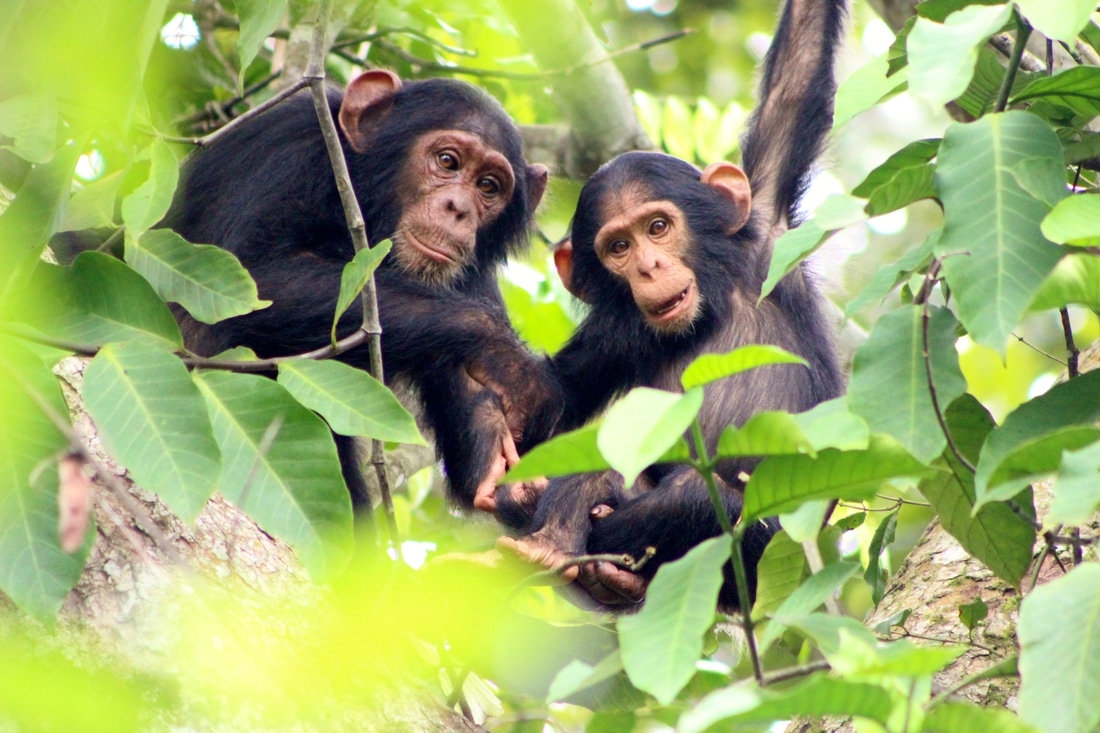
A well-designed wildlife corridor reconnects separated forest fragments, allowing animals like chimpanzees to travel between patches to find food, seek mates from other parts of a fragmented population, and avoid being genetically or physically isolated within a single small patch indefinitely.
Corridor replanting in practice
In practical terms, corridor replanting usually means deliberately planting native tree species along a specific route — frequently following a river or stream, since riverside land is often less intensively farmed and provides a natural, already-partially-forested starting point — to gradually rebuild a connected strip of habitat between two larger forest fragments.
Why rivers are a common corridor route
Riverside land is frequently less suitable for certain crops due to flooding risk or soil conditions, making it more available for reforestation without displacing farmland communities depend on for their livelihoods. Rivers also naturally support the kind of moisture-retentive vegetation chimpanzees and other forest wildlife favour, giving corridor replanting projects a practical head start.
Reducing road and open-ground risk
Beyond genetic and population benefits, corridors directly reduce a very immediate danger: the risk chimpanzees face crossing roads and open farmland to move between fragments. A well-placed corridor can let a chimpanzee community reach a neighbouring forest patch without ever needing to cross the kind of busy road documented in road-crossing studies of chimpanzee populations in similarly fragmented landscapes.
Corridors and reduced human-wildlife conflict
Corridors also indirectly reduce conflict with farming communities. When chimpanzees can travel safely between forest patches to reach adequate natural food, they're less likely to be forced into crop-raiding simply because a single isolated fragment can't sustain them through a lean season.
Why this is central to Bulindi's conservation strategy
The Bulindi Chimpanzee & Community Project runs an active corridor replanting initiative in Western Uganda specifically for these reasons — reconnecting fragments of remaining forest along rivers to give its wild chimpanzee community safer movement options, reduce road-crossing risk, and support the broader forest enrichment work aimed at reducing crop-raiding conflict.
A slow but genuinely effective strategy
Corridor replanting takes years to mature into usable habitat, and it's a far less dramatic intervention than declaring a large new protected area. But in a landscape where a return to unbroken, continuous forest simply isn't realistic, reconnecting what remains is one of the most practical, achievable ways to give a fragmented chimpanzee population a genuine long-term future.
Quick FAQ
How long does it take a replanted corridor to become usable habitat? Typically several years at minimum, since trees need time to mature enough to provide the canopy cover and food resources a species like chimpanzees actually needs to use the corridor safely.
Do corridors work for every species? Effectiveness varies by species' specific mobility and habitat needs, but corridors are a well-established, widely used strategy across many fragmented-habitat conservation contexts, not just chimpanzee conservation specifically.
Can farmers still use land near a wildlife corridor? Corridor design typically focuses on specific strips of land, often less agriculturally valuable riverside areas, aiming to minimise disruption to farmland actively used by local communities.
A long-term investment, not a quick fix
Corridor replanting won't show results within a single year, but it represents exactly the kind of patient, multi-year investment that turns a genuinely fragmented, precarious habitat into one capable of sustaining a wild chimpanzee population over the long term — a slower payoff, but a far more durable one. Some corridor projects also incorporate community involvement directly into the planting and maintenance process, providing local employment opportunities that further reinforce the economic case for supporting, rather than resisting, this kind of long-term habitat restoration work. Researchers increasingly use camera traps and, in some cases, GPS tracking to verify that a newly established corridor is actually being used as intended by target species, providing concrete evidence of success rather than relying solely on assumption once the initial planting work is complete.
Related Reading
- Chimpanzee Habitat Loss, By the Numbers
- The Albertine Rift: Uganda's Biodiversity Hotspot
- Where Do Wild Chimpanzees Live Today?
- 50 Fascinating Chimpanzee Facts
Meet the Real Chimps of Bulindi
BCCP monitors six wild chimpanzee communities in the Budongo–Bugoma Corridor, each with its own named members and story. Meet the chimps we protect and follow their lives.
Support the Bulindi Chimpanzee & Community Project to help fund this corridor replanting work. This kind of monitoring data also helps secure continued funding for corridor projects, since donors and conservation bodies increasingly expect concrete evidence of impact rather than assurance based on planting activity alone.