

 Bulindi
 Wagaisa
.webp?width=600&height=450&name=bccp_individual%20chimp%20page%20-%20mairirwe_the%20mairirwe%20chimpanzees%20(1).webp) Mairirwe
Mairirwe
 Kyabasengya
 Kihomboza
.webp?width=600&height=450&name=bccp_individual%20chimp%20page%20-%20kiraira-kasunga_the%20kiraira%E2%80%93kasunga%20chimpanzees%20(1).webp) Kiraira-Kasunga
Kiraira-Kasunga
 Blogs & Updates
 Videos
 Publications
How Do Chimpanzees Give Birth?
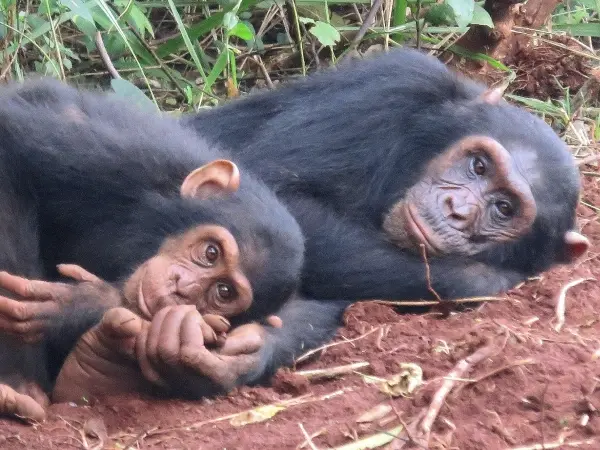
Chimpanzee birth is rarely witnessed directly in the wild, since mothers typically seek privacy for labour and delivery. Much of what's known comes from a mix of rare field observations, sanctuary and captive-setting births, and physiological research — together building a reasonably clear picture of the process.
Seeking privacy for labour
Unlike much of chimpanzee daily life, which happens in full view of the community, birth typically occurs away from other individuals, often at night or in a secluded spot within the community's range. This preference for privacy during labour appears to be a consistent pattern across chimpanzee populations, though the exact reasons — reducing predation risk, avoiding disturbance, or simple instinct — aren't fully settled.
Labour and delivery
Chimpanzee gestation lasts roughly 230–240 days, and labour itself appears broadly similar in basic structure to other great ape births, including humans — progressive contractions leading to delivery, typically without direct assistance from other chimpanzees. Mothers generally give birth unassisted, consistent with patterns seen across most wild primate species.
Immediately after birth
A newborn chimpanzee is entirely dependent from the moment of birth, unable to move independently and reliant on clinging instinctively to its mother's fur. The mother typically cleans the infant and begins nursing within the first hours, and the pair generally remain apart from the wider community for a period before rejoining group activity.
Why the first days are so critical
Infant mortality is highest in the earliest period of life, driven by a combination of factors including disease, accidental injury, and — in some chimpanzee populations — infanticide risk from rival males. This vulnerability is one reason mothers are especially cautious and protective in the days immediately following birth.
How researchers actually study this
Because direct observation of birth itself is so rare, much of what's known about chimpanzee labour and delivery has been pieced together from a combination of sanctuary and zoo-based births (where monitoring is possible), physiological studies of pregnant chimpanzees, and careful field observation of mothers and infants in the days immediately following a birth that wasn't directly witnessed.
Why every birth matters for a small population
Given how slowly chimpanzees reproduce — typically one infant every 5–6 years per female, with years of dependent care required afterward — every successful birth and surviving infant matters enormously to a small, fragmented population's long-term viability. A community that loses infants faster than it can naturally replace them faces a genuine risk of slow, cumulative decline.
What this means for daily monitoring in the field
This is exactly why organisations like the Bulindi Chimpanzee & Community Project invest so heavily in daily, individual-level monitoring of their wild community in Western Uganda — tracking which females are pregnant, when births occur, and how infants are faring in those critical early months, since this data is essential for understanding whether a small, fragmented population is actually holding steady, growing, or slowly declining.
Quick FAQ
Do other chimpanzees help during birth? Generally no — chimpanzee mothers typically give birth alone, unlike some primate species where birth attendance by other females has been documented.
How soon after birth does a mother resume normal community activity? This varies, but mothers typically remain somewhat apart from the wider group in the first days before gradually reintegrating into normal foraging and social activity.
Is chimpanzee birth ever monitored directly by researchers? Direct observation of the birth moment itself is rare even at well-studied field sites, though the days immediately before and after are sometimes documented when a birth is anticipated based on a female's advanced pregnancy signs.
Why this knowledge gap matters
Precisely because chimpanzee birth is so rarely observed directly, every data point researchers can gather — even indirect signs following an unwitnessed birth — adds real value to understanding a population's reproductive health, which is only possible through sustained, patient, long-term field presence. Advances in non-invasive monitoring technology, including camera traps and hormone analysis from collected faecal samples, have gradually expanded what researchers can learn about wild chimpanzee reproduction without ever needing to directly disturb a mother during this especially sensitive period. Some research sites have also begun using minimally invasive hormone monitoring from collected samples to anticipate births in advance, allowing for more careful, less disruptive observation planning around this especially sensitive period in a wild female's life.
As this body of knowledge continues to grow, it increasingly supports better-informed conservation planning around exactly when and how a field team should adjust its monitoring approach around an expectant mother. Every additional detail researchers learn here adds another small piece to a much larger, still-incomplete picture of how wild chimpanzee populations sustain themselves generation after generation.
Related Reading
- Chimpanzee Family Structure Explained
- Why Do Chimpanzees Fight?
- Baby Chimpanzees: Early Life and Development
- Apes vs. Monkeys: What's the Real Difference?
Meet the Real Chimps of Bulindi
BCCP monitors six wild chimpanzee communities in the Budongo–Bugoma Corridor, each with its own named members and story. Meet the chimps we protect and follow their lives.
Support the Bulindi Chimpanzee & Community Project to help fund this ongoing field monitoring. This growing body of indirect evidence has gradually filled in much of what direct observation alone could never realistically provide, given how rarely wild chimpanzee births are actually witnessed by researchers in real time.