

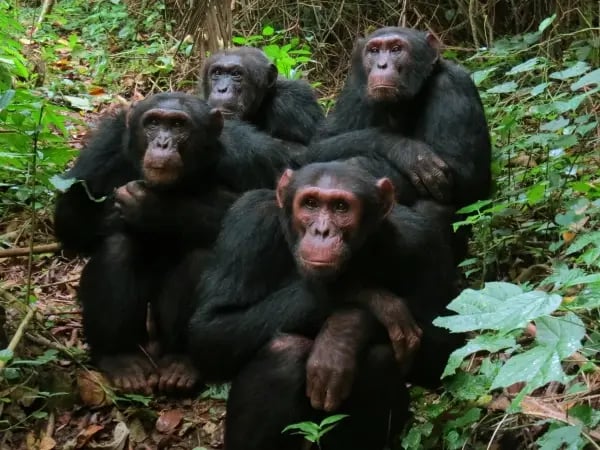
 Bulindi
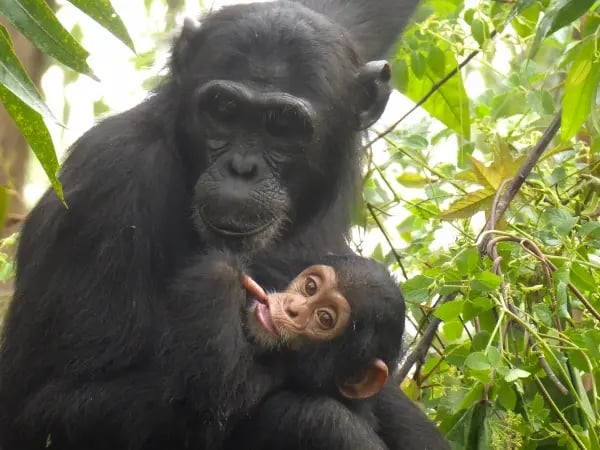 Wagaisa
.webp?width=600&height=450&name=bccp_individual%20chimp%20page%20-%20mairirwe_the%20mairirwe%20chimpanzees%20(1).webp) Mairirwe
Mairirwe
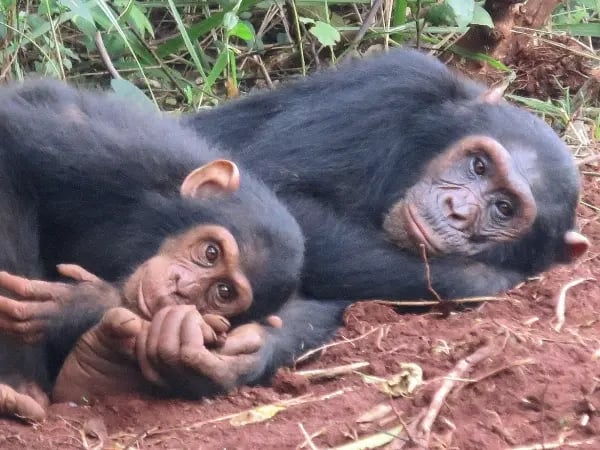 Kyabasengya
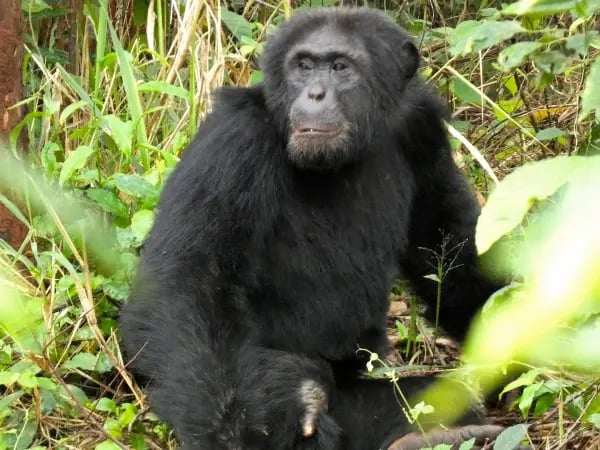 Kihomboza
.webp?width=600&height=450&name=bccp_individual%20chimp%20page%20-%20kiraira-kasunga_the%20kiraira%E2%80%93kasunga%20chimpanzees%20(1).webp) Kiraira-Kasunga
Kiraira-Kasunga
 Blogs & Updates
 Videos
 Publications
Male vs. Female Chimpanzees: Social Roles
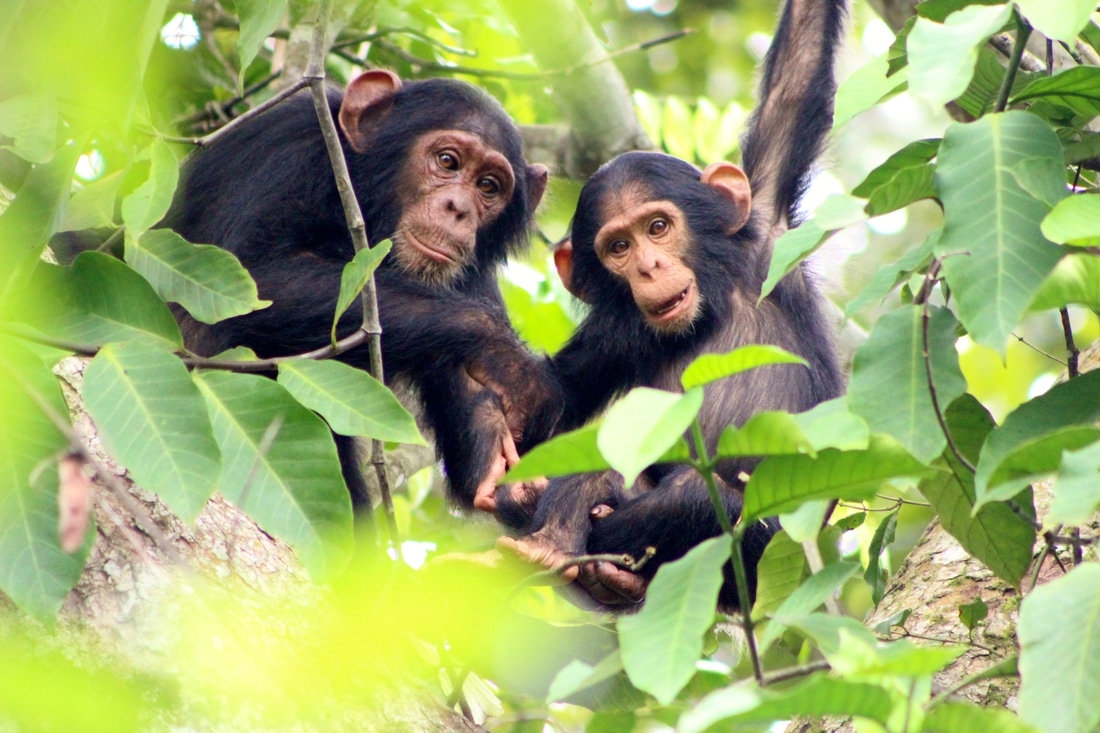
Chimpanzee society is often described in terms of male rank and competition, but female chimpanzees play an equally important, if quieter, role in how a community actually functions day to day.
Male roles: rank, alliances, and territory
Adult male chimpanzees compete actively for social rank, using a mix of physical displays, strategic alliances, and occasional direct confrontation to establish and defend their position. Higher-ranking males typically gain better access to food and mating opportunities, giving strong incentive for sustained political manoeuvring throughout a male's adult life. Males also patrol the boundaries of community territory and are the primary participants in conflict with neighbouring communities.
Female roles: feeding priority and long-term relationships
Female chimpanzees generally show less overt rank competition, but rank still matters — higher-ranking females often gain access to the best feeding areas and tend to have more surviving offspring over their lifetime. Female social strategy tends to focus more on long-term relationship building and consistent access to resources than on dramatic, visible contests for position.
Group movement patterns
Male chimpanzees typically remain in their birth community for life, reinforcing long-term male alliances and rank relationships built up over years. Females, in many chimpanzee populations, transfer to a neighbouring community around adolescence — a behaviour that helps maintain genetic diversity across communities but also means adult females often arrive as newcomers needing to build social standing from scratch.
Maternal investment
Female chimpanzees invest enormously in each offspring — nursing for up to five years, carrying infants for much of that time, and continuing a close relationship with adult offspring in many cases. This deep maternal investment shapes much of a female's social priorities and behaviour throughout her reproductive years.
Different strategies, not different intelligence
Neither sex is "smarter" or more socially sophisticated than the other — they simply pursue different strategies suited to different reproductive and social priorities. Males compete visibly for rank and mating access; females invest in long-term relationships, feeding priority, and offspring survival. Both strategies require real social intelligence, just expressed differently.
Why understanding this matters for field researchers
Recognising these distinct male and female roles is essential for interpreting chimpanzee behaviour accurately in the field. A conservation team monitoring a wild community needs to understand both the visible, dramatic male rank competition and the quieter, longer-term female social dynamics to get a genuine picture of the community's overall health and stability.
The Bulindi community
The Bulindi Chimpanzee & Community Project's daily monitoring work in Western Uganda tracks both these dynamics across its known chimpanzee community — understanding not just which males hold rank, but how female relationships, feeding patterns, and offspring survival are faring, since both dimensions matter equally to the long-term viability of a small, fragmented population.
Quick FAQ
Do female chimpanzees ever hold the highest rank in a community? Overall community leadership is generally male-dominated, but high-ranking females can wield considerable influence and command real respect within the group's social dynamics.
Why do females typically transfer between communities while males don't? This pattern helps prevent inbreeding within a community over generations, since males remaining in their birth group means related males and females would otherwise frequently encounter each other as potential mates.
Do male and female chimpanzees form close friendships across sexes? Yes — cross-sex friendships and alliances are well documented, sometimes providing females extra protection or social support from a specific male ally within the community.
Why both roles matter to field monitoring
A conservation team that only tracks visible male rank dynamics misses half the picture of a community's actual health. Understanding female relationships, feeding success, and offspring survival is just as essential to judging whether a small, fragmented population is genuinely thriving or slowly declining. Researchers have also found that individual personality can shape how strongly a given chimpanzee conforms to these broader sex-based patterns, meaning any single individual's behaviour can still meaningfully deviate from the general trend described here. Long-term field studies spanning multiple generations have proven especially valuable for understanding these patterns properly, since a single short-term study risks mistaking one particular community's temporary social dynamics for a fixed, universal rule applying to the species as a whole.
A fuller picture of both male and female roles also makes chimpanzee behavioural research more scientifically complete, correcting decades of research that focused disproportionately on the more visually dramatic male side of community life. Recognising both roles fully also makes for far richer, more accurate storytelling when conservation organisations share updates about a specific wild community's day-to-day life. Both perspectives together give a far more complete, more honest account of how chimpanzee society actually functions day to day.
Related Reading
- How Do Chimpanzees Give Birth?
- Chimpanzee Family Structure Explained
- Why Do Chimpanzees Fight?
- Apes vs. Monkeys: What's the Real Difference?
Meet the Real Chimps of Bulindi
BCCP monitors six wild chimpanzee communities in the Budongo–Bugoma Corridor, each with its own named members and story. Meet the chimps we protect and follow their lives.
Support the Bulindi Chimpanzee & Community Project to help sustain this detailed, ongoing field monitoring. Researchers studying female chimpanzee social strategy specifically have gained increasing academic attention in recent decades, correcting an earlier research tendency that focused disproportionately on more visible male rank competition.